Duan Yutian, Wang Yong, Li Xiaohu, Zhang Guozhen, Zhang Guoying, Hu Jinming
CAS Key Laboratory of Soft Matter Chemistry , Hefei National Laboratory for Physical Science at the Microscale , Department of Polymer Science and Engineering , University of Science and Technology of China , Hefei 230026 , Anhui , China . Email:
Department of Ophthalmology , The First Affiliated Hospital of Anhui Medical University , Hefei , Anhui 230022 , China.
Chem Sci. 2019 Nov 5;11(1):186-194. doi: 10.1039/c9sc04039k. eCollection 2020 Jan 7.
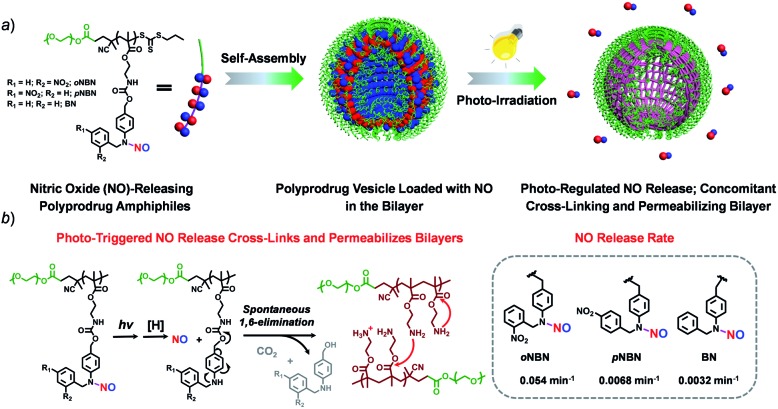
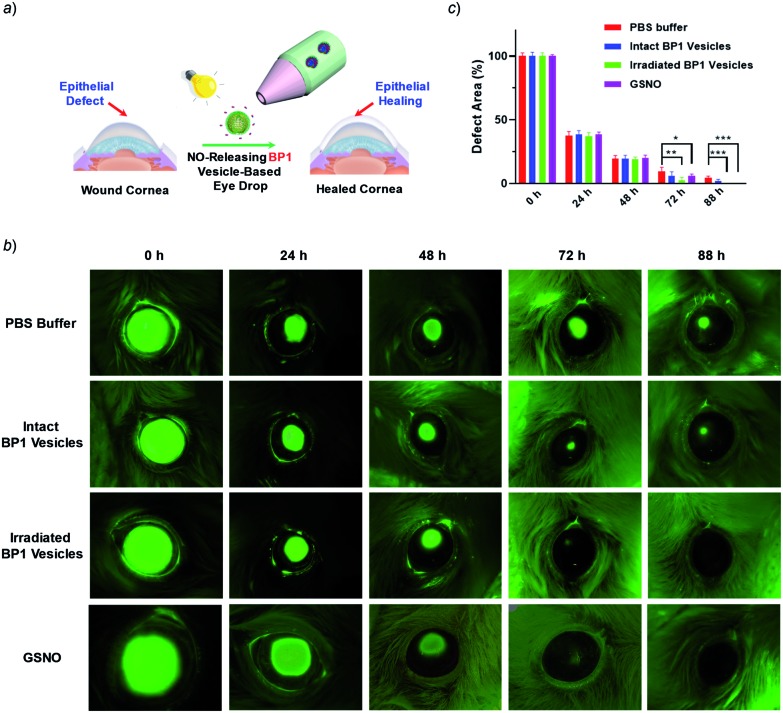
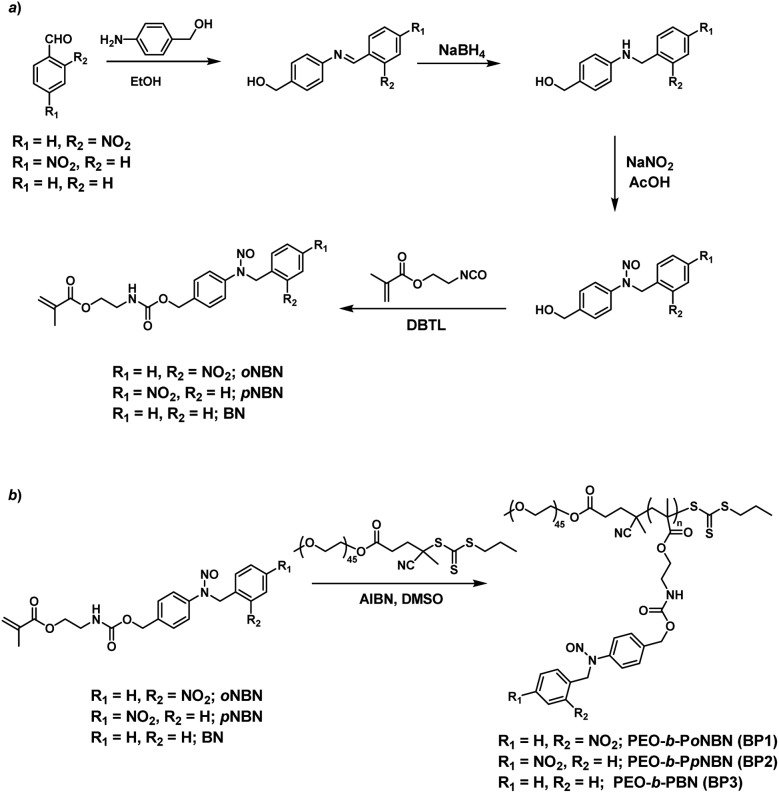
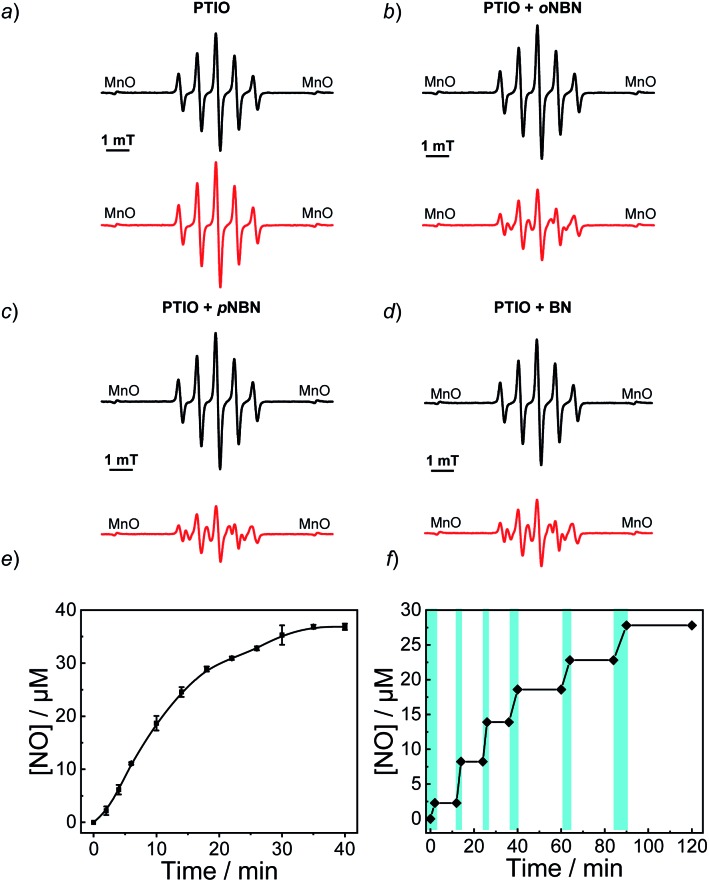
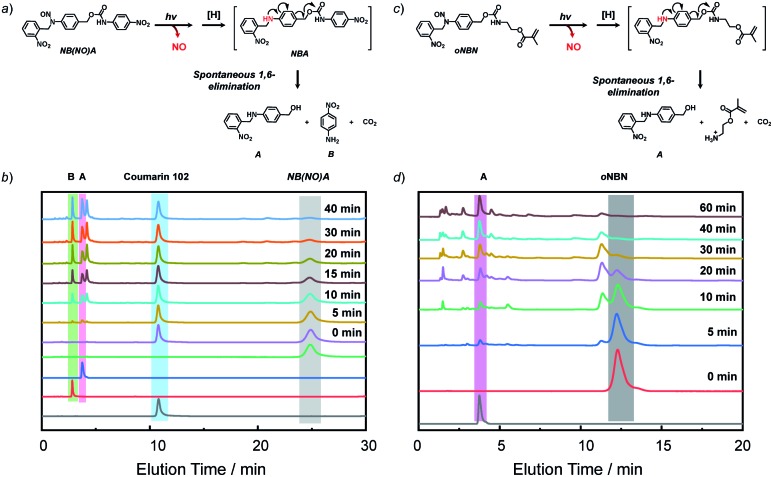
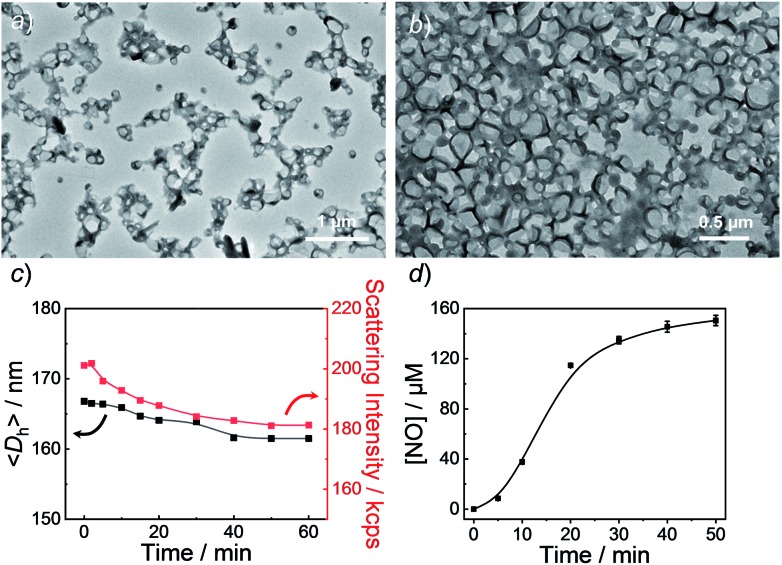
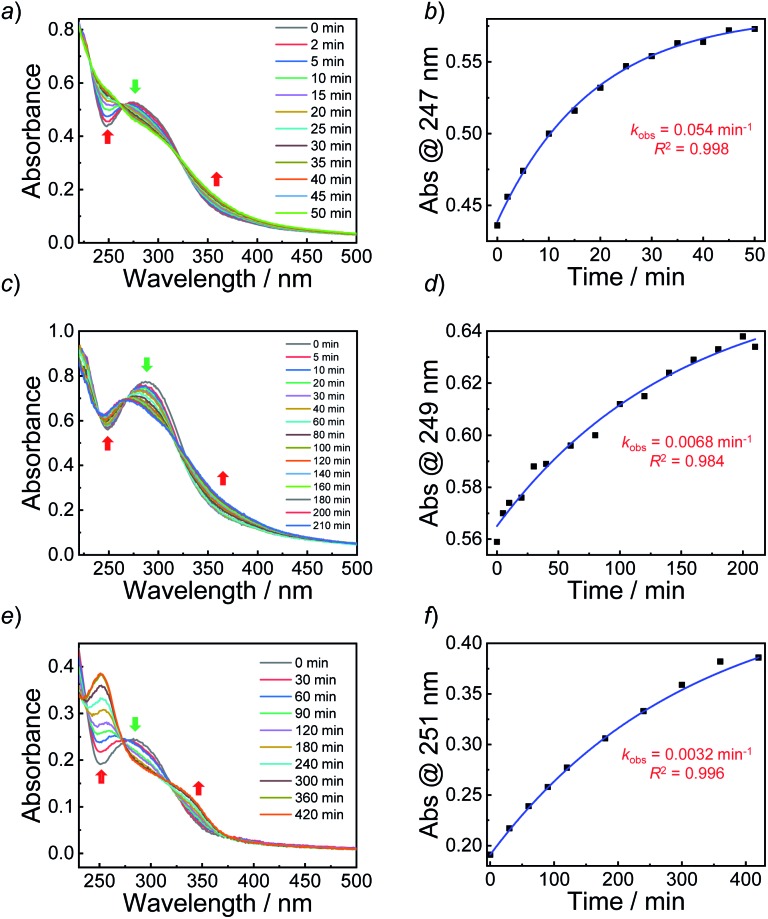
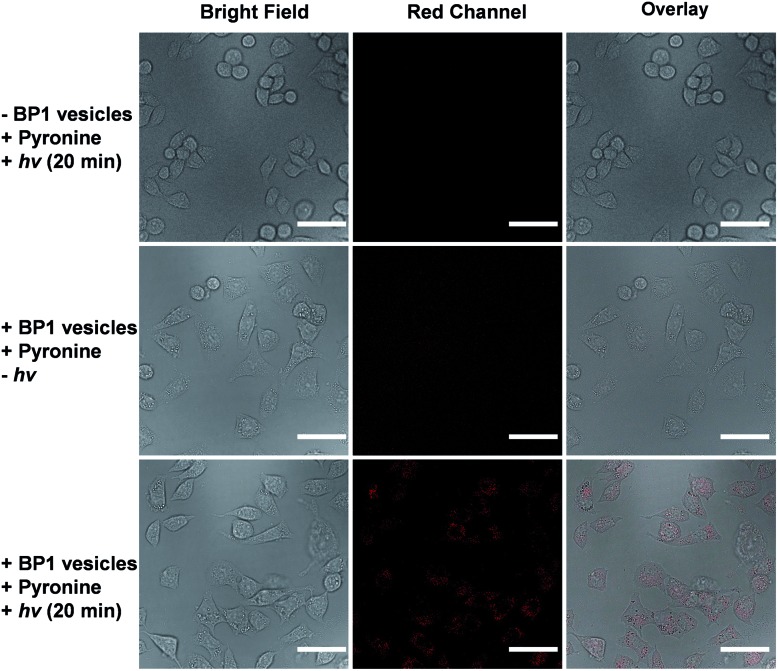
Polymersomes have been extensively used in the delivery of both small and macromolecular payloads. However, the controlled delivery of gaseous therapeutics (, nitric oxide, NO) remains a grand challenge due to its difficulty in loading of gaseous payloads into polymersomes without premature leakage. Herein, NO-releasing vesicles could be fabricated the self-assembly of NO-releasing amphiphiles, which were synthesized by the direct polymerization of photoresponsive NO monomers (abbreviated as NBN, NBN, and BN). These monomers were rationally designed through the integration of the photoresponsive behavior of -nitrosoamine moieties and the self-immolative chemistry of 4-aminobenzyl alcohol derivatives, which outperformed conventional NO donors such as diazeniumdiolates (NONOates) and -nitrosothiols (SNOs) in terms of ease of preparation, stability of storage, and controllability of NO release. The unique design made it possible to selectively release NO by a light stimulus and to regulate the NO release rates. Importantly, the photo-mediated NO release could be manipulated in living cells and showed promising applications in the treatment of corneal wounds. In addition to delivering NO, the current design enabled the synergistic delivery of NO and other therapeutic payloads by taking advantage of NO release-mediated traceless crosslinking of the vesicles.
聚合物囊泡已被广泛用于递送小分子和大分子负载物。然而,气态治疗剂(如一氧化氮,NO)的可控递送仍然是一个巨大的挑战,因为将气态负载物装载到聚合物囊泡中而不发生过早泄漏很困难。在此,可通过释放NO的两亲分子的自组装制备释放NO的囊泡,这些两亲分子是通过光响应性NO单体(简称为NBN、NBN和BN)的直接聚合合成的。这些单体通过整合亚硝基胺部分的光响应行为和4-氨基苄醇衍生物的自牺牲化学进行合理设计,在制备的简易性、储存稳定性和NO释放的可控性方面优于传统的NO供体,如重氮二醇盐(NONOates)和亚硝基硫醇(SNOs)。这种独特的设计使得通过光刺激选择性释放NO并调节NO释放速率成为可能。重要的是,光介导的NO释放在活细胞中可以被操控,并在角膜伤口治疗中显示出有前景的应用。除了递送NO外,当前的设计还通过利用NO释放介导的囊泡无痕交联实现了NO与其他治疗负载物的协同递送。