Hwang Young-Hwa, Ismail Ishamri, Joo Seon-Tea
Institute of Agriculture & Life Science, Gyeongsang National University, Jinju 52828, Korea.
Division of Applied Life Science (BK21+), Gyeongsang National University, Jinju 52828, Korea.
Foods. 2020 Feb 26;9(3):251. doi: 10.3390/foods9030251.
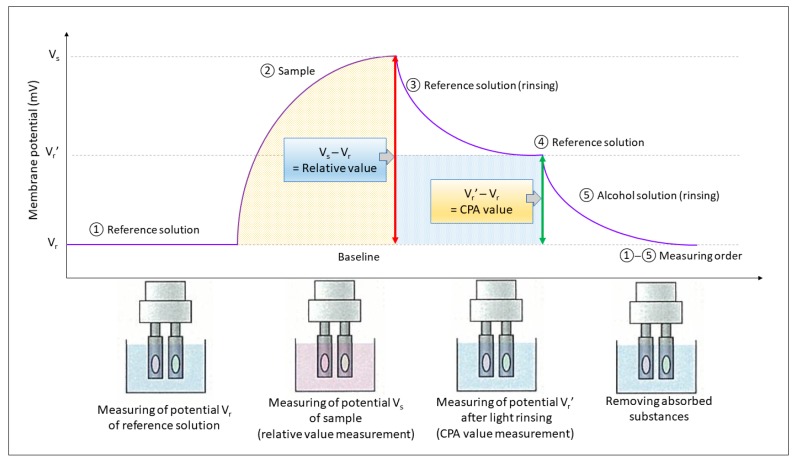
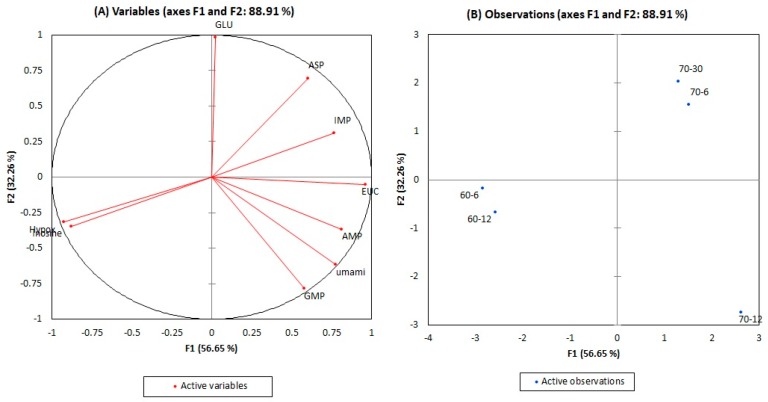
Behaviour of umami compounds that are associated with non-volatile compounds on slow cooking regimes remains less explored. This study aims to assess the ability of the electronic tongue system on the umami taste from sous-vide beef . The identification was based on the taste-enhancing synergism between umami compounds 5'-nucleotides (IMP, GMP, AMP, inosine, and hypoxanthine) and free amino acids (glutamic and aspartic acid) using the estimation of equivalent umami concentration (EUC) and electronic tongue system. Sous-vide cooked at 60 and 70 °C for 6 and 12 h and cooked using the conventional method at 70 °C for 30 min (as control) were compared. The temperature had a significant effect on 5'-nucleotides, but aspartic and glutamic acid were not influenced by any treatments applied. Sous-vide cooked at 60 °C tended to have higher inosine and hypoxanthine. Meanwhile, desirable 5'-nucleotides IMP, AMP, and GMP were more intensified at the temperature of 70 °C. The principal component analysis predicted a good correlation between EUC and the electronic tongue, with sous-vide at 70 °C for 12 h presenting the most umami. Therefore, the electronic tongue system is a useful tool in food processing, particularly in determining complex sensory properties such as umami, which cannot be evaluated objectively.
在慢煮过程中,鲜味化合物与非挥发性化合物之间的相互作用仍有待深入研究。本研究旨在评估电子舌系统对低温慢煮牛肉鲜味的检测能力。该识别基于鲜味化合物5'-核苷酸(肌苷酸、鸟苷酸、腺苷酸、肌苷和次黄嘌呤)与游离氨基酸(谷氨酸和天冬氨酸)之间的增味协同作用,采用等效鲜味浓度(EUC)估算和电子舌系统进行分析。比较了在60℃和70℃下低温慢煮6小时和12小时以及在70℃下采用传统方法煮30分钟(作为对照)的情况。温度对5'-核苷酸有显著影响,但天冬氨酸和谷氨酸不受任何处理的影响。在60℃下低温慢煮的牛肉往往含有较高的肌苷和次黄嘌呤。同时,理想的5'-核苷酸肌苷酸、腺苷酸和鸟苷酸在70℃时含量更高。主成分分析预测EUC与电子舌之间具有良好的相关性,在70℃下低温慢煮12小时的牛肉鲜味最强。因此,电子舌系统是食品加工中的一种有用工具,特别是在确定诸如鲜味等无法客观评估的复杂感官特性方面。