Department of Molecular and Cell Biology, School of Natural Sciences, University of California, Merced, Merced, CA, United States.
Front Immunol. 2020 Feb 11;11:123. doi: 10.3389/fimmu.2020.00123. eCollection 2020.
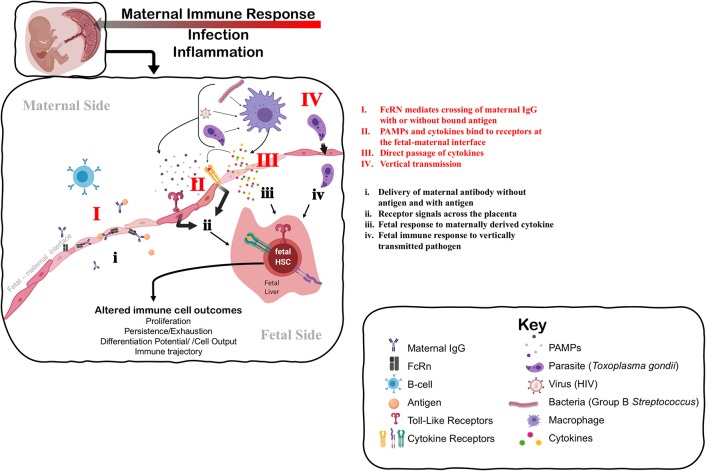
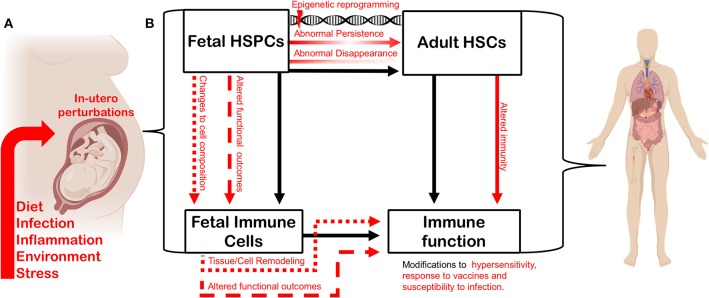
Over the last century, the alarming surge in allergy and autoimmune disease has led to the hypothesis that decreasing exposure to microbes, which has accompanied industrialization and modern life in the Western world, has fundamentally altered the immune response. In its current iteration, the "hygiene hypothesis" suggests that reduced microbial exposures during life restricts the production and differentiation of immune cells suited for immune regulation. Although it is now well-appreciated that the increase in hypersensitivity disorders represents a "perfect storm" of many contributing factors, we argue here that two important considerations have rarely been explored. First, the window of microbial exposure that impacts immune development is not limited to early childhood, but likely extends into the womb. Second, restricted microbial interactions by an expectant mother will bias the fetal immune system toward hypersensitivity. Here, we extend this discussion to hypothesize that the cell types sensing microbial exposures include fetal hematopoietic stem cells, which drive long-lasting changes to immunity.
在过去的一个世纪里,过敏和自身免疫性疾病的惊人增长导致了这样一种假设,即伴随着工业化和西方世界现代生活而来的微生物接触减少,从根本上改变了免疫反应。目前的“卫生假说”认为,生命过程中微生物暴露的减少限制了适合免疫调节的免疫细胞的产生和分化。尽管现在人们已经充分认识到,过敏症的增加代表了许多致病因素的“完美风暴”,但我们在这里认为,有两个重要的考虑因素很少被探讨。首先,影响免疫发育的微生物暴露窗口期不仅限于儿童早期,而且可能延伸到子宫内。其次,孕妇有限的微生物相互作用会使胎儿免疫系统偏向过敏。在这里,我们将这一讨论扩展到假设感知微生物暴露的细胞类型包括胎儿造血干细胞,这些细胞会对免疫产生持久的影响。