Faculty of Biology, Medicine and Health, Manchester Collaborative Centre for Inflammation Research, Lydia Becker Institute of Immunology and Inflammation, University of Manchester, Manchester, United Kingdom.
Manchester Academic Health Science Centre, Manchester, United Kingdom.
Front Immunol. 2020 Feb 14;11:183. doi: 10.3389/fimmu.2020.00183. eCollection 2020.
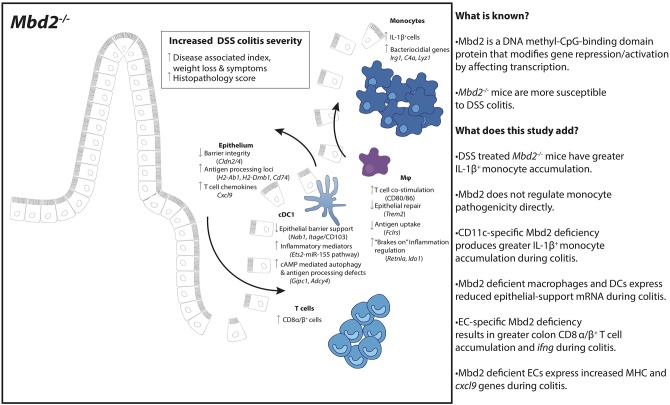
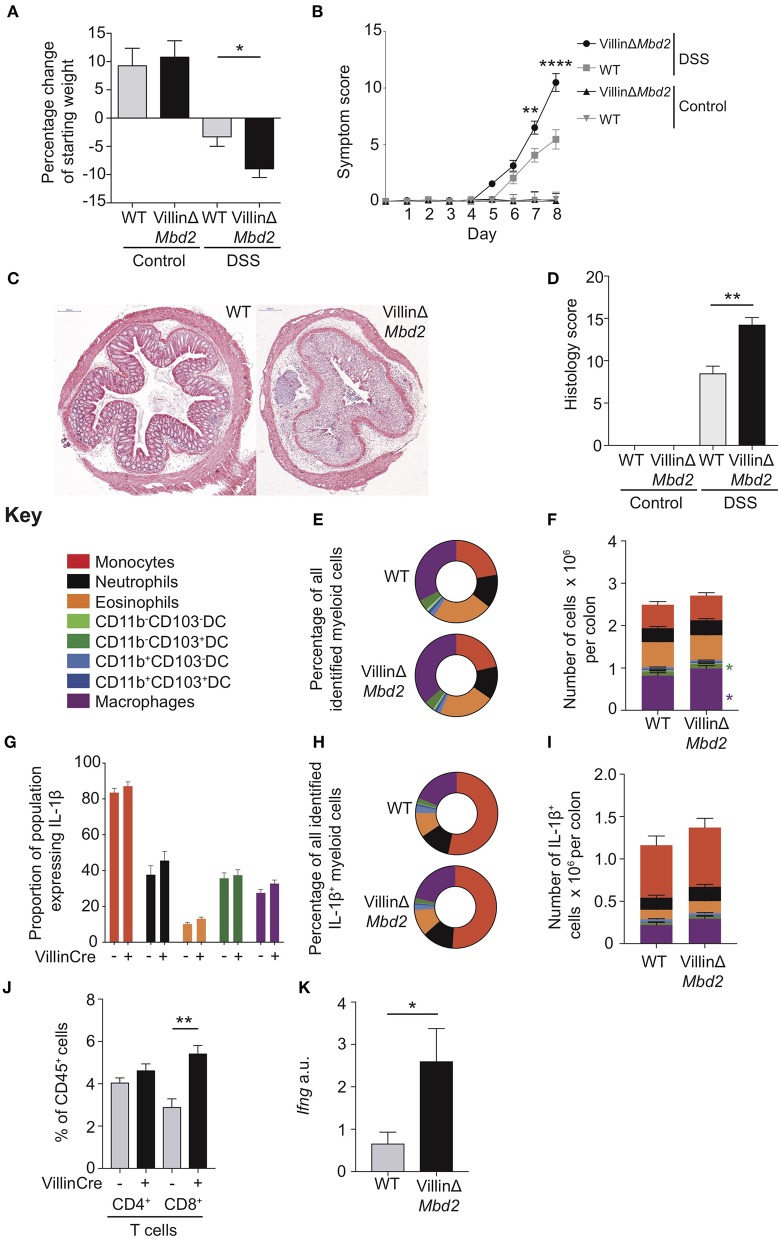
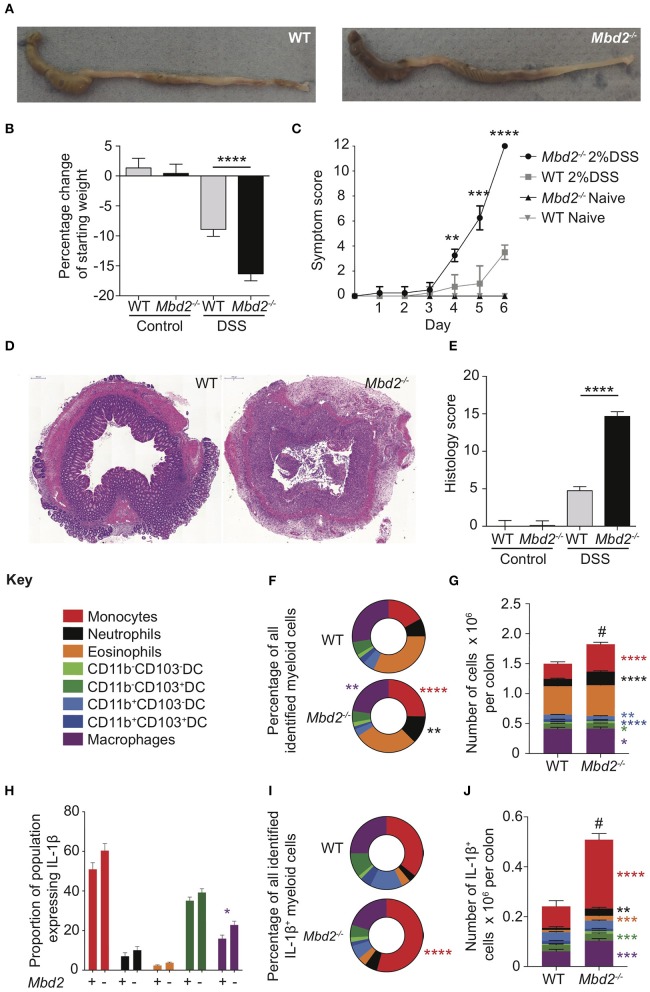
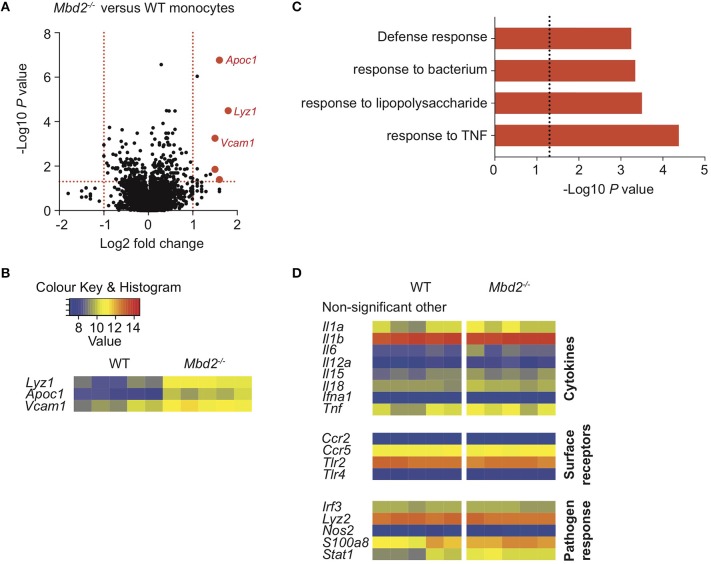
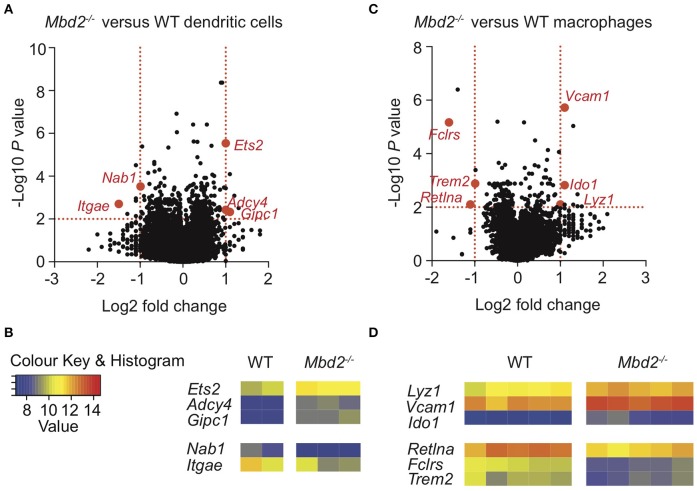
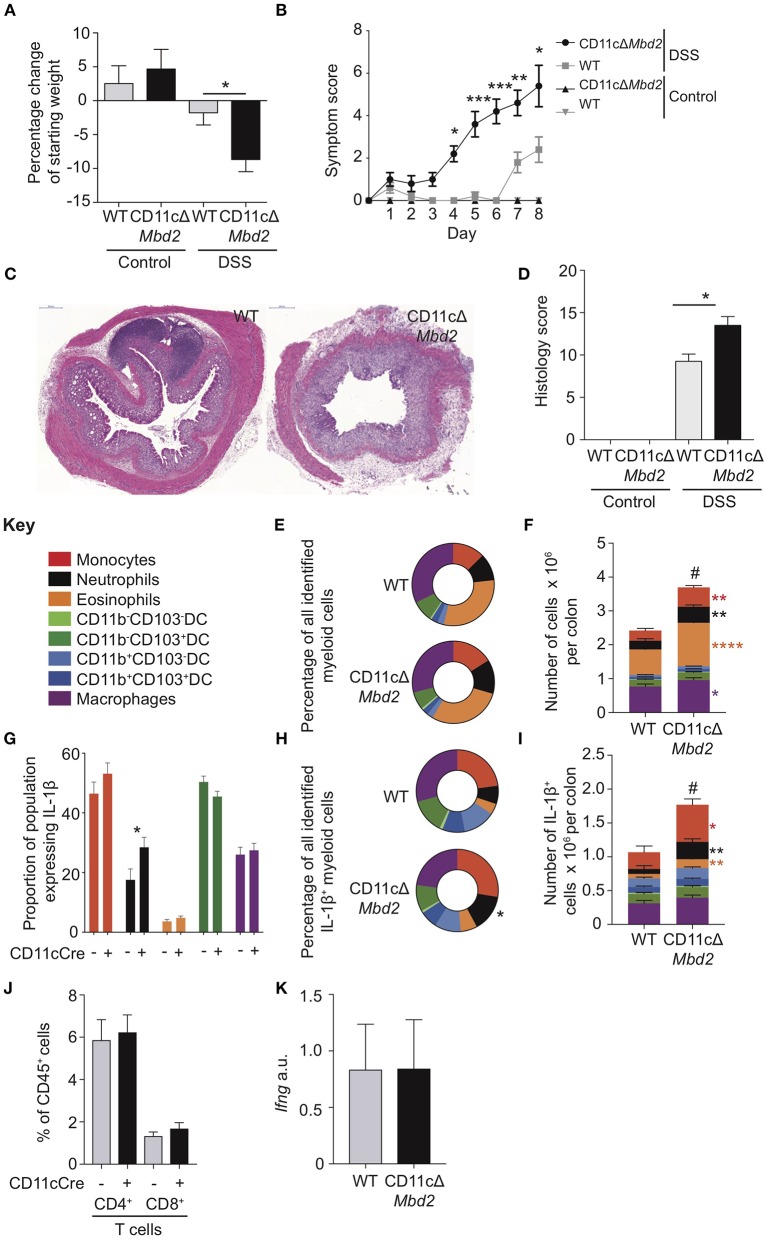
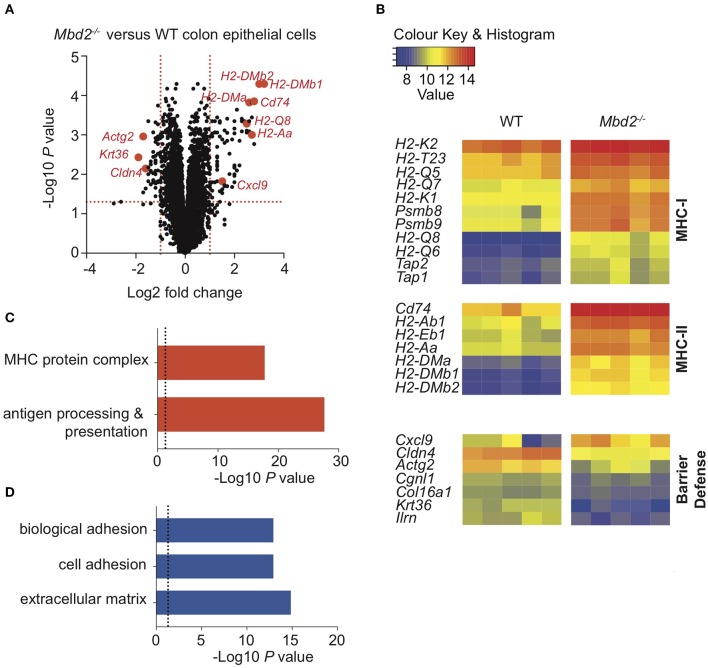
Methyl-CpG-binding domain-2 (Mbd2) acts as an epigenetic regulator of gene expression, by linking DNA methylation to repressive chromatin structure. Although Mbd2 is widely expressed in gastrointestinal immune cells and is implicated in regulating intestinal cancer, anti-helminth responses and colonic inflammation, the Mbd2-expressing cell types that control these responses are incompletely defined. Indeed, epigenetic control of gene expression in cells that regulate intestinal immunity is generally poorly understood, even though such mechanisms may explain the inability of standard genetic approaches to pinpoint the causes of conditions like inflammatory bowel disease. In this study we demonstrate a vital role for Mbd2 in regulating murine colonic inflammation. mice displayed dramatically worse pathology than wild type controls during dextran sulfate sodium (DSS) induced colitis, with increased inflammatory (IL-1β) monocytes. Profiling of mRNA from innate immune and epithelial cell (EC) populations suggested that Mbd2 suppresses inflammation and pathology via control of innate-epithelial cell crosstalk and T cell recruitment. Consequently, restriction of Mbd2 deficiency to CD11c dendritic cells and macrophages, or to ECs, resulted in increased DSS colitis severity. Our identification of this dual role for in regulating the inflammatory capacity of both CD11c cells and ECs highlights how epigenetic control mechanisms may limit intestinal inflammatory responses.
甲基化 CpG 结合域蛋白 2(Mbd2)通过将 DNA 甲基化与抑制性染色质结构联系起来,充当基因表达的表观遗传调节剂。尽管 Mbd2 在胃肠道免疫细胞中广泛表达,并与调节肠道癌症、抗寄生虫反应和结肠炎症有关,但控制这些反应的 Mbd2 表达细胞类型尚未完全确定。事实上,尽管这些机制可能解释了为什么标准遗传方法无法确定炎症性肠病等疾病的原因,但细胞中基因表达的表观遗传控制在调节肠道免疫方面仍知之甚少。在这项研究中,我们证明了 Mbd2 在调节小鼠结肠炎症中的重要作用。Mbd2 敲除小鼠在葡聚糖硫酸钠(DSS)诱导的结肠炎中表现出比野生型对照更严重的病理,炎症(IL-1β)单核细胞增加。对先天免疫和上皮细胞(EC)群体的 mRNA 进行分析表明,Mbd2 通过控制先天-上皮细胞串扰和 T 细胞募集来抑制炎症和病理学。因此,将 Mbd2 缺陷限制在 CD11c 树突状细胞和巨噬细胞或 EC 中,会导致 DSS 结肠炎的严重程度增加。我们确定了 Mbd2 在调节 CD11c 细胞和 EC 炎症能力方面的双重作用,这突显了表观遗传调控机制如何限制肠道炎症反应。