Lee Jun Hyung, Mazarei Mitra, Pfotenhauer Alexander C, Dorrough Aubrey B, Poindexter Magen R, Hewezi Tarek, Lenaghan Scott C, Graham David E, Stewart C Neal
Department of Plant Sciences, University of Tennessee, Knoxville, TN, United States.
Center for Agricultural Synthetic Biology, University of Tennessee Institute of Agriculture, Knoxville, TN, United States.
Front Plant Sci. 2020 Jan 31;10:1720. doi: 10.3389/fpls.2019.01720. eCollection 2019.
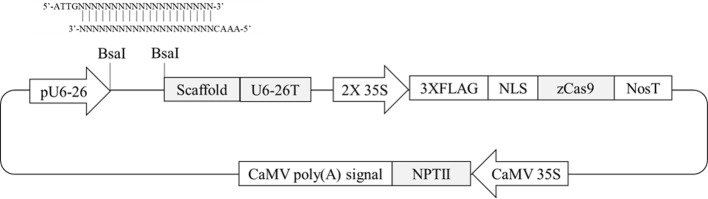
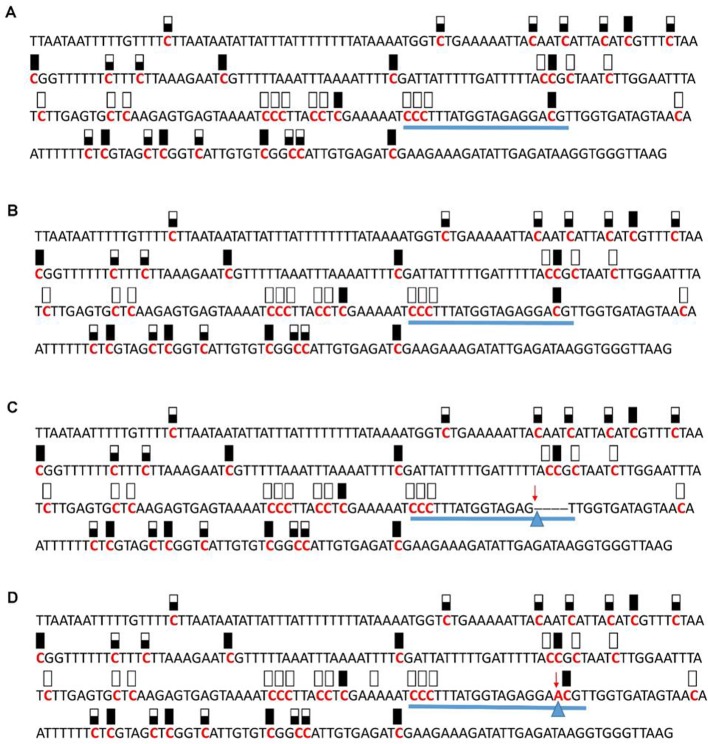
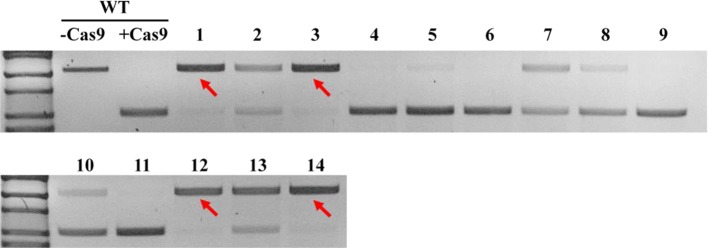
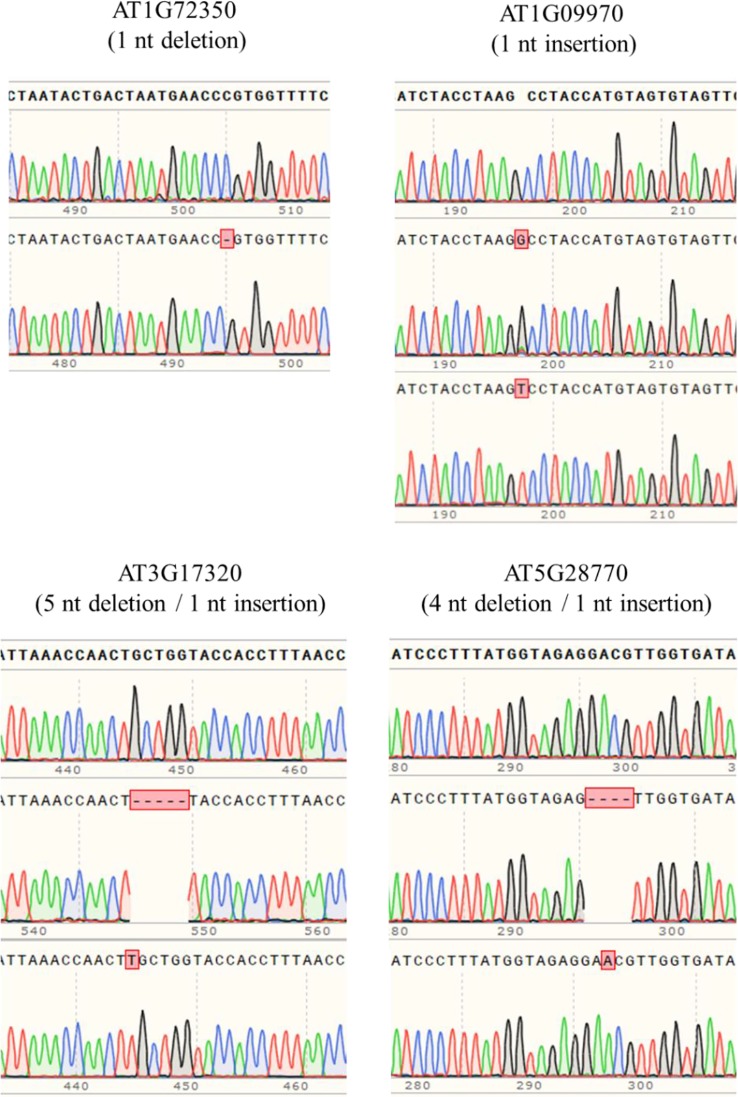
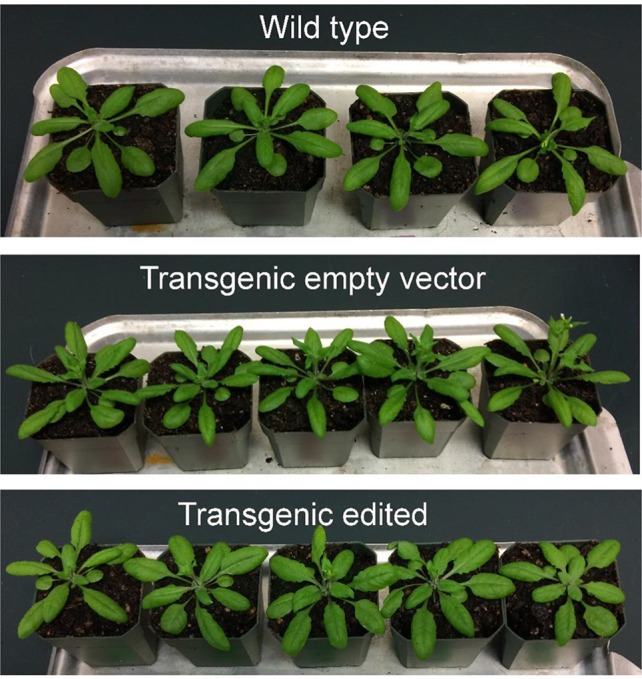
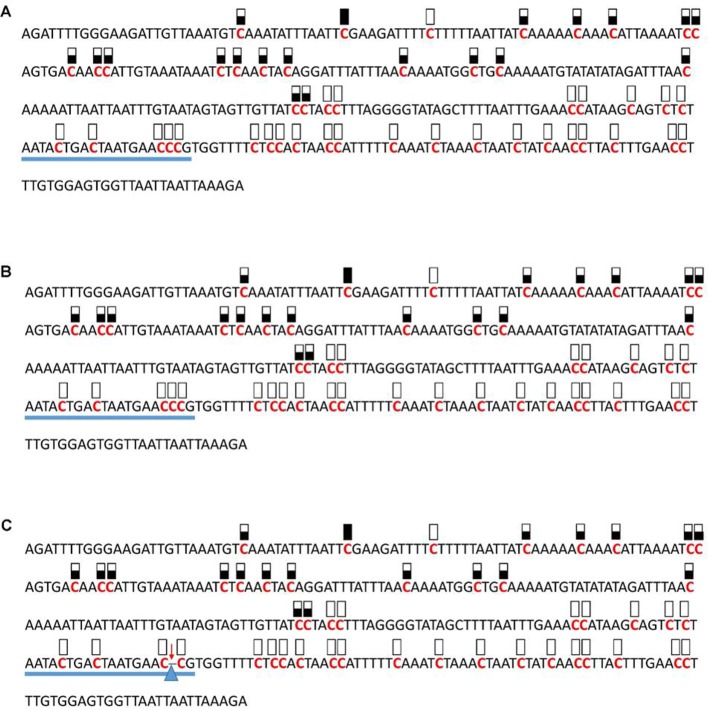
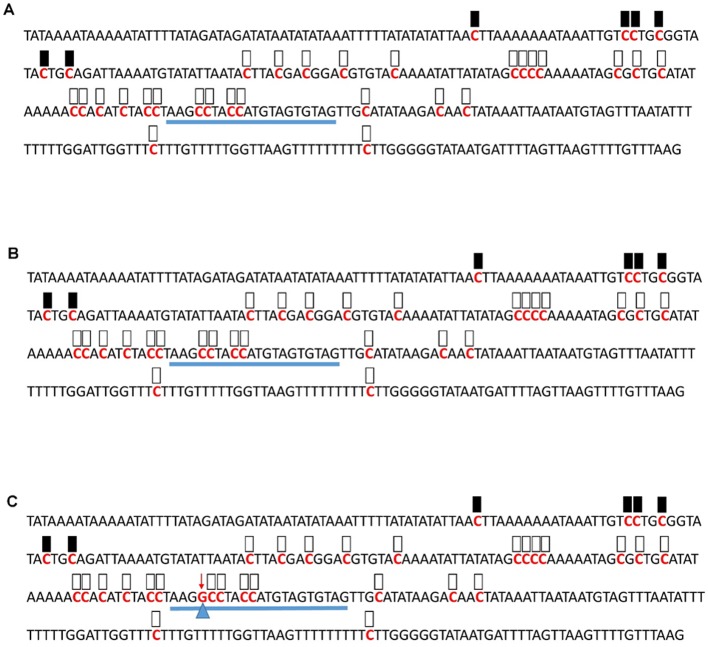
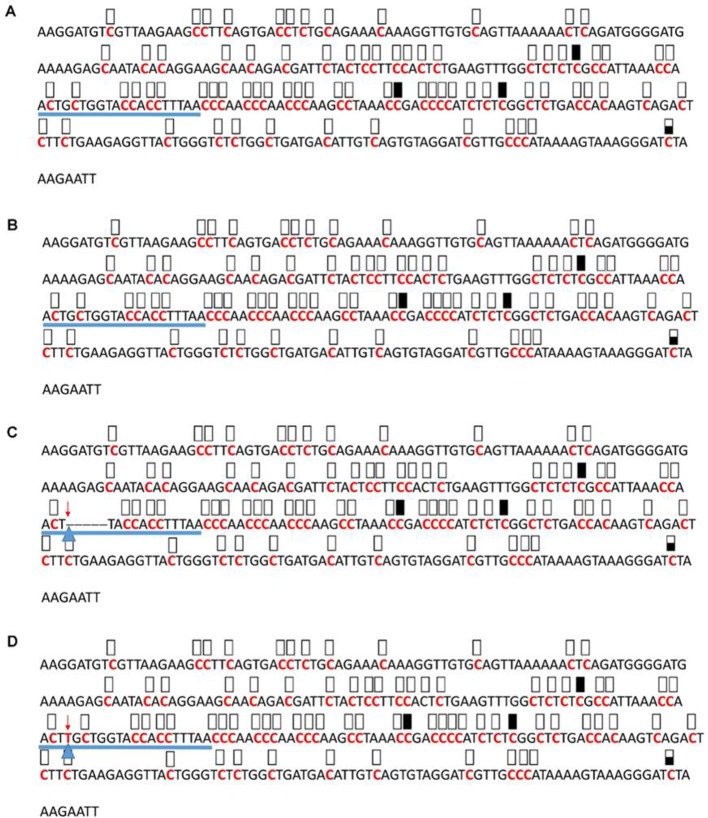
CRISPR/Cas9 has been widely applied to various plant species accelerating the pace of plant genome editing and precision breeding in crops. Unintended effects beyond off-target nucleotide mutations are still somewhat unexplored. We investigated the degree and patterns of epigenetic changes after gene editing. We examined changes in DNA methylation in genome-edited promoters of naturally hypermethylated genes (AT1G72350 and AT1G09970) and hypomethylated genes (AT3G17320 and AT5G28770) from . Transgenic plants were developed via -mediated floral dip transformation. Homozygous edited lines were selected from segregated T plants by an digestion assay using ribonucleoprotein complex. Bisulfite sequencing comparisons were made between paired groups of edited and non-edited plants to identify changes in DNA methylation of the targeted loci. We found that directed mutagenesis via CRISPR/Cas9 resulted in no unintended morphological or epigenetic alterations. Phenotypes of wild-type, transgenic empty vector, and transgenic edited plants were similar. Epigenetic profiles revealed that methylation patterns of promoter regions flanking target sequences were identical among wild-type, transgenic empty vector, and transgenic edited plants. There was no effect of mutation type on epigenetic status. We also evaluated off-target mutagenesis effects in the edited plants. Potential off-target sites containing up to 4-bp mismatch of each target were sequenced. No off-target mutations were detected in candidate sites. Our results showed that CRISPR/Cas9 did not leave an epigenetic footprint on either the immediate gene-edited DNA and flanking DNA or introduce off-target mutations.
CRISPR/Cas9已广泛应用于各种植物物种,加快了植物基因组编辑和作物精准育种的步伐。除了脱靶核苷酸突变之外的意外影响仍有待进一步探索。我们研究了基因编辑后表观遗传变化的程度和模式。我们检测了来自自然超甲基化基因(AT1G72350和AT1G09970)和低甲基化基因(AT3G17320和AT5G28770)的基因组编辑启动子中DNA甲基化的变化。通过农杆菌介导的花浸染转化培育转基因植物。使用核糖核蛋白复合体通过酶切分析从分离的T代植株中筛选纯合编辑株系。对编辑植株和未编辑植株的配对组进行亚硫酸氢盐测序比较,以确定目标位点DNA甲基化的变化。我们发现,通过CRISPR/Cas9进行的定向诱变不会导致意外的形态或表观遗传改变。野生型、转基因空载体和转基因编辑植株的表型相似。表观遗传图谱显示,野生型、转基因空载体和转基因编辑植株中目标序列侧翼启动子区域的甲基化模式相同。突变类型对表观遗传状态没有影响。我们还评估了编辑植株中的脱靶诱变效应。对每个靶点含有多达4个碱基错配的潜在脱靶位点进行了测序。在候选位点未检测到脱靶突变。我们的结果表明,CRISPR/Cas9不会在直接基因编辑的DNA及其侧翼DNA上留下表观遗传印记,也不会引入脱靶突变。