Jaganathan Deepa, Ramasamy Karthikeyan, Sellamuthu Gothandapani, Jayabalan Shilpha, Venkataraman Gayatri
Plant Molecular Biology Laboratory, Department of Biotechnology, M. S. Swaminathan Research Foundation, Chennai, India.
Front Plant Sci. 2018 Jul 17;9:985. doi: 10.3389/fpls.2018.00985. eCollection 2018.
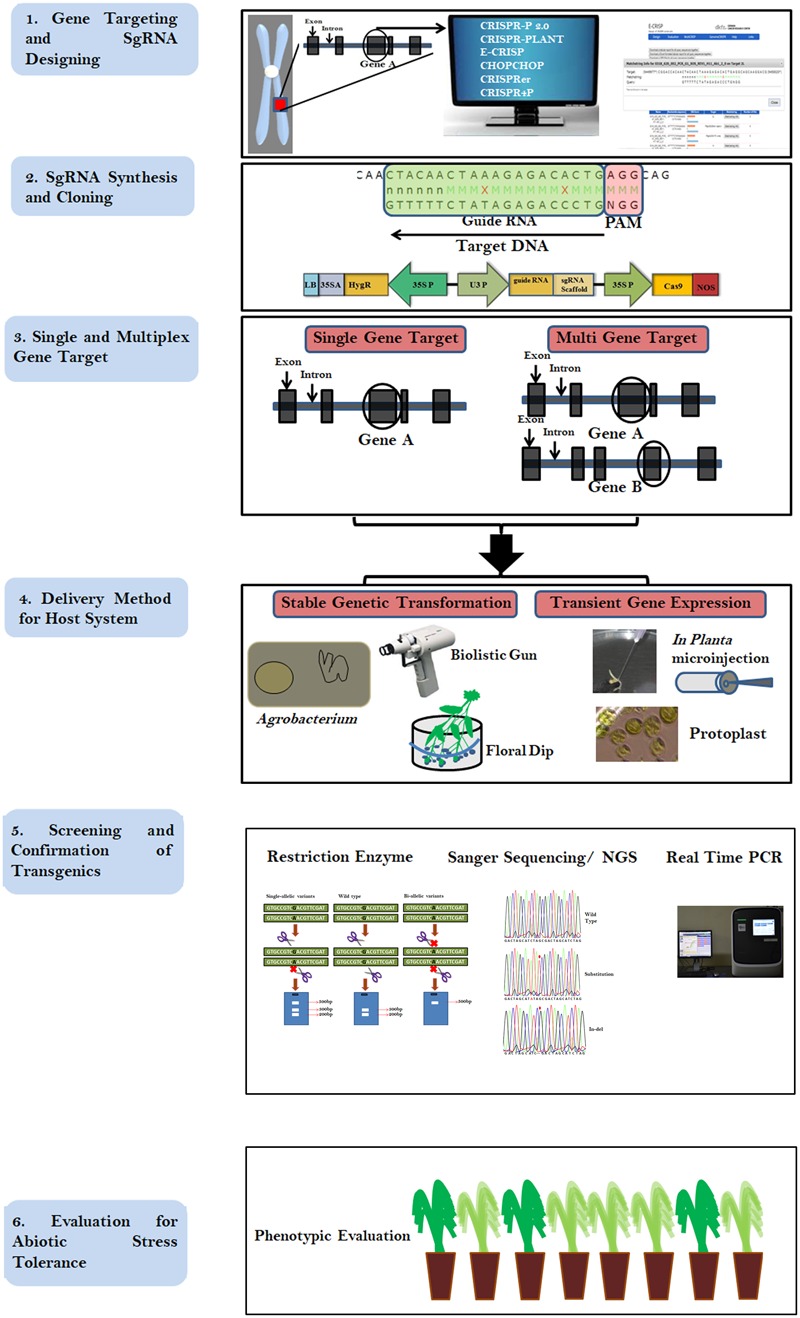
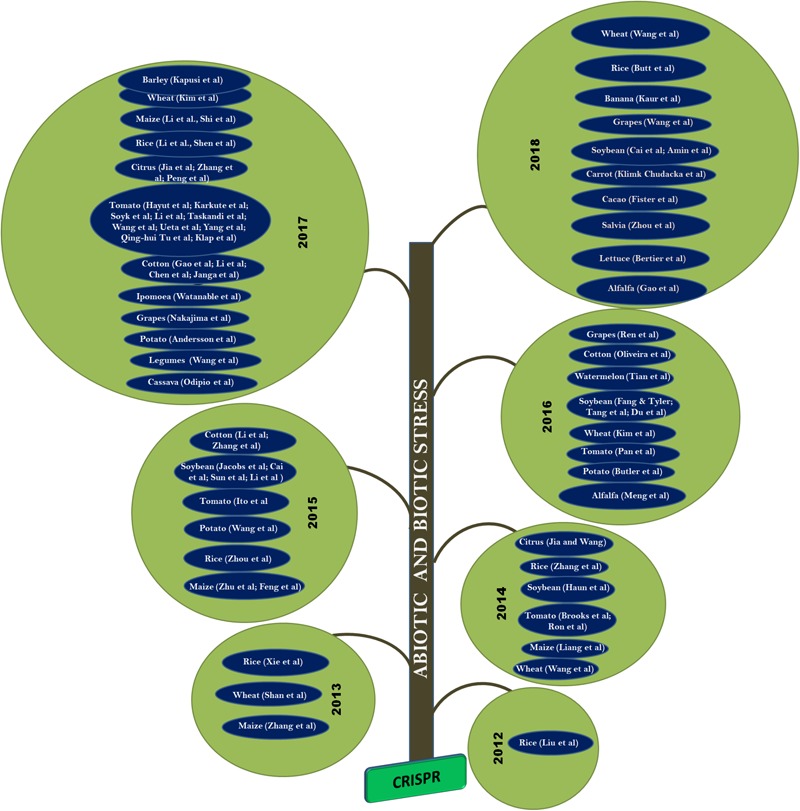
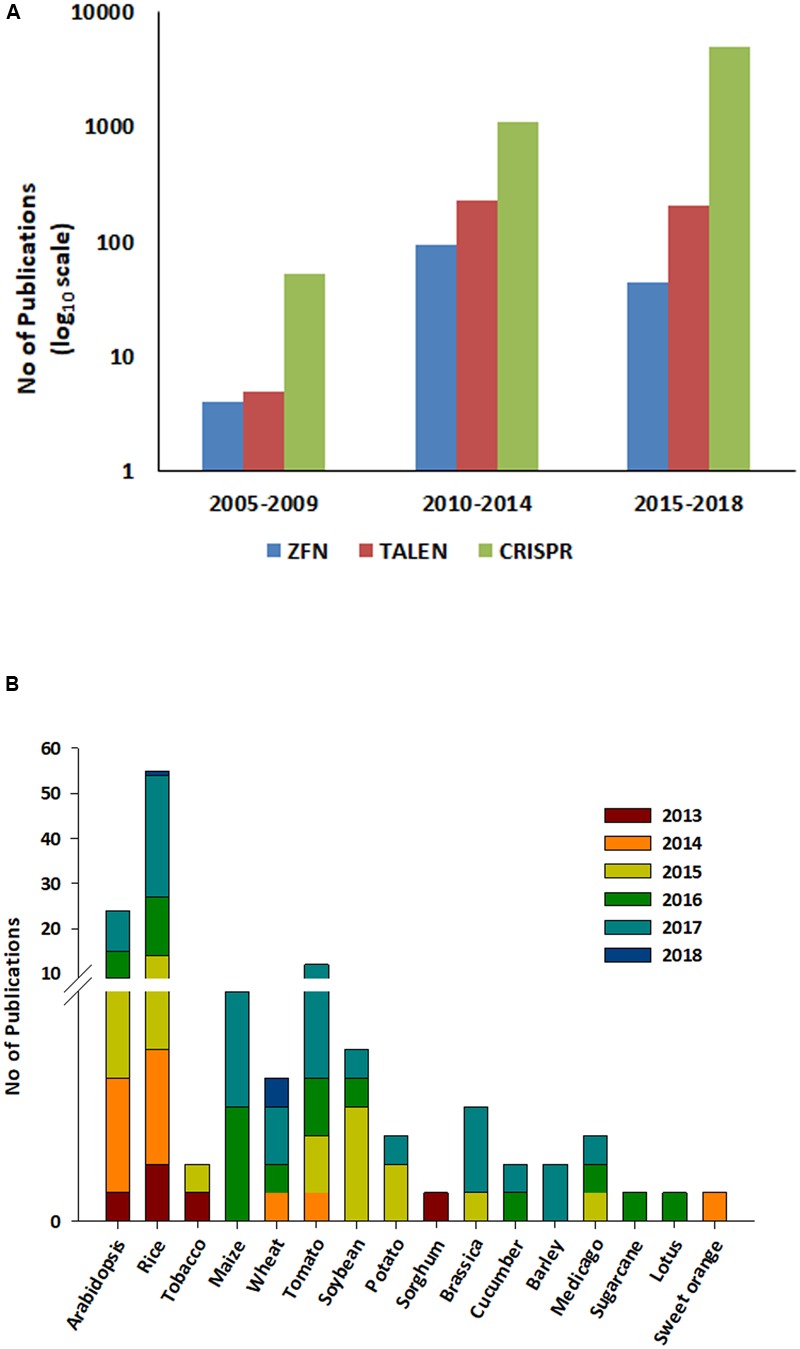
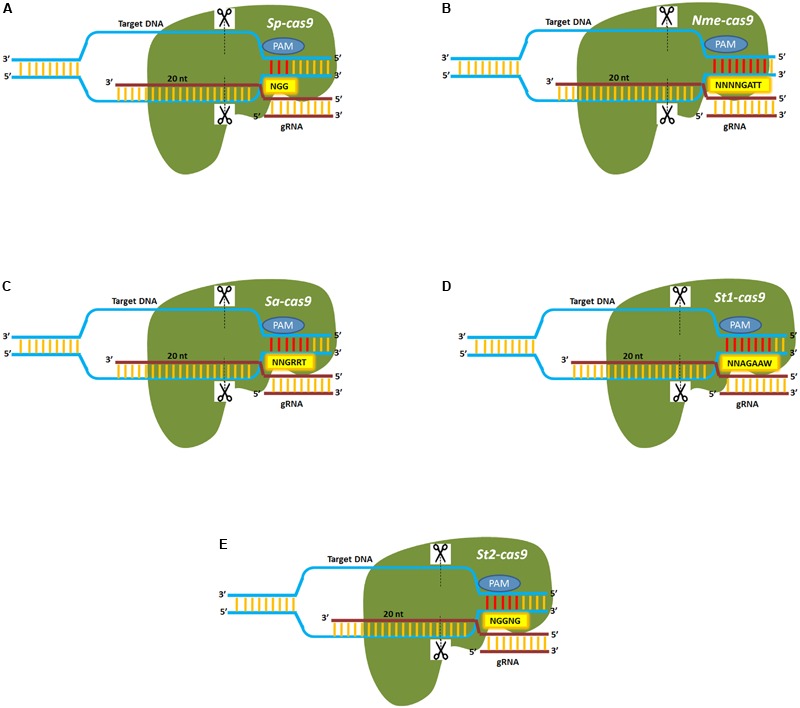
The availability of genome sequences for several crops and advances in genome editing approaches has opened up possibilities to breed for almost any given desirable trait. Advancements in genome editing technologies such as zinc finger nucleases (ZFNs), transcription activator-like effector nucleases (TALENs) has made it possible for molecular biologists to more precisely target any gene of interest. However, these methodologies are expensive and time-consuming as they involve complicated steps that require protein engineering. Unlike first-generation genome editing tools, CRISPR/Cas9 genome editing involves simple designing and cloning methods, with the same Cas9 being potentially available for use with different guide RNAs targeting multiple sites in the genome. After proof-of-concept demonstrations in crop plants involving the primary CRISPR-Cas9 module, several modified Cas9 cassettes have been utilized in crop plants for improving target specificity and reducing off-target cleavage (e.g., Nmcas9, Sacas9, and Stcas9). Further, the availability of Cas9 enzymes from additional bacterial species has made available options to enhance specificity and efficiency of gene editing methodologies. This review summarizes the options available to plant biotechnologists to bring about crop improvement using CRISPR/Cas9 based genome editing tools and also presents studies where CRISPR/Cas9 has been used for enhancing biotic and abiotic stress tolerance. Application of these techniques will result in the development of non-genetically modified (Non-GMO) crops with the desired trait that can contribute to increased yield potential under biotic and abiotic stress conditions.
几种作物基因组序列的可得性以及基因组编辑方法的进展为培育几乎任何给定的理想性状开辟了可能性。诸如锌指核酸酶(ZFNs)、转录激活样效应因子核酸酶(TALENs)等基因组编辑技术的进步使分子生物学家能够更精确地靶向任何感兴趣的基因。然而,这些方法昂贵且耗时,因为它们涉及需要蛋白质工程的复杂步骤。与第一代基因组编辑工具不同,CRISPR/Cas9基因组编辑涉及简单的设计和克隆方法,同一Cas9有可能与靶向基因组中多个位点的不同引导RNA一起使用。在涉及主要CRISPR-Cas9模块的作物植物中进行概念验证演示后,几种经过修饰的Cas9盒已用于作物植物,以提高靶向特异性并减少脱靶切割(例如Nmcas9、Sacas9和Stcas9)。此外,来自其他细菌物种的Cas9酶的可得性为提高基因编辑方法的特异性和效率提供了选择。本综述总结了植物生物技术学家可利用基于CRISPR/Cas9的基因组编辑工具实现作物改良的选择,并介绍了使用CRISPR/Cas9增强生物和非生物胁迫耐受性的研究。这些技术的应用将导致开发出具有所需性状的非转基因作物,这些作物在生物和非生物胁迫条件下有助于提高产量潜力。