Chung Yong Suk, Kim Ki-Seung, Hamayun Muhammad, Kim Yoonha
Department of Plant Resources and Environment, Jeju National University, Jeju, South Korea.
FarmHannong, Ltd., Daejeon, South Korea.
Front Plant Sci. 2020 Feb 13;10:1725. doi: 10.3389/fpls.2019.01725. eCollection 2019.
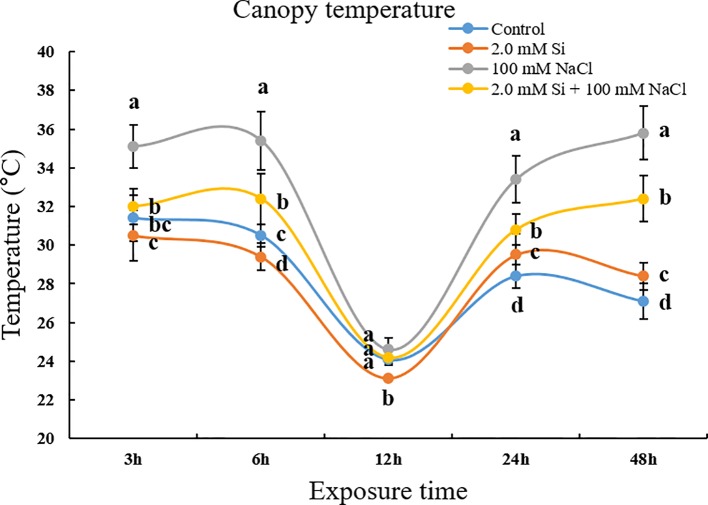
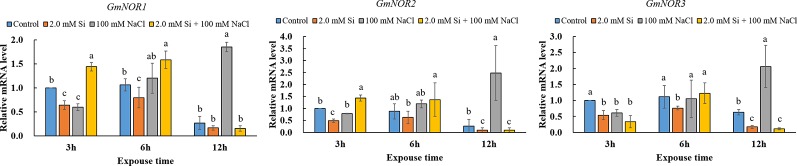
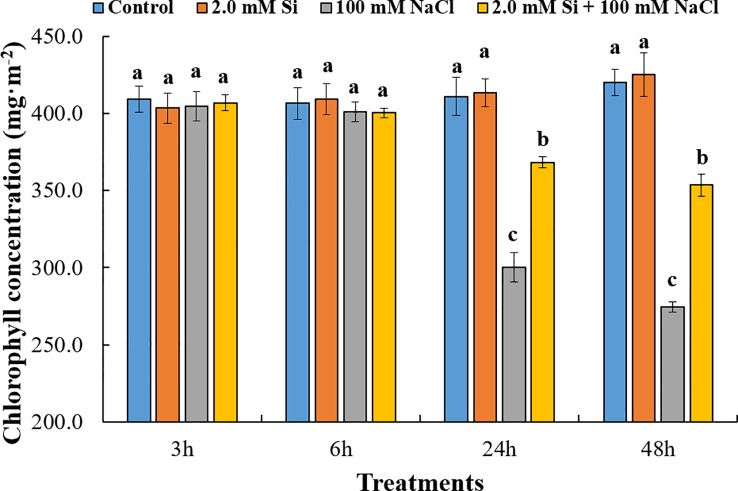
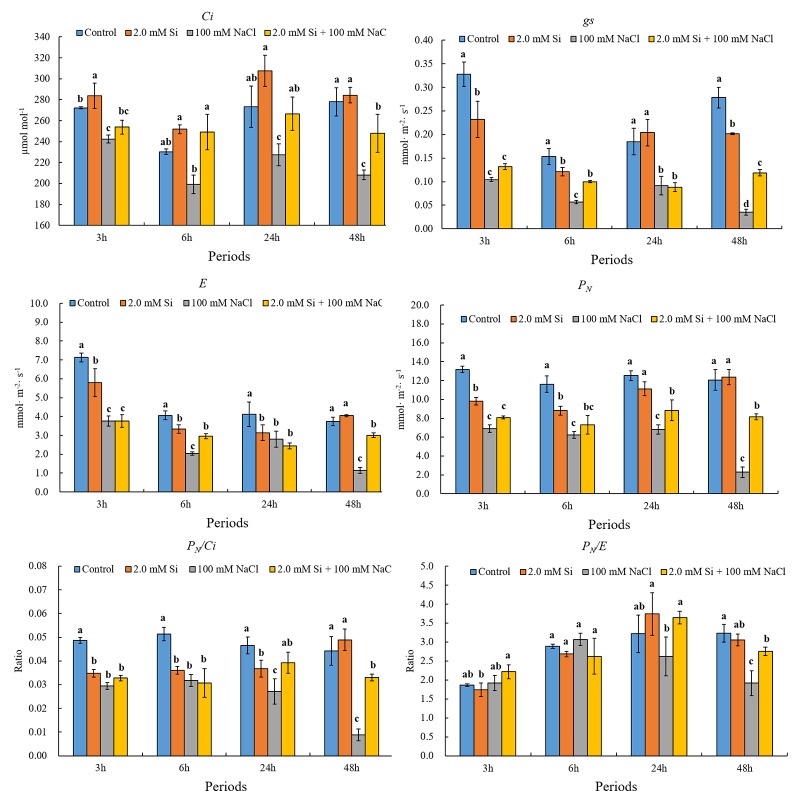
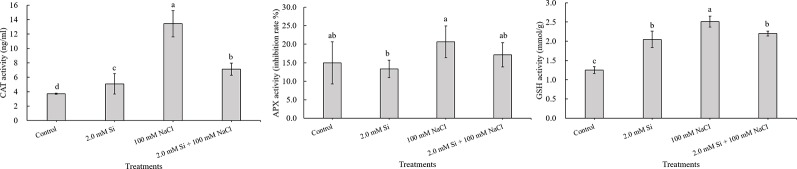
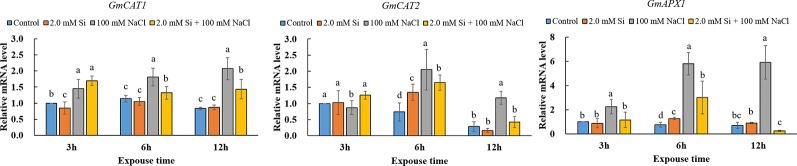
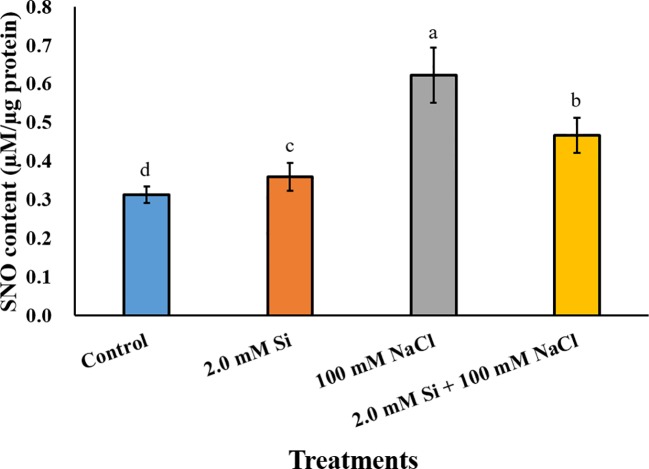
Salt stress is one of the major abiotic stressors that causes huge losses to the agricultural industry worldwide. Different strategies have been adopted over time to mitigate the negative impact of salt stress on plants and reclaim salt-affected lands. In the current study, we used silicon (Si) as a tool for salinity alleviation in soybean and investigated the influence of exogenous Si application on the regulation of reactive oxygen and reactive nitrogen species and other salt stress-related parameters of the treated plants. Our results revealed that the canopy temperature was much higher in sole NaCl-treated plants but declined in Si + NaCl-treated plants. Furthermore, the chlorophyll contents decreased with sole NaCl treatment, whereas Si + NaCl-treated plants showed improved chlorophyll contents. In addition, Si application normalized the photosynthetic responses, such as transpiration rate () and net photosynthesis rate ( ) in salt-treated plants, and reduced the activity of ascorbate peroxidase and glutathione under salt stress. The expression levels of antioxidant-related genes , , and started to decline at 12 h after addition of Si to NaCl-treated plants. Similarly, the -nitrosothiol and nitric oxide (NO)-related genes were upregulated in the salt stress condition but reduced after Si supplementation. Si application downregulated genes associated with reactive oxygen species and reactive nitrogen species and reduced enzymatic and non-enzymatic antioxidants of the treated plants. Results of the current study conclude that Si mitigated the adverse effects of NaCl-induced stress by modulating the crosstalk between antioxidants and NO scavengers. It is suggested that Si may be used in agricultural systems for alleviating salt stress.
盐胁迫是导致全球农业产业巨大损失的主要非生物胁迫因素之一。长期以来,人们采取了不同策略来减轻盐胁迫对植物的负面影响并开垦受盐影响的土地。在本研究中,我们使用硅(Si)作为缓解大豆盐害的工具,并研究了外源施硅对处理植株中活性氧和活性氮物种调节以及其他盐胁迫相关参数的影响。我们的结果表明,单独用氯化钠处理的植株冠层温度高得多,但在硅 + 氯化钠处理的植株中有所下降。此外,单独用氯化钠处理时叶绿素含量降低,而硅 + 氯化钠处理的植株叶绿素含量有所改善。此外,施硅使盐处理植株的光合反应(如蒸腾速率()和净光合速率())恢复正常,并降低了盐胁迫下抗坏血酸过氧化物酶和谷胱甘肽的活性。在向氯化钠处理的植株中添加硅后12小时,抗氧化相关基因、和的表达水平开始下降。同样,在盐胁迫条件下,亚硝基硫醇和一氧化氮(NO)相关基因上调,但在补充硅后降低。施硅下调了与活性氧和活性氮物种相关的基因,并降低了处理植株的酶促和非酶促抗氧化剂。本研究结果得出结论,硅通过调节抗氧化剂和NO清除剂之间的相互作用减轻了氯化钠诱导的胁迫的不利影响。建议在农业系统中使用硅来缓解盐胁迫。