Department of Physical Therapy, Laboratory of Muscle Performance, Federal University of Rio Grande do Norte, Natal, Rio Grande do Norte 59072-970, Brazil.
Department of Physical Therapy, Neuromuscular Performance Analysis Laboratory, Federal University of Rio Grande do Norte, Natal, Rio Grande do Norte 59072-970, Brazil.
J Sport Health Sci. 2020 Mar;9(2):152-159. doi: 10.1016/j.jshs.2019.07.001. Epub 2019 Jul 5.
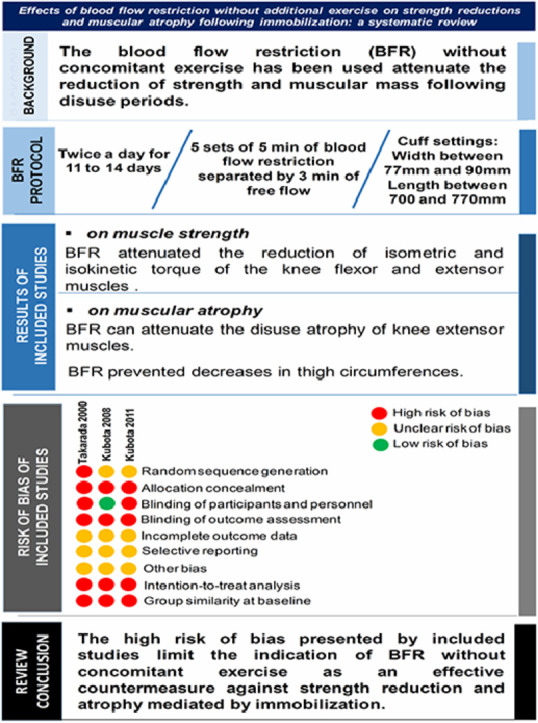
To investigate whether blood flow restriction (BFR) without concomitant exercise mitigated strength reduction and atrophy of thigh muscles in subjects under immobilization for lower limbs.
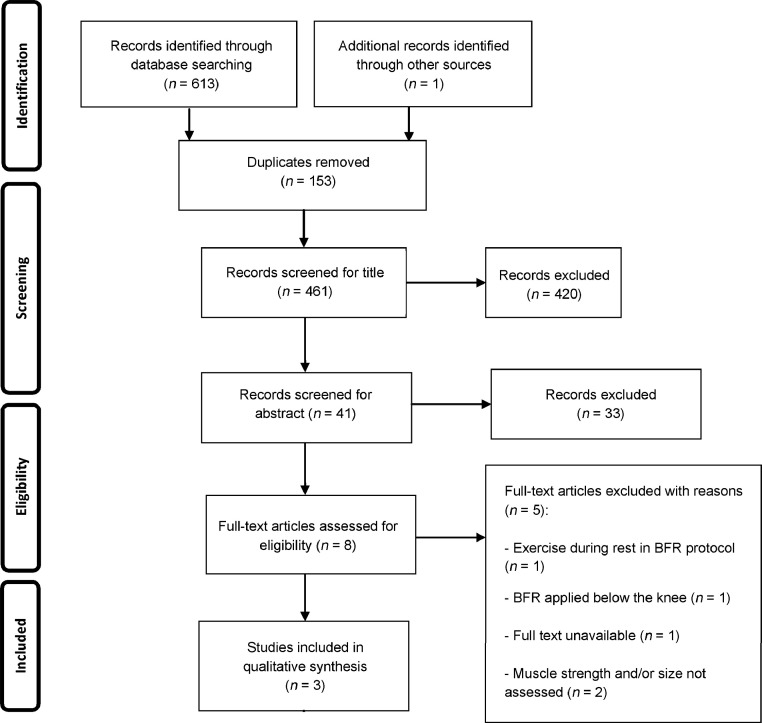
The following databases were searched: PubMed, CINAHL, PEDro, Web of Science, Central, and Scopus.
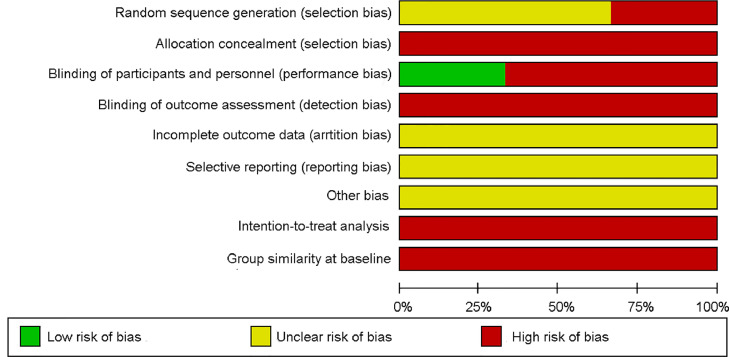
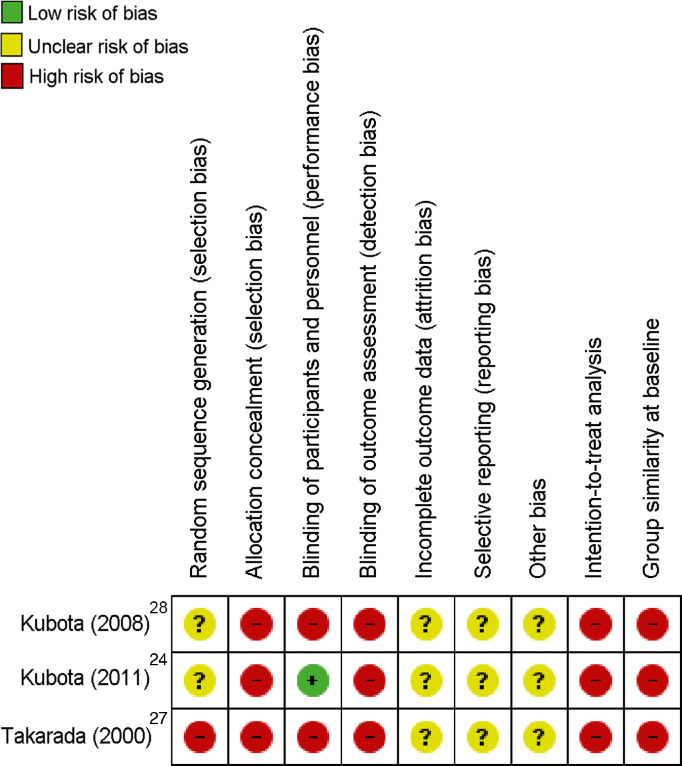
The search identified 3 eligible studies, and the total sample in the identified studies consisted of 38 participants. Isokinetic and isometric torque of the knee flexors and extensors was examined in 2 studies. Cross-sectional area of thigh muscles was evaluated in 1 study, and thigh girth was measured in 2 studies. The BFR protocol was 5 sets of 5 min of occlusion and 3 min of free flow, twice daily for approximately 2 weeks. As a whole, the included studies indicate that BFR without exercise is able to minimize strength reduction and muscular atrophy after immobilization. It is crucial to emphasize, however, that the included studies showed a high risk of bias, especially regarding allocation concealment, blinding of outcome assessment, intention-to-treat analyses, and group similarity at baseline.
Although potentially useful, the high risk of bias presented by original studies limits the indication of BFR without concomitant exercise as an effective countermeasure against strength reduction and atrophy mediated by immobilization.
研究在下肢固定期间,是否不伴随运动的血流限制(BFR)可以减轻大腿肌肉力量下降和萎缩。
检索了以下数据库:PubMed、CINAHL、PEDro、Web of Science、CENTRAL 和 Scopus。
搜索共确定了 3 项符合条件的研究,确定研究中的总样本由 38 名参与者组成。有 2 项研究检查了膝关节屈肌和伸肌的等速和等长扭矩,1 项研究评估了大腿肌肉的横截面积,2 项研究测量了大腿围。BFR 方案为每天两次,每次 5 组,每组 5 分钟闭塞和 3 分钟自由流动,持续约 2 周。总的来说,纳入的研究表明,不运动的 BFR 能够最小化固定后的力量下降和肌肉萎缩。然而,必须强调的是,纳入的研究存在很高的偏倚风险,特别是在分配隐藏、结果评估的盲法、意向治疗分析和基线时组间相似性方面。
尽管可能有用,但原始研究的高偏倚风险限制了不伴随运动的 BFR 作为对抗固定引起的力量下降和萎缩的有效对策的指征。