Wang Yan, Yu Yang, Huang Min, Gao Peng, Chen Hao, Liu Mianxue, Chen Qian, Yang Zhirong, Sun Qun
Key Laboratory of Bio-resource and Bio-environment of the Ministry of Education, College of Life Science, Sichuan University, Chengdu, Sichuan, China.
Key Laboratory of Irradiation Preservation of Sichuan Province, Sichuan Institute of Atomic Energy, Chengdu, Sichuan, China.
PeerJ. 2020 Feb 21;8:e8306. doi: 10.7717/peerj.8306. eCollection 2020.
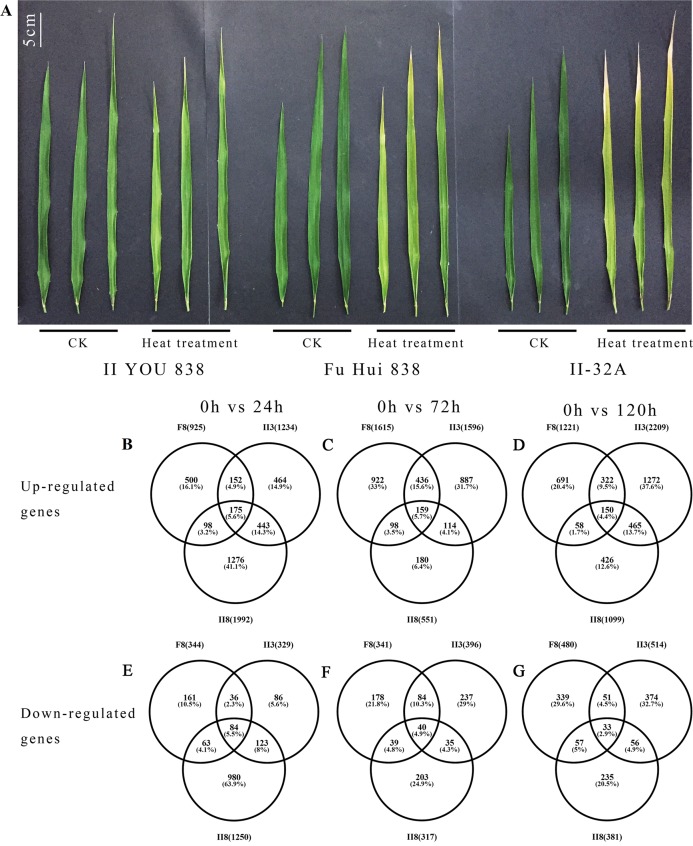
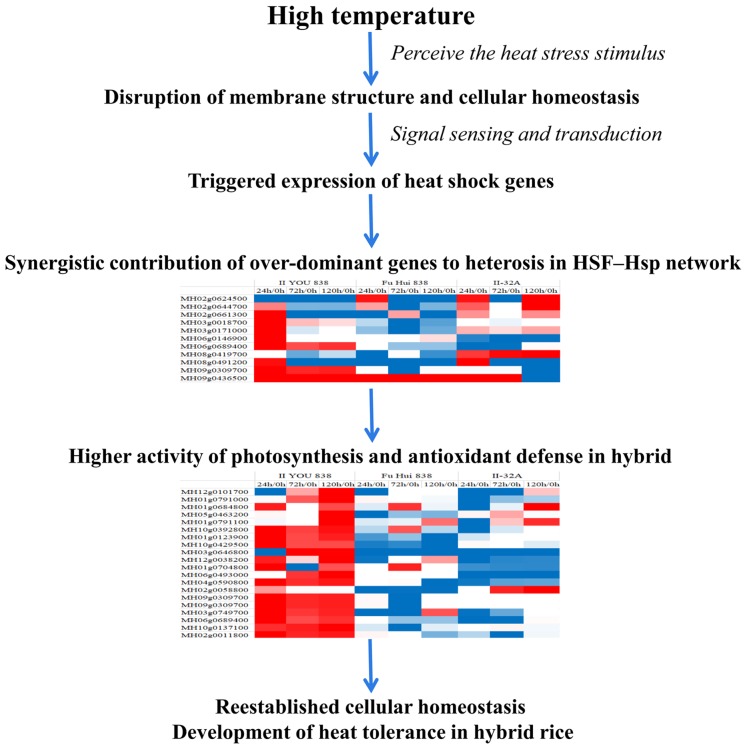
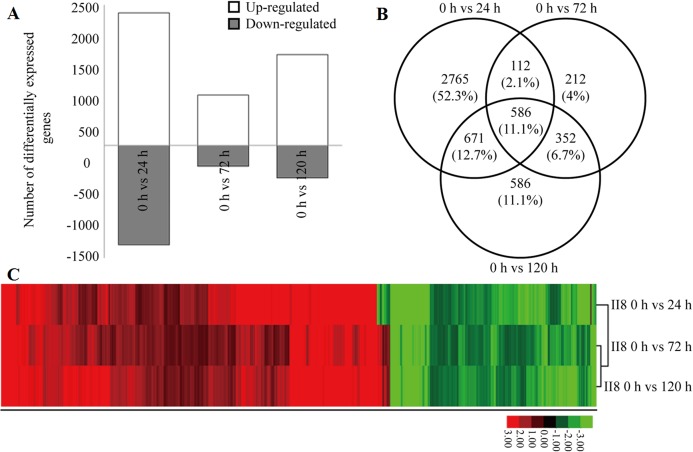
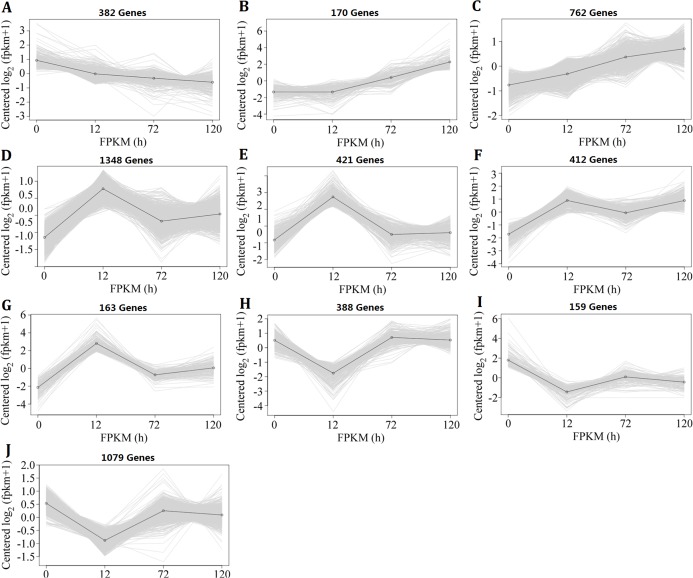
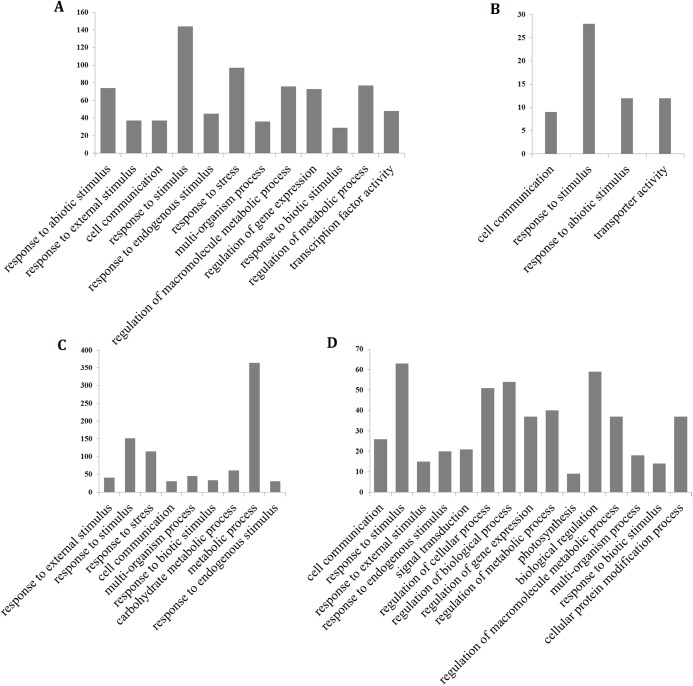
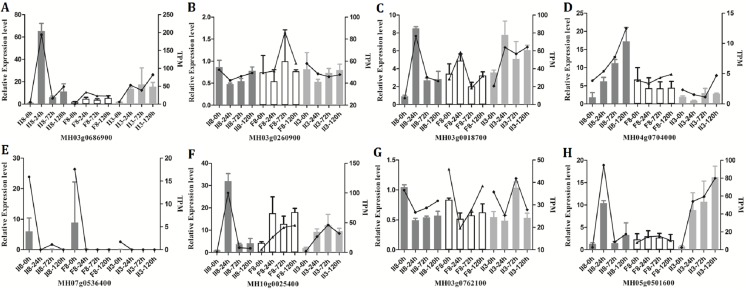
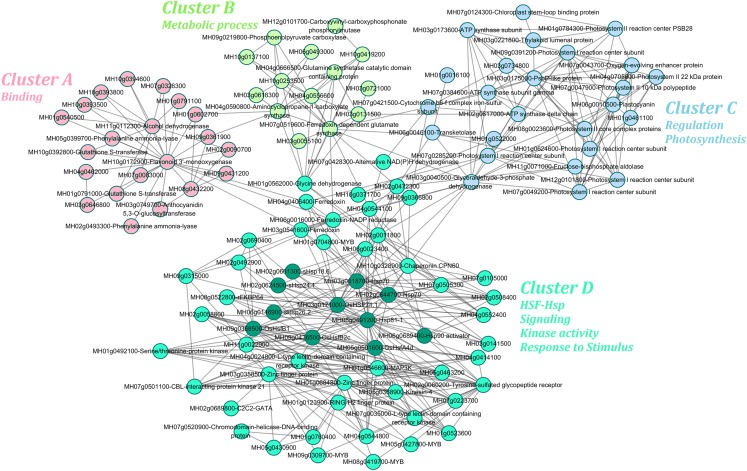
Heat stress is an increasing threat to rice production worldwide. To investigate the mechanisms of heat tolerance in hybrid rice and their contributions to rice heterosis, we compared the transcriptome of the hybrid rice II YOU 838 (II8) with the transcriptomes of its parents Fu Hui 838 (F8) and II-32A (II3) after heat stress at 42 °C for 0 h, 24 h, 72 h and 120 h. We also performed a proteomic analysis in II8 after heat stress at 42 °C for 24 h. The transcriptome data revealed time-dependent gene expression patterns under the heat stress conditions, and the heat stress response of II8 was greatly different from those of its parents. Gene ontology analysis of the differentially expressed genes that were clustered using -means clustering showed that most of the up-regulated genes were involved in responses to stimuli, cell communication, and metabolic and transcription factor activities, whereas the down-regulated genes were enriched in photosynthesis and signal transduction. Moreover, 35 unique differentially abundant proteins, including a basic helix-loop-helix transcription factor (bHLH96), calmodulin-binding transcription activator, heat shock protein (Hsp70), and chaperonin 60 (CPN60), were detected in the proteomic analysis of II8 under heat stress. The co-regulatory analysis revealed novel genes and pathways involved in heat tolerance, namely, ferredoxin-NADP reductase, peroxidases, mitogen-activated protein kinase kinase kinase, and heat shock factor (HSF)-Hsp network. Members of the Hsp and HSF families had over-dominant expression patterns in the hybrid compared with its parents, to help maintain the higher photosynthesis and antioxidant defense systems in the hybrid. Our study suggests that the complex HSF-Hsp regulatory network contribute to the heat tolerance of the hybrid rice.
热胁迫对全球水稻生产构成的威胁日益增加。为了探究杂交水稻耐热性的机制及其对水稻杂种优势的贡献,我们比较了杂交水稻II优838(II8)及其亲本福恢838(F8)和II-32A(II3)在42℃热胁迫0小时、24小时、72小时和120小时后的转录组。我们还对II8在42℃热胁迫24小时后进行了蛋白质组学分析。转录组数据揭示了热胁迫条件下基因表达的时间依赖性模式,并且II8的热胁迫反应与其亲本有很大不同。使用k均值聚类对差异表达基因进行的基因本体分析表明,大多数上调基因参与了对刺激的反应、细胞通讯以及代谢和转录因子活性,而下调基因则富集于光合作用和信号转导。此外,在II8热胁迫的蛋白质组学分析中检测到35种独特的差异丰富蛋白,包括一种碱性螺旋-环-螺旋转录因子(bHLH96)、钙调蛋白结合转录激活因子、热休克蛋白(Hsp70)和伴侣蛋白60(CPN60)。共调控分析揭示了与耐热性相关的新基因和途径,即铁氧还蛋白-NADP还原酶、过氧化物酶、丝裂原活化蛋白激酶激酶激酶和热休克因子(HSF)-Hsp网络。与亲本相比,Hsp和HSF家族成员在杂种中具有超显性表达模式,以帮助维持杂种中较高的光合作用和抗氧化防御系统。我们的研究表明,复杂的HSF-Hsp调控网络有助于杂交水稻的耐热性。