Serpell James A, Kruger Katherine A, Freeman Lisa M, Griffin James A, Ng Zenithson Y
School of Veterinary Medicine, University of Pennsylvania, Philadelphia, PA, United States.
Cummings School of Veterinary Medicine, Tufts University, North Grafton, MA, United States.
Front Vet Sci. 2020 Feb 7;7:35. doi: 10.3389/fvets.2020.00035. eCollection 2020.
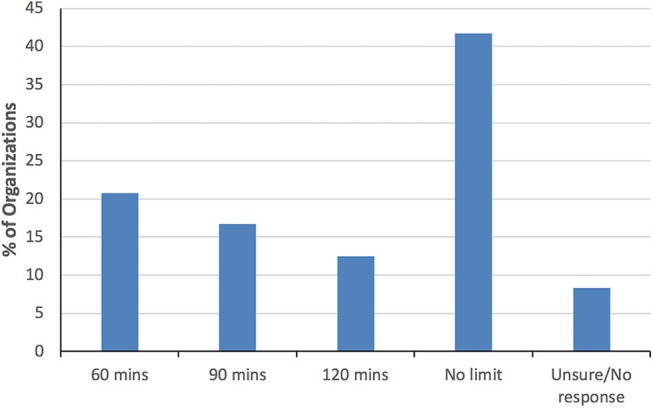
Organizations that deliver animal-assisted interventions (AAIs), as well as those that train, evaluate, and register therapy dogs, have proliferated in recent decades in the United States (U.S.). Each of these organizations has its own policies and procedures for screening, evaluating, and instructing dogs and their owners/handlers, but little is currently known about the range of different practices that exist nationwide. The aim of this project was to survey a representative, national sample of U.S. therapy dog organizations to investigate commonalities and differences in the types of practices in current use and to compare these to recommendations in existing published guidelines. The findings suggest the need for further research, and highlight a number of areas relating to dog welfare, human safety, and infection control in which many organizations were inconsistent in their adherence to existing guidelines. Of particular concern with regard to animal welfare was the finding that approximately half of the organizations surveyed imposed no time limit on the length of visits. Also, given the potential for zoonotic disease transmission, the finding that only a small minority of organizations prohibit the feeding of raw meat diets and treats to visiting dogs is concerning. This information will help to raise awareness among facilities with therapy animal programs and assist in the development of future best practices within the therapy dog industry.
近几十年来,在美国,提供动物辅助干预(AAIs)的组织以及那些训练、评估和注册治疗犬的组织大量涌现。这些组织中的每一个都有自己筛选、评估和指导犬只及其主人/ handlers的政策和程序,但目前对于全国范围内存在的不同做法的范围知之甚少。本项目的目的是对美国治疗犬组织具有代表性的全国样本进行调查,以研究当前使用的做法类型中的共性和差异,并将这些与现有已发表指南中的建议进行比较。研究结果表明需要进一步研究,并突出了许多与犬只福利、人类安全和感染控制相关的领域,在这些领域中,许多组织在遵守现有指南方面并不一致。关于动物福利,特别令人担忧的是,约一半接受调查的组织对访问时长没有设定时间限制。此外,鉴于人畜共患病传播的可能性,只有一小部分组织禁止给来访犬只喂食生肉饮食和零食这一发现令人担忧。这些信息将有助于提高开展治疗动物项目的机构的认识,并协助治疗犬行业制定未来的最佳做法。