National Institute of Infectious Diseases and Vaccinology, National Health Research Institutes , Zhunan, Taiwan.
College of Life Science, National Tsing Hua University , Hsinchu, Taiwan.
Hum Vaccin Immunother. 2020 Sep 1;16(9):2245-2251. doi: 10.1080/21645515.2020.1721223. Epub 2020 Mar 2.
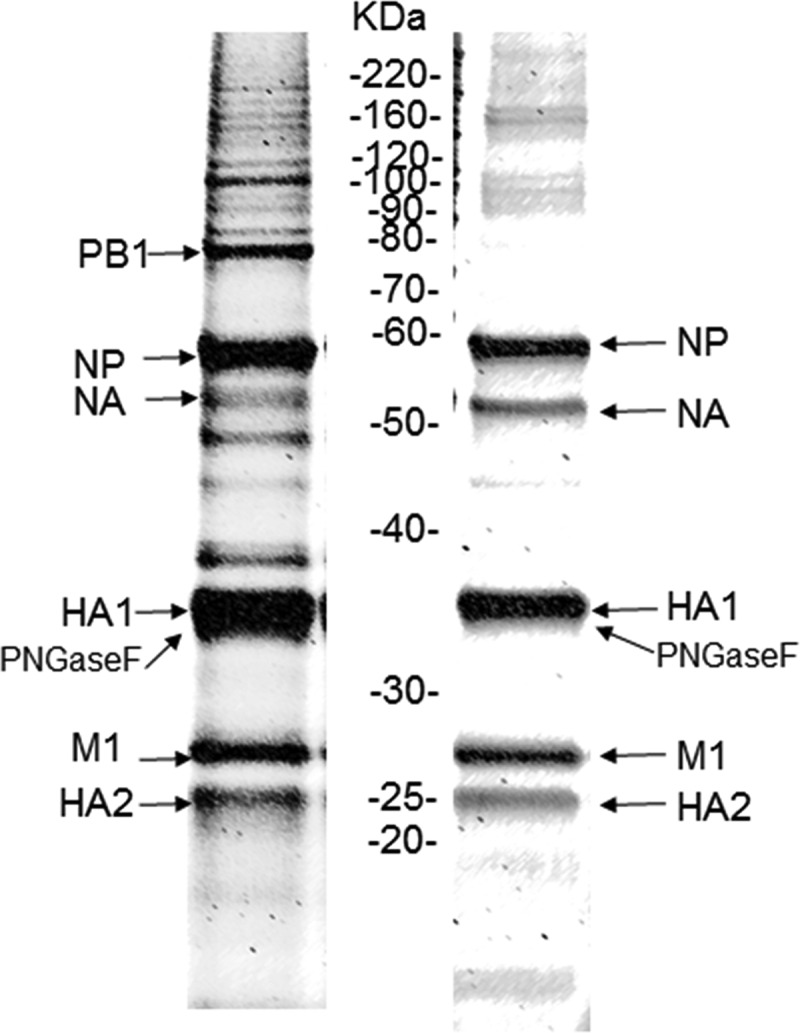
Outbreaks of infection by novel avian influenza virus strains in humans cause public health issues worldwide, and the development of vaccines against such novel strains is the most effective method for the prevention of these virus outbreaks. All types of vaccines must be tested for potency before use; thus, quantitative potency assays are needed for influenza vaccines. The single radial immunodiffusion (SRID) assay is considered the gold standard for quantification of influenza virus antigens, and the SRID reference reagents are essential for the determination of vaccine potency. However, it remains debatable whether reference reagents derived from egg-based vaccine platforms can be used to precisely quantify non-egg-derived vaccines; thus, influenza vaccine production using cell-based platforms has attracted increasing attention. To evaluate the utility of reference reagents derived from a cell-based influenza vaccine platform, we prepared cell-based reference reagents from MDCK cell-grown viruses and compared them with egg-derived reference reagents. A primary liquid standard (PLS) was purified from cell-derived candidate influenza vaccine viruses, and hemagglutinin (HA) antigen content was determined by a densitometric method. The produced PLS could be stored at 4°C for more than 10 months. We also established a simple HA protein purification method for goat antiserum preparation, and the performance of the resulting antiserum was compared to that of standard reagents obtained using different production platforms. The results of this study indicate that these reference reagents can be used for both cell-based and egg-based production platforms and that the differences between these two types of platforms are negligible.
新型禽流感病毒株在人类中的爆发引起了全球公共卫生问题,而针对这些新型病毒株开发疫苗是预防这些病毒爆发的最有效方法。所有类型的疫苗在使用前都必须进行效力测试;因此,流感疫苗需要定量效力测定。单向免疫扩散(SRID)测定被认为是定量流感病毒抗原的金标准,而 SRID 参考试剂是确定疫苗效力的关键。然而,基于鸡蛋的疫苗平台衍生的参考试剂是否可以用于精确量化非鸡蛋衍生疫苗仍然存在争议;因此,基于细胞的平台生产流感疫苗引起了越来越多的关注。为了评估源自细胞培养流感疫苗平台的参考试剂的实用性,我们从 MDCK 细胞培养的病毒中制备了基于细胞的参考试剂,并将其与基于鸡蛋的参考试剂进行了比较。从细胞衍生的候选流感疫苗病毒中纯化了初级液体标准品(PLS),并通过密度测定法测定了血凝素(HA)抗原含量。制备的 PLS 可在 4°C 下储存超过 10 个月。我们还建立了一种简单的 HA 蛋白纯化方法,用于山羊抗血清的制备,并比较了由此产生的抗血清与使用不同生产平台获得的标准试剂的性能。本研究结果表明,这些参考试剂可用于基于细胞和基于鸡蛋的生产平台,并且这两种平台之间的差异可以忽略不计。