Department of Prevention, Rehabilitation and Sports Medicine, School of Medicine, Technical University of Munich, Munich, Germany.
DZHK (German Center for Cardiovascular Research), Partner Site Munich Heart Alliance, Munich, Germany.
Metab Syndr Relat Disord. 2020 May;18(4):176-185. doi: 10.1089/met.2019.0115. Epub 2020 Mar 2.
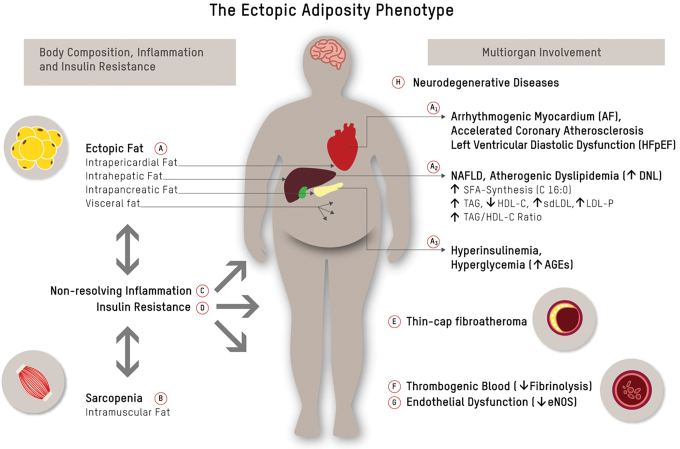
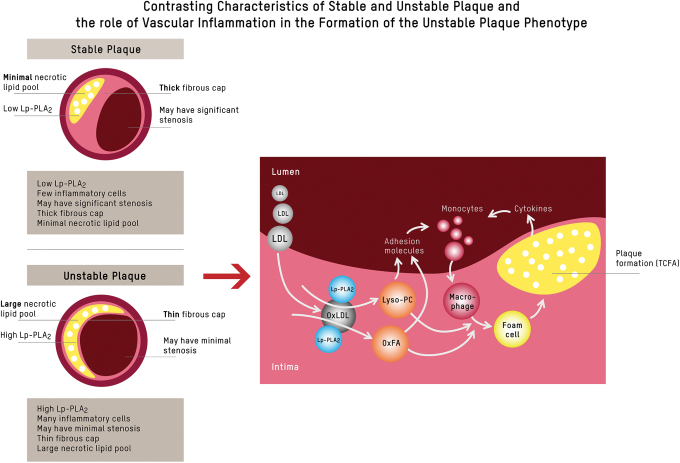
Current algorithms for assessing risk of atherosclerotic cardiovascular disease (ASCVD) and, in particular, the reliance on low-density lipoprotein (LDL) cholesterol in conditions where this measurement is discordant with apoB and LDL-particle concentrations fail to identify a sizeable part of the population at high risk for adverse cardiovascular events. This results in missed opportunities for ASCVD prevention, most notably in those with metabolic syndrome, prediabetes, and diabetes. There is substantial evidence that accumulation of ectopic fat and associated metabolic traits are markers for and pathogenic components of high-risk atherosclerosis. Conceptually, the subset of advanced lesions in high-risk atherosclerosis that triggers vascular complications is closely related to a set of coordinated high-risk traits clustering around a distinct metabolic phenotype. A key feature of this phenotype is accumulation of ectopic fat, which, coupled with age-related muscle loss, creates a milieu conducive for the development of ASCVD: atherogenic dyslipidemia, nonresolving inflammation, endothelial dysfunction, hyperinsulinemia, and impaired fibrinolysis. Sustained vascular inflammation, a hallmark of high-risk atherosclerosis, impairs plaque stabilization in this phenotype. This review describes how metabolic and inflammatory processes that are promoted in large measure by ectopic adiposity, as opposed to subcutaneous adipose tissue, relate to the pathogenesis of high-risk atherosclerosis. Clinical biomarkers indicative of these processes provide incremental information to standard risk factor algorithms and advanced lipid testing identifies atherogenic lipoprotein patterns that are below the discrimination level of standard lipid testing. This has the potential to enable improved identification of high-risk patients who are candidates for therapeutic interventions aimed at prevention of ASCVD.
目前评估动脉粥样硬化性心血管疾病 (ASCVD)风险的算法,特别是在 LDL 胆固醇测量结果与载脂蛋白 B 和 LDL 颗粒浓度不一致的情况下,无法识别出存在心血管不良事件高风险的相当一部分人群。这导致 ASCVD 预防的机会错失,特别是在代谢综合征、糖尿病前期和糖尿病患者中。大量证据表明,异位脂肪的积累和相关的代谢特征是高危动脉粥样硬化的标志物和发病成分。从概念上讲,引发血管并发症的高危动脉粥样硬化的高级病变亚组与围绕独特代谢表型聚类的一组协调的高危特征密切相关。这种表型的一个关键特征是异位脂肪的积累,它与年龄相关的肌肉损失相结合,为 ASCVD 的发展创造了有利的环境:致动脉粥样硬化的血脂异常、持续存在的炎症、内皮功能障碍、高胰岛素血症和纤溶受损。持续的血管炎症是高危动脉粥样硬化的一个标志,它损害了这种表型中斑块的稳定性。这篇综述描述了在很大程度上由异位脂肪(而不是皮下脂肪组织)促进的代谢和炎症过程如何与高危动脉粥样硬化的发病机制相关。这些过程的临床生物标志物提供了标准风险因素算法的增量信息,而先进的脂质检测则识别出低于标准脂质检测区分水平的致动脉粥样硬化脂蛋白模式。这有可能提高识别高危患者的能力,这些患者是针对 ASCVD 预防的治疗干预的候选者。