Nitta Suguru, Kusakari Yuto, Yamada Yoko, Kubo Takeaki, Neo Sakurako, Igarashi Hirotaka, Hisasue Masaharu
Laboratory of Small Animal Internal Medicine, School of Veterinary Medicine, Azabu University, Sagamihara City, Kanagawa, Japan.
Celltrust Animal Therapeutics Co., Ltd, Yokohama City, Kanagawa, Japan.
Regen Ther. 2020 Feb 20;14:165-176. doi: 10.1016/j.reth.2020.01.003. eCollection 2020 Jun.
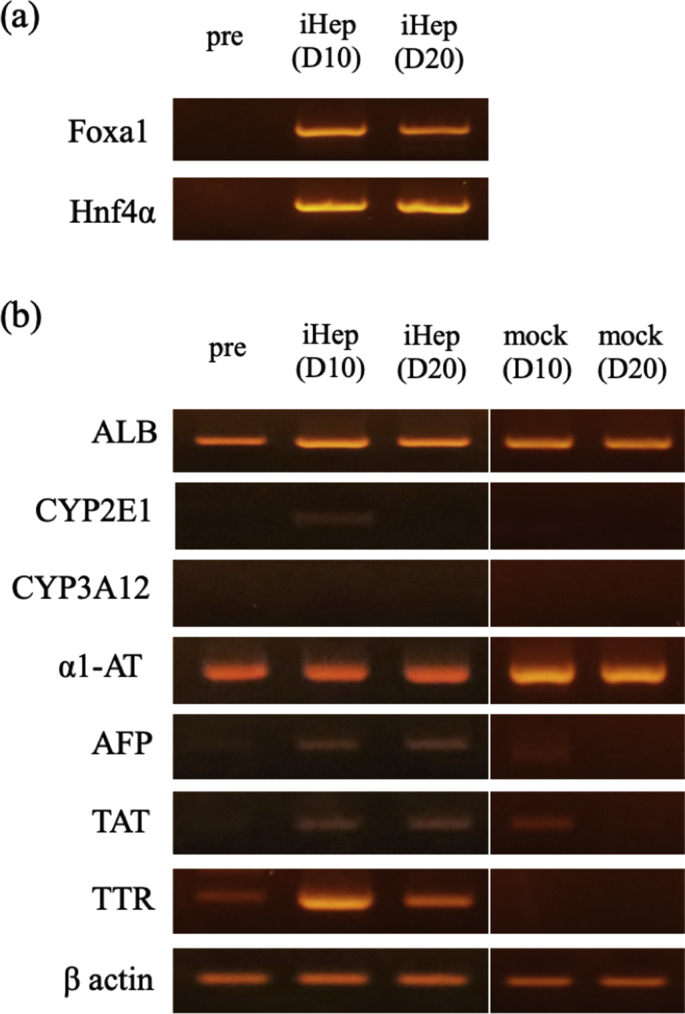
Hepatocytes, which account for the majority of liver tissue, are derived from the endoderm and become hepatocytes via differentiation of hepatic progenitor cells. Induced hepatocyte-like (iHep) cells and artificial liver tissues are expected to become useful, efficient therapies for severe and refractory liver diseases and to contribute to drug discovery research. The establishment of iHep cell lines are needed to carry out liver transplants and assess liver toxicity in the rising number of dogs affected by liver disease. Recently, direct conversion of non-hepatocyte cells into iHep cells was achieved by transfecting mouse adult fibroblasts with the Forkhead box protein A1 () and hepatocyte nuclear factor 4 homeobox alpha () genes. Here, we applied this conversion process for the differentiation of canine bone marrow stem cells (cBMSCs) into hepatocyte-like cells.
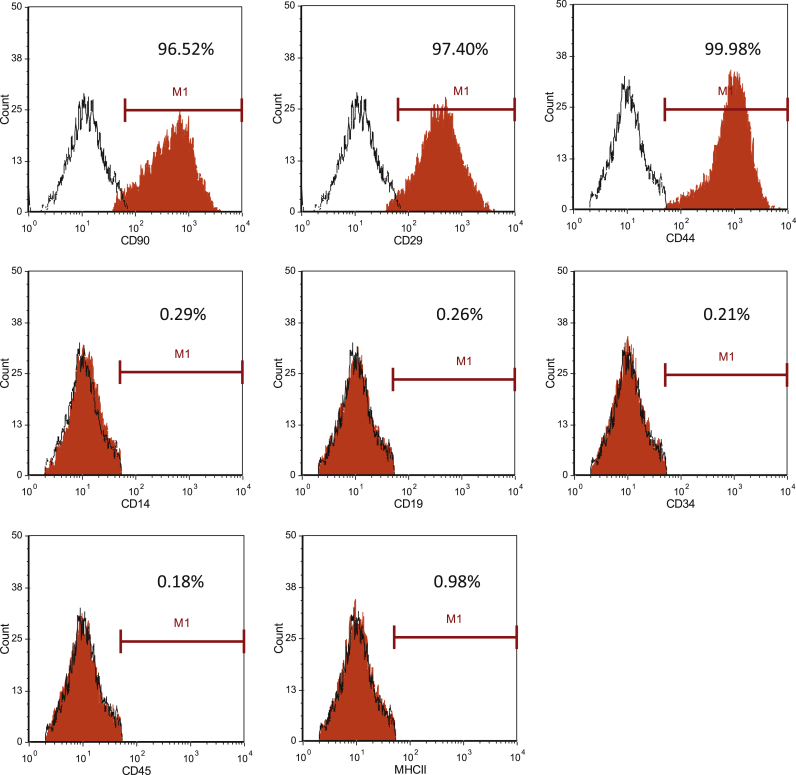
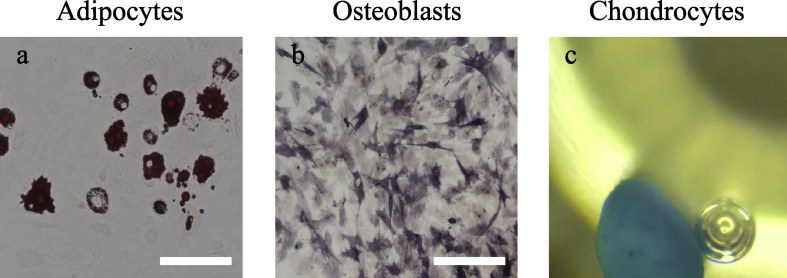
Bone marrow specimens were collected from four healthy Beagle dogs and used to culture cBMSCs in Dulbecco's Modified Eagle's Medium (DMEM). The cBMSCs displayed the following characteristic features: plastic adherence; differentiation into adipocytes, osteoblasts and chondrocytes; and a cell surface antigen profile of CD29 (+), CD44 (+), CD90 (+), CD45 (-), CD34 (-) and CD14 (-), or CD11b (-) and CD79a (-), or CD19 (-) and HLA class II(-). The cBMSCs were seeded in a collagen I-coated plate and cultured in DMEM with 10% fetal bovine serum and transfected with retroviruses expressing and the following day. Canine iHep cells were differentiated from cBMSCs in culture on day 10, and were analyzed for morphology, RNA expression, immunocytochemistry, urea production, and low-density lipoprotein (LDL) metabolism.
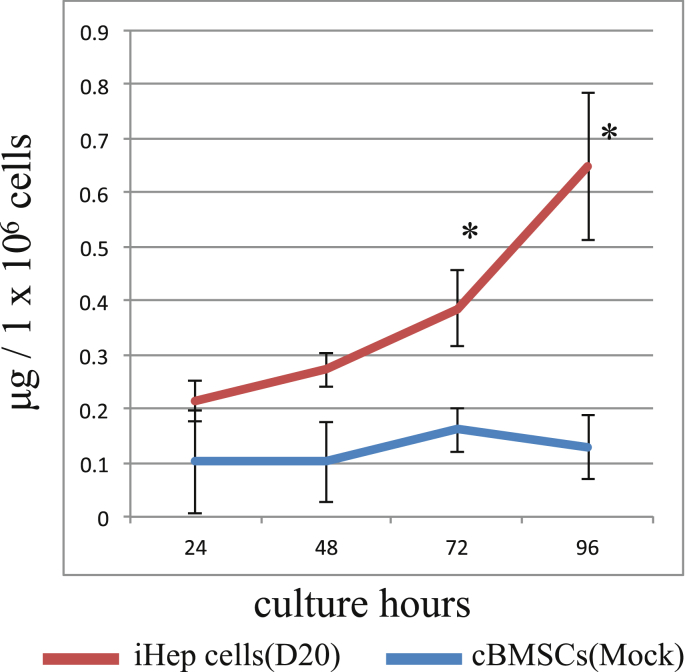
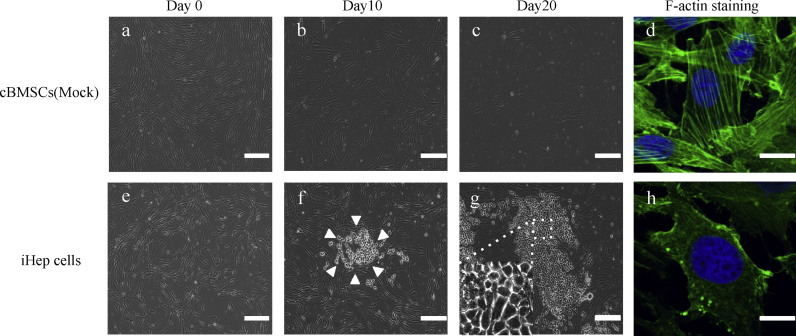
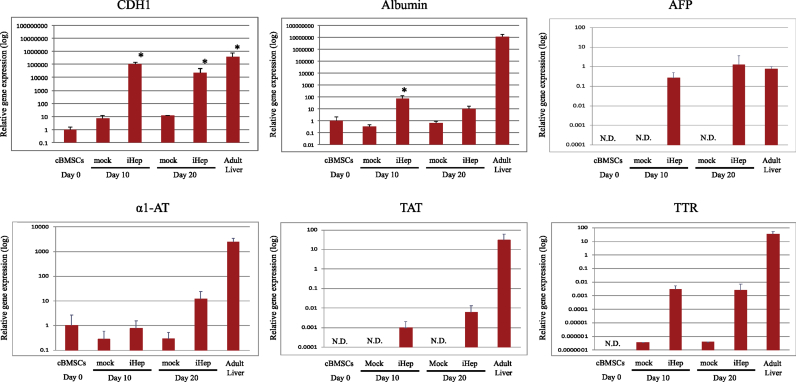
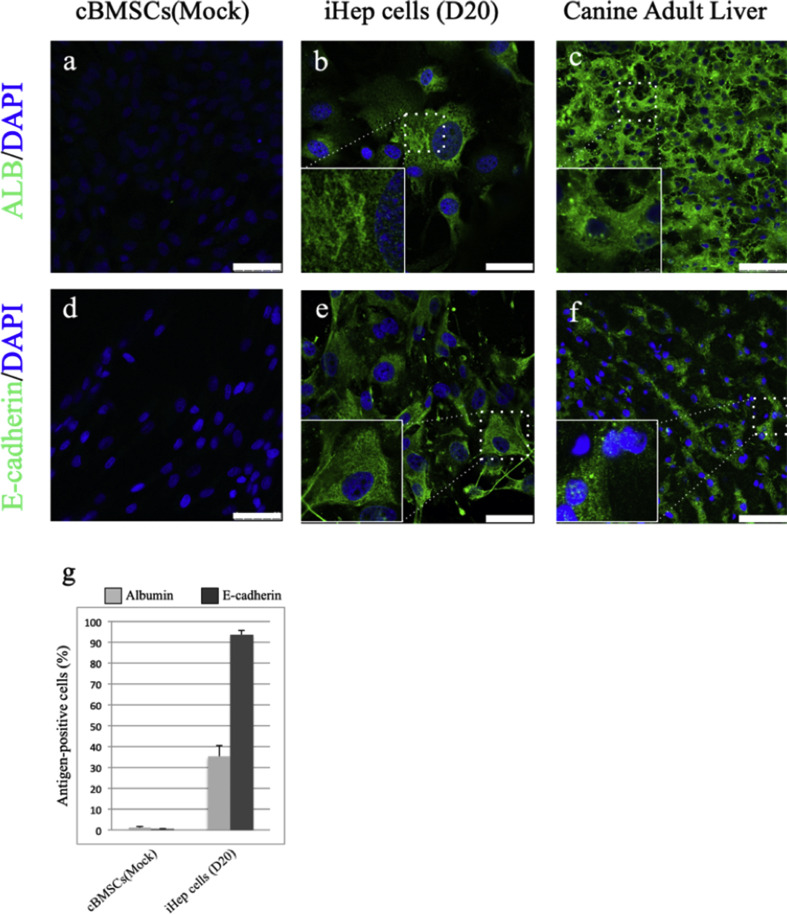
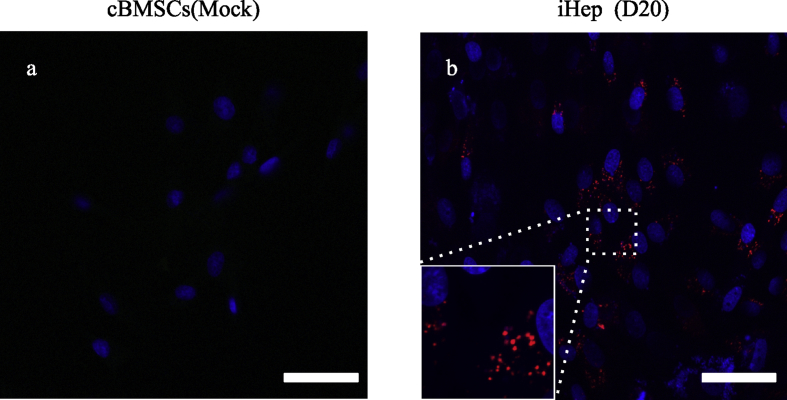
The cBMSCs expressed CD29 (98.06 ± 1.14%), CD44 (99.59 ± 0.27%) and CD90 (92.78 ± 4.89%), but did not express CD14 (0.47 ± 0.29%), CD19 (0.44 ± 0.39%), CD34 (0.33 ± 0.25%), CD45 (0.46 ± 0.34%) or MHC class II (0.54 ± 0.40%). The iHep cells exhibited morphology that included circular to equilateral circular shapes, and the formation of colonies that adhered to each other 10 days after and transfection. Quantitative RT-PCR analysis showed that the expression levels of the genes encoding albumin () and cadherin () in iHep cells on day 10 were increased approximately 100- and 10,000-fold, respectively, compared with cBMSCs. Corresponding protein expression of ALB and epithelial-CDH was confirmed by immunocytochemistry. Important hepatic functions, including LDL metabolic ability and urea production, were increased in iHep cells on day 10.
We successfully induced cBMSCs to differentiate into functional iHep cells. To our knowledge, this is the first report of canine liver tissue differentiation using and gene transfection. Canine iHep cells are expected to provide insights for the construction of liver models for drug discovery research and may serve as potential therapeutics for canine liver disease.
肝细胞占肝脏组织的大部分,起源于内胚层,通过肝祖细胞的分化成为肝细胞。诱导性肝样(iHep)细胞和人工肝组织有望成为治疗严重和难治性肝病的有效疗法,并有助于药物研发研究。建立iHep细胞系对于进行肝移植以及评估受肝病影响的犬只数量不断增加情况下的肝毒性是必要的。最近,通过用叉头框蛋白A1()和肝细胞核因子4同源框α()基因转染小鼠成纤维细胞,实现了将非肝细胞直接转化为iHep细胞。在此,我们将这种转化过程应用于犬骨髓干细胞(cBMSCs)向肝样细胞的分化。
从四只健康的比格犬采集骨髓标本,用于在杜尔贝科改良伊格尔培养基(DMEM)中培养cBMSCs。cBMSCs具有以下特征:贴壁生长;可分化为脂肪细胞、成骨细胞和软骨细胞;细胞表面抗原谱为CD29(+)、CD44(+)、CD90(+)、CD45(-)、CD34(-)、CD14(-),或CD11b(-)、CD79a(-),或CD19(-)、HLA II类(-)。将cBMSCs接种于I型胶原包被的培养板中,在含10%胎牛血清的DMEM中培养,并于次日用表达和的逆转录病毒转染。在第10天,犬iHep细胞从培养的cBMSCs中分化出来,并对其形态、RNA表达、免疫细胞化学、尿素生成和低密度脂蛋白(LDL)代谢进行分析。
cBMSCs表达CD29(98.06 ± 1.14%)、CD44(99.59 ± 0.27%)和CD90(92.78 ± 4.89%),但不表达CD14(0.47 ± 0.29%)、CD19(0.44 ± 0.39%)、CD34(0.33 ± 0.25%)、CD45(0.46 ± 0.34%)或MHC II类(0.54 ± 0.40%)。iHep细胞呈现出圆形至等边圆形的形态,并在转染和后10天形成相互粘附的集落。定量逆转录聚合酶链反应(RT-PCR)分析表明,与cBMSCs相比,第10天iHep细胞中编码白蛋白()和钙粘蛋白()的基因表达水平分别增加了约100倍和10000倍。免疫细胞化学证实了ALB和上皮钙粘蛋白的相应蛋白表达。第10天iHep细胞中包括LDL代谢能力和尿素生成在内的重要肝功能增强。
我们成功诱导cBMSCs分化为功能性iHep细胞。据我们所知,这是首次关于使用和基因转染进行犬肝组织分化的报道。犬iHep细胞有望为药物研发研究的肝模型构建提供见解,并可能成为犬肝病的潜在治疗方法。