Department of Internal Medicine, Catholic Kwandong University College of Medicine, International St. Mary's Hospital, Incheon, Republic of Korea.
Department Medicine, Catholic Kwandong University College of Medicine, Gangneung, Republic of Korea.
Stem Cell Res Ther. 2020 Aug 3;11(1):332. doi: 10.1186/s13287-020-01745-0.
Cell therapy using hepatocytes derived from stem cells has been regarded as a promising alternate to liver transplantation. However, the heterogeneity of these hepatocytes makes them unsuitable for therapeutic use. To overcome this limitation, we generated homogenous hepatocyte like induced hepatocyte-like (iHep) cells.
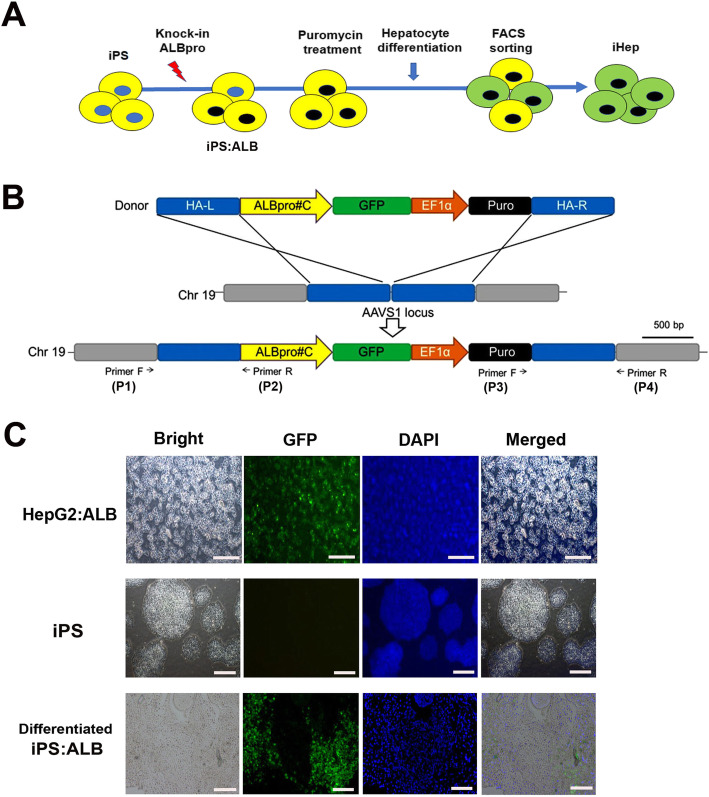
iHep cells were generated from induced pluripotent stem cells (iPSCs) integrated with the albumin (ALB) reporter gene. The therapeutic properties of these iHep cells were investigated after transplantation in fibrotic liver tissues of a mouse model.
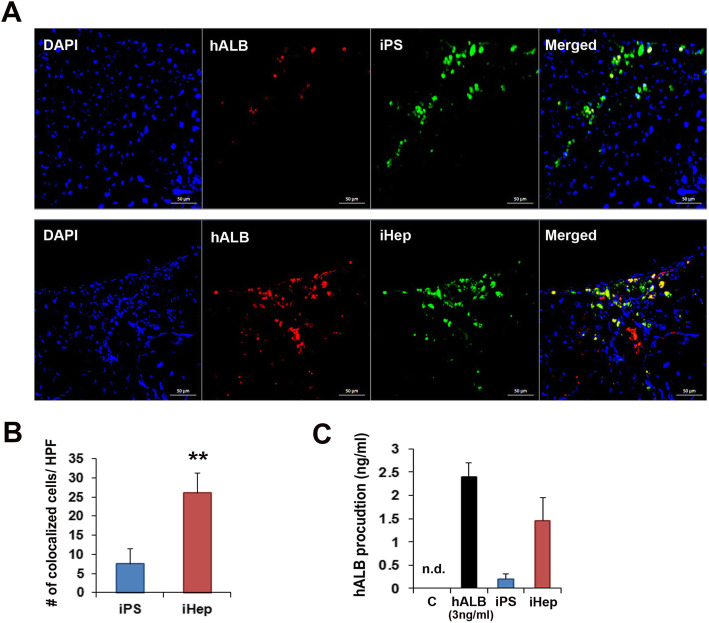
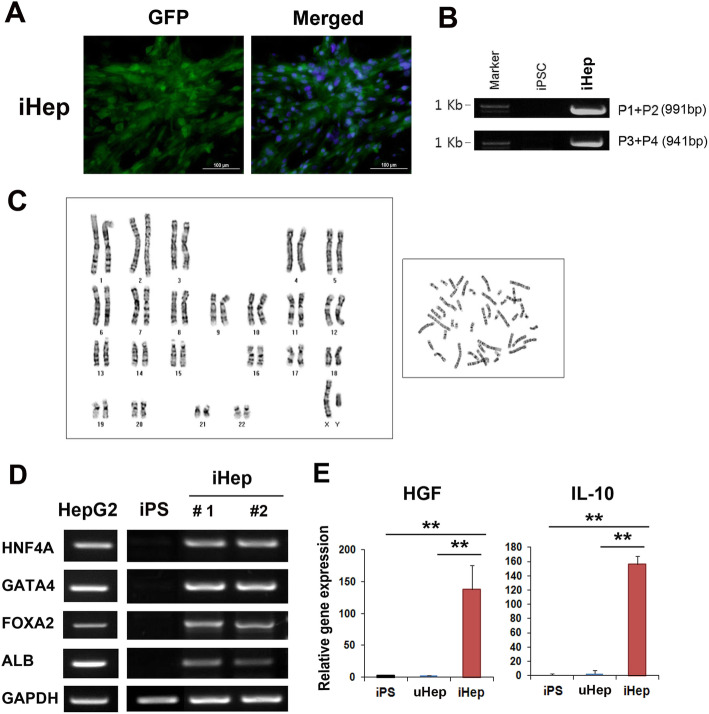
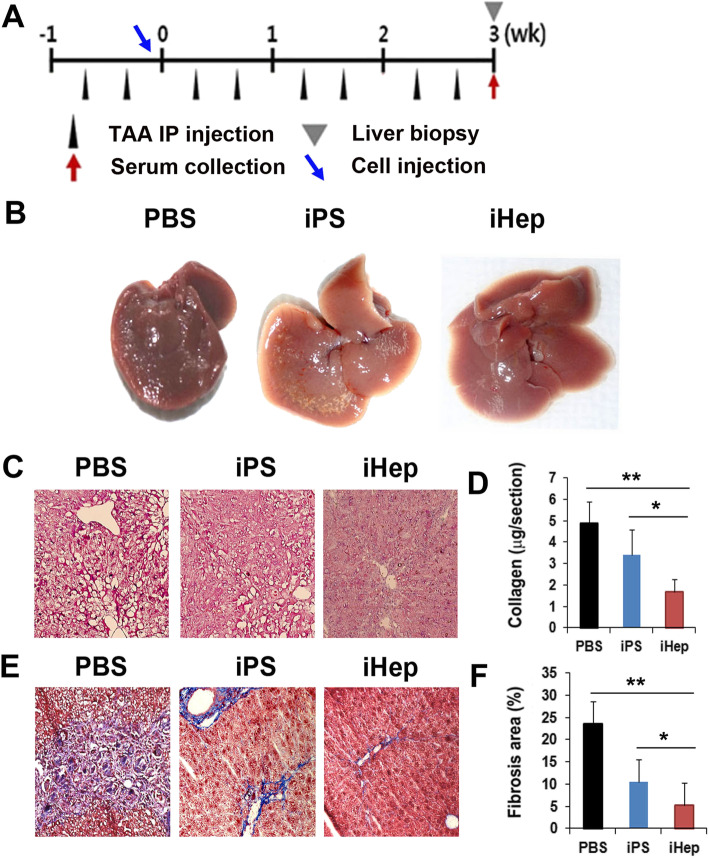
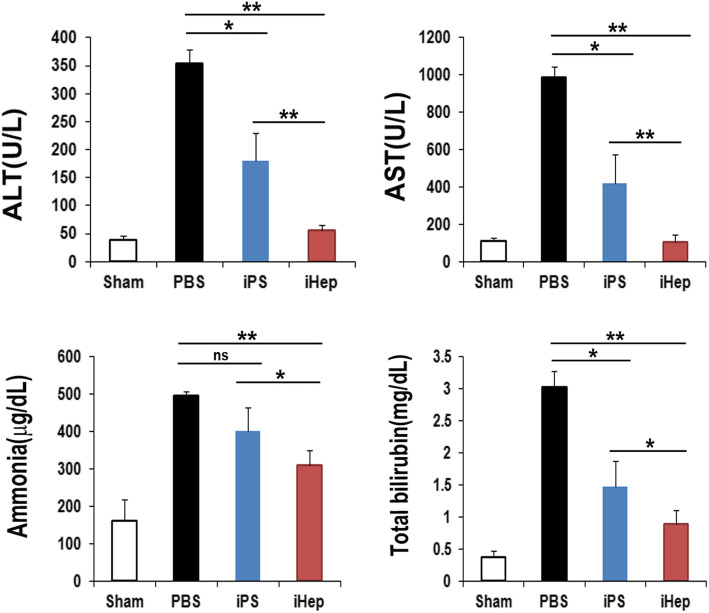
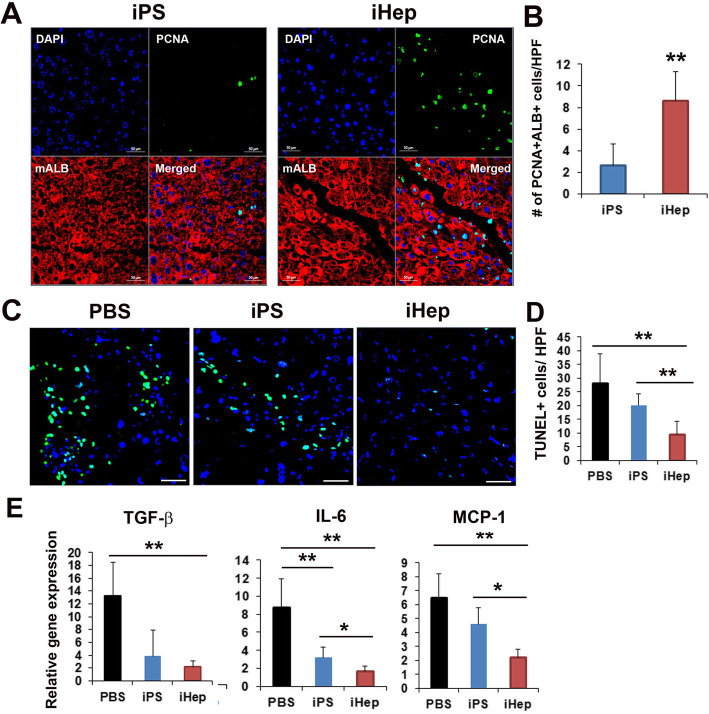
The iHep cells expressed hepatocyte specific genes and proteins, and exhibited high levels of hepatocyte growth factor (HGF) and interleukin (IL)-10 expressions. Transplantation of iHep cells significantly decreased thioacetamide (TAA)-induced liver fibrosis, apoptotic cells in the liver, and ameliorated abnormal liver function. Liver tissues engrafted with iHep cells exhibited decreased expression of pro-inflammatory factors such as transforming growth factor (TGF)-β, IL-6, and monocyte chemo attractant protein (MCP)-1. Furthermore, an increased number of proliferating hepatocytes and human albumin-expressing iHep cells were detected in mice liver.
This study has investigated and proven the liver regeneration potential of genome-edited iHep cells and promises to be a strong foundation for further studies exploring cell therapy as an alternative therapeutic option for the treatment of liver fibrosis.
利用干细胞衍生的肝细胞进行细胞治疗已被视为肝移植的一种有前途的替代方法。然而,这些肝细胞的异质性使得它们不适合治疗用途。为了克服这一限制,我们生成了同质的肝样诱导肝样细胞(iHep 细胞)。
iHep 细胞是从整合了白蛋白(ALB)报告基因的诱导多能干细胞(iPSCs)中生成的。在纤维化肝组织的小鼠模型中,研究了这些 iHep 细胞移植后的治疗特性。
iHep 细胞表达了肝细胞特异性基因和蛋白质,并表现出高水平的肝细胞生长因子(HGF)和白细胞介素(IL)-10 表达。iHep 细胞的移植显著降低了硫代乙酰胺(TAA)诱导的肝纤维化、肝内凋亡细胞,并改善了异常肝功能。移植了 iHep 细胞的肝组织中促炎因子如转化生长因子(TGF)-β、IL-6 和单核细胞趋化蛋白(MCP)-1 的表达降低。此外,在小鼠肝脏中检测到更多增殖的肝细胞和表达人白蛋白的 iHep 细胞。
本研究研究并证明了基因组编辑的 iHep 细胞的肝脏再生潜力,为进一步研究细胞治疗作为肝纤维化治疗的替代治疗选择提供了坚实的基础。