Department of Medicine, Division of Hematology and Oncology, Vanderbilt University Medical Center, Nashville, TN, USA.
Oncogene. 2020 Apr;39(18):3611-3619. doi: 10.1038/s41388-020-1239-y. Epub 2020 Mar 3.
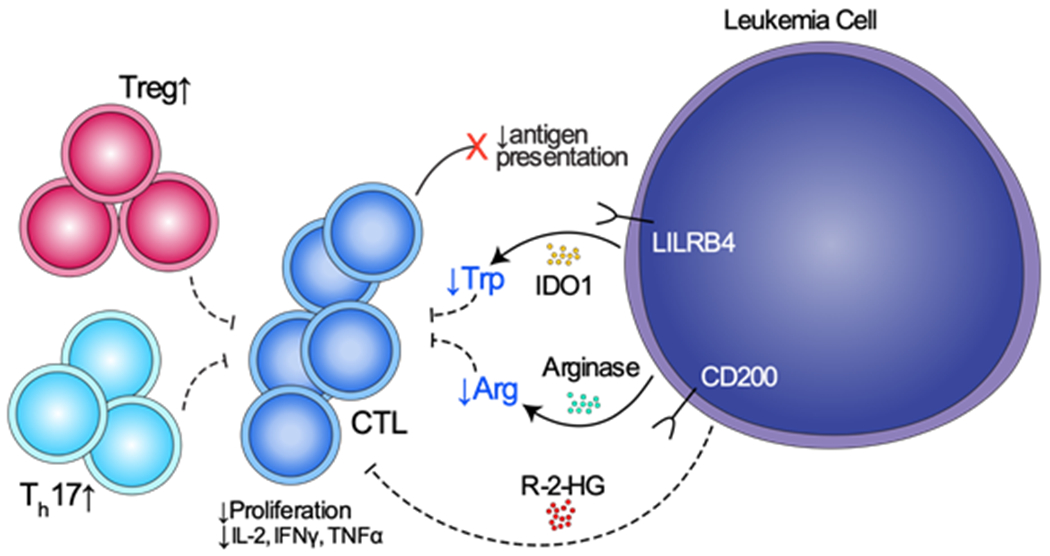
Acute myeloid leukemia (AML) is a systemic, heterogeneous hematologic malignancy with poor overall survival. While some malignancies have seen improvements in clinical outcomes with immunotherapy, success of these agents in AML remains elusive. Despite limited progress, stem cell transplantation and donor lymphocyte infusions show that modulation of the immune system can improve overall survival of AML patients. Understanding the causes of immune evasion and disease progression will identify potential immune-mediated targets in AML. This review explores immunosuppressive mechanisms that alter T-cell-mediated immunity in AML.
急性髓系白血病(AML)是一种全身性、异质性的血液系统恶性肿瘤,总体生存率较差。虽然某些恶性肿瘤的免疫治疗在临床结局方面有所改善,但这些药物在 AML 中的疗效仍难以捉摸。尽管进展有限,但干细胞移植和供者淋巴细胞输注表明,免疫系统的调节可以改善 AML 患者的总体生存率。了解免疫逃逸和疾病进展的原因将确定 AML 中潜在的免疫介导靶点。本综述探讨了改变 AML 中 T 细胞介导免疫的免疫抑制机制。