Kalliola Maria, Jakobson Liina, Davidsson Pär, Pennanen Ville, Waszczak Cezary, Yarmolinsky Dmitry, Zamora Olena, Palva E Tapio, Kariola Tarja, Kollist Hannes, Brosché Mikael
Faculty of Biological and Environmental Sciences Viikki Plant Science Centre University of Helsinki Helsinki Finland.
Institute of Technology University of Tartu Tartu Estonia.
Plant Direct. 2020 Feb 28;4(2):e00206. doi: 10.1002/pld3.206. eCollection 2020 Feb.
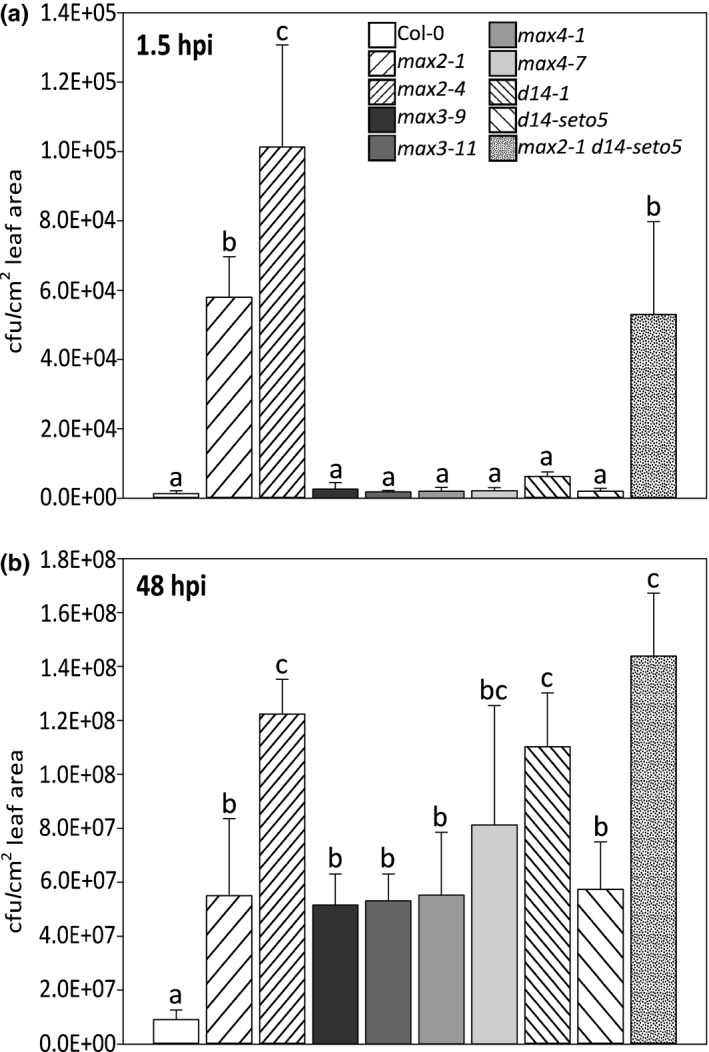
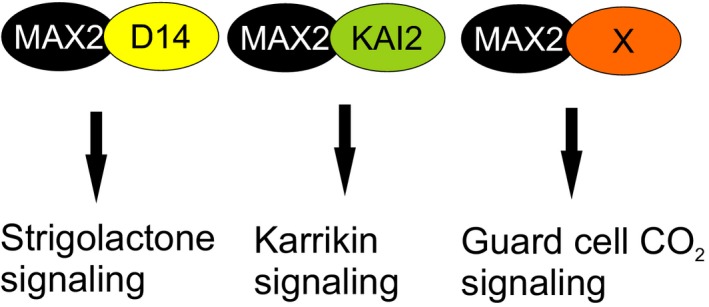
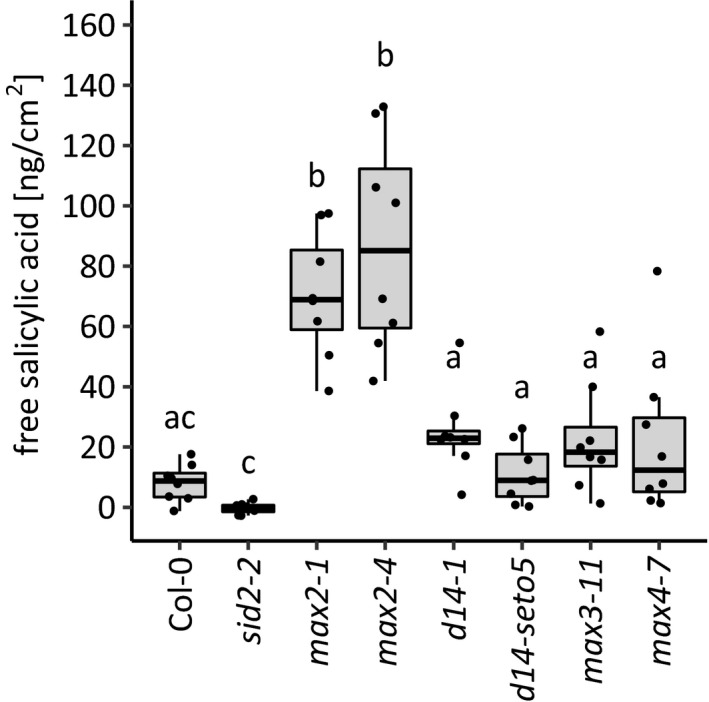
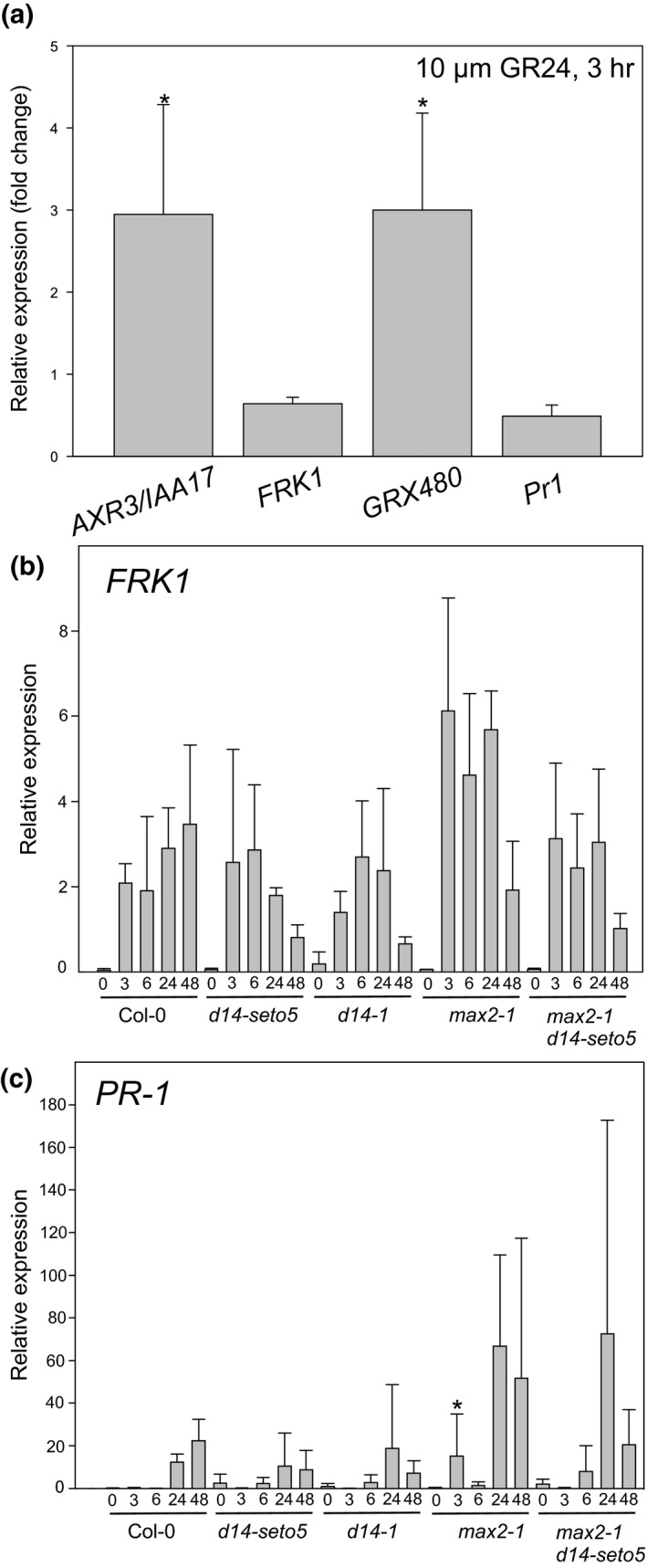
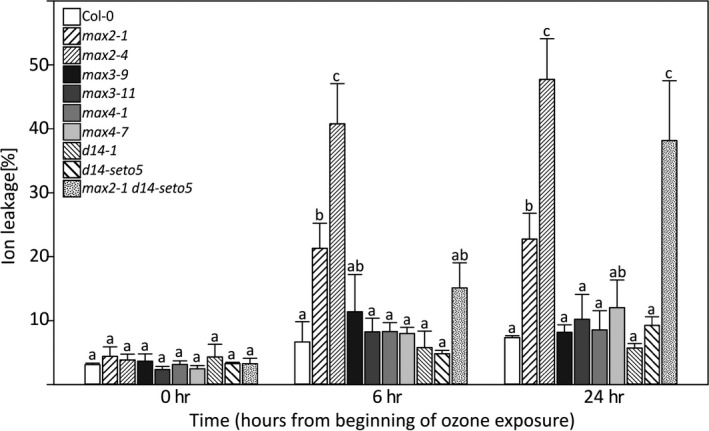
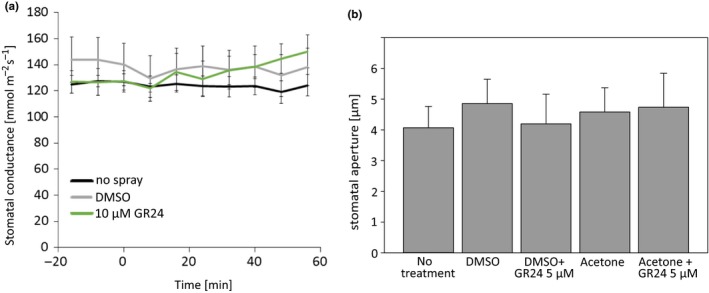
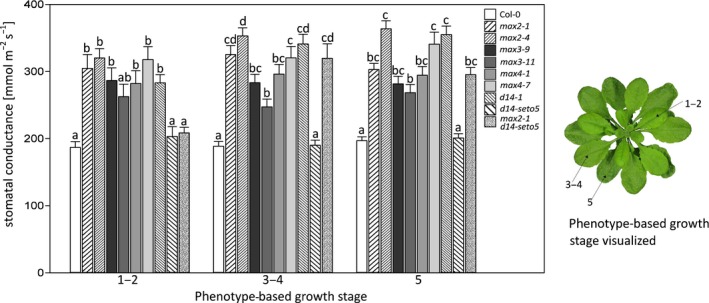
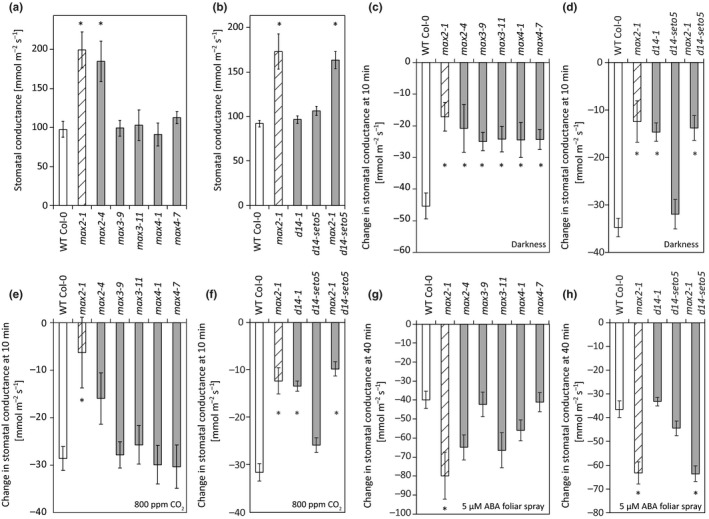
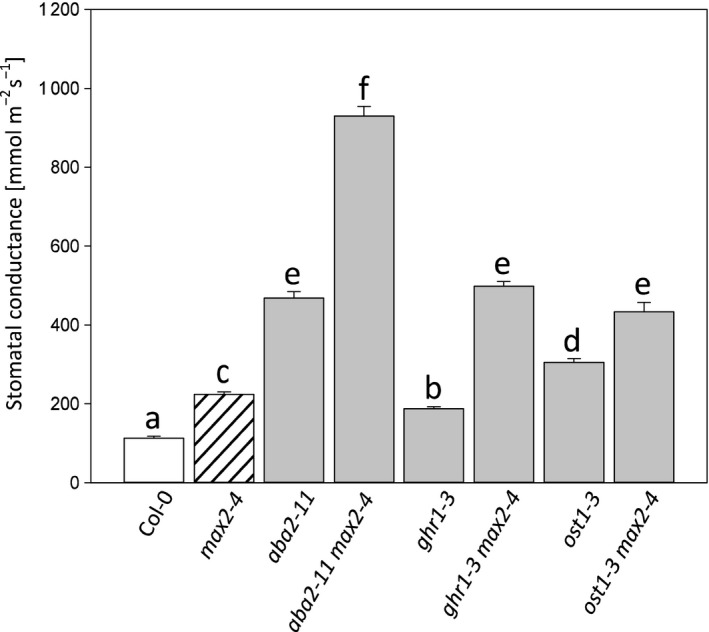
Strigolactones are a group of phytohormones that control developmental processes including shoot branching and various plant-environment interactions in plants. We previously showed that the strigolactone perception mutant has increased susceptibility to plant pathogenic bacteria. Here we show that both strigolactone biosynthesis ( and ) and perception mutants ( and ) are significantly more sensitive to DC3000. Moreover, in response to infection, high levels of SA accumulated in and this mutant was ozone sensitive. Further analysis of gene expression revealed no major role for strigolactone in regulation of defense gene expression. In contrast, guard cell function was clearly impaired in and depending on the assay used, also in , and mutants. We analyzed stomatal responses to stimuli that cause stomatal closure. While the response to abscisic acid (ABA) was not impaired in any of the mutants, the response to darkness and high CO was impaired in and mutants, and to CO also in strigolactone synthesis (, ) mutants. To position the role of MAX2 in the guard cell signaling network, was crossed with mutants defective in ABA biosynthesis or signaling. This revealed that MAX2 acts in a signaling pathway that functions in parallel to the guard cell ABA signaling pathway. We propose that the impaired defense responses of are related to higher stomatal conductance that allows increased entry of bacteria or air pollutants like ozone. Furthermore, as MAX2 appears to act in a specific branch of guard cell signaling (related to CO signaling), this protein could be one of the components that allow guard cells to distinguish between different environmental conditions.
独脚金内酯是一类植物激素,可控制植物的发育过程,包括枝条分枝以及植物与环境之间的各种相互作用。我们之前发现,独脚金内酯感知突变体对植物病原菌的易感性增加。在此我们表明,独脚金内酯生物合成突变体( 和 )以及感知突变体( 和 )对丁香假单胞菌番茄致病变种DC3000均更为敏感。此外,在应对DC3000感染时, 中积累了高水平的水杨酸(SA),且该突变体对臭氧敏感。对基因表达的进一步分析表明,独脚金内酯在防御基因表达调控中没有主要作用。相反, 在保卫细胞功能方面明显受损,并且根据所使用的检测方法, 、 和 突变体也存在此问题。我们分析了气孔对导致气孔关闭的刺激的反应。虽然所有突变体对脱落酸(ABA)的反应均未受损,但 和 突变体对黑暗和高浓度二氧化碳的反应受损,独脚金内酯合成突变体( 、 )对二氧化碳的反应也受损。为了确定MAX2在保卫细胞信号网络中的作用,将 与ABA生物合成或信号传导缺陷的突变体进行杂交。结果表明,MAX2在一条与保卫细胞ABA信号通路平行发挥作用的信号通路中起作用。我们认为, 防御反应受损与较高的气孔导度有关,较高的气孔导度会使细菌或臭氧等空气污染物更容易进入。此外,由于MAX2似乎在保卫细胞信号传导的一个特定分支(与二氧化碳信号传导有关)中起作用,因此该蛋白可能是使保卫细胞能够区分不同环境条件的成分之一。