Appignani Marianna, Sciartilli Adolfo, Caputo Marcello, Di Girolamo Enrico
Intensive Cardiac Care Unit, Heart Department, "SS. Annunziata" Hospital, Via Dei Vestini, 66100 Chieti, Italy.
Arrhythmology Unit, Heart Department, "SS. Annunziata" Hospital, Via Dei Vestini, 66100 Chieti, Italy.
Eur Heart J Case Rep. 2019 Dec 23;4(1):1-5. doi: 10.1093/ehjcr/ytz235. eCollection 2020 Feb.
Patients with low levels of antithrombin III (AT III) are at an increased risk of developing arteriovenous thromboembolic disease.
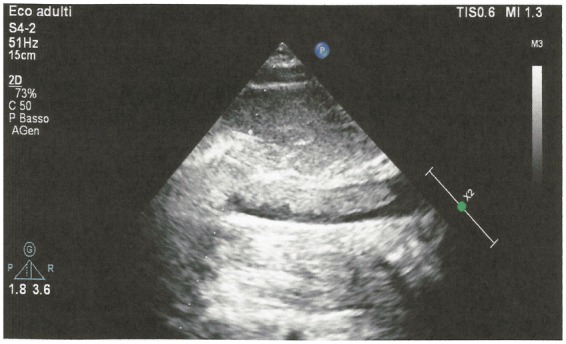
We report a case of a 28-year-old woman who presented with a 1-week history of spontaneous right calf pain and swelling. A heterozygous AT III deficiency, phenotypically expressed as deep vein thrombosis, was reported in the patient's mother and sister. Blood workup revealed residual AT III activity at 58% with normal protein C and protein S levels. Computed tomographic angiography (CTA) revealed subsegmental bilateral pulmonary embolism (PE) and deep vein thrombosis in the right leg extending into the inferior vena cava up to the confluence of the left renal vein. Placement of an inferior vena cava filter was not considered. Given the patient's haemodynamic stability, anticoagulant therapy with 15 mg of rivaroxaban twice a day was initiated instead. Echocardiography after 10 days of treatment revealed complete resolution of the thrombus located in the inferior vena cava, while CTA revealed complete resolution of the PE.
Patients with AT III deficiency are likely to be heparin-resistant and will require higher heparin doses or the administration of AT III replacement therapy for the treatment of thrombosis, both of which are associated with an increased risk for haemorrhagic complications. Direct factor Xa inhibition by rivaroxaban provided an alternative mechanism for anticoagulation, which was found to be particularly useful in this patient with familial AT III deficiency, deep vein thrombosis, and PE.
抗凝血酶III(AT III)水平较低的患者发生动静脉血栓栓塞性疾病的风险增加。
我们报告一例28岁女性患者,其右小腿自发起痛和肿胀1周。患者的母亲和姐姐有杂合子AT III缺乏症,表型表现为深静脉血栓形成。血液检查显示残余AT III活性为58%,蛋白C和蛋白S水平正常。计算机断层血管造影(CTA)显示双侧亚段肺栓塞(PE)以及右下肢深静脉血栓形成并延伸至下腔静脉直至左肾静脉汇合处。未考虑放置下腔静脉滤器。鉴于患者血流动力学稳定,改为开始每天两次服用15毫克利伐沙班进行抗凝治疗。治疗10天后的超声心动图显示下腔静脉内血栓完全溶解,而CTA显示PE完全溶解。
AT III缺乏症患者可能对肝素耐药,治疗血栓形成需要更高剂量的肝素或给予AT III替代疗法,而这两种方法都与出血并发症风险增加相关。利伐沙班直接抑制因子Xa提供了一种替代抗凝机制,发现其对该患有家族性AT III缺乏症、深静脉血栓形成和PE的患者特别有用。