Lehrstuhl für Technische Mikrobiologie, Technische Universität München, Gregor-Mendel-Straße 4, 85354, Freising, Germany.
Antonie Van Leeuwenhoek. 2020 Jul;113(7):863-873. doi: 10.1007/s10482-020-01397-3. Epub 2020 Mar 4.
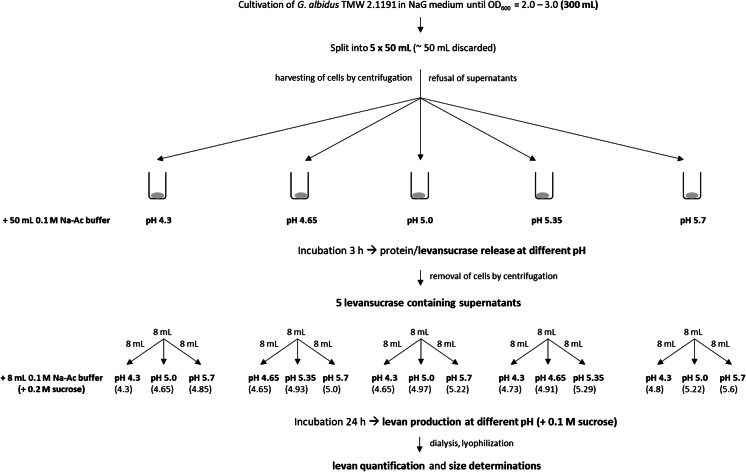
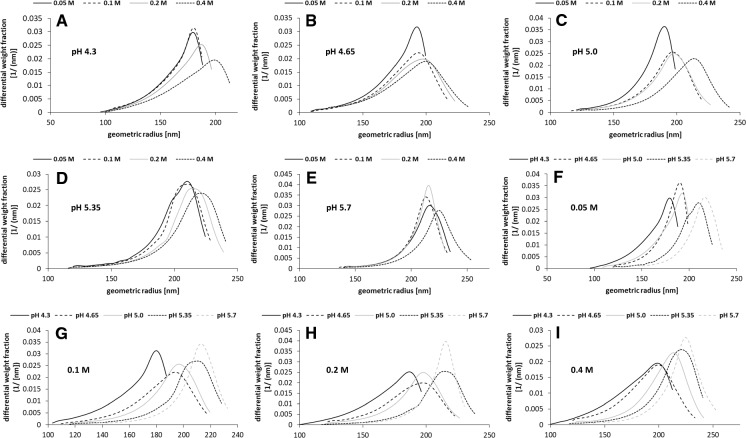
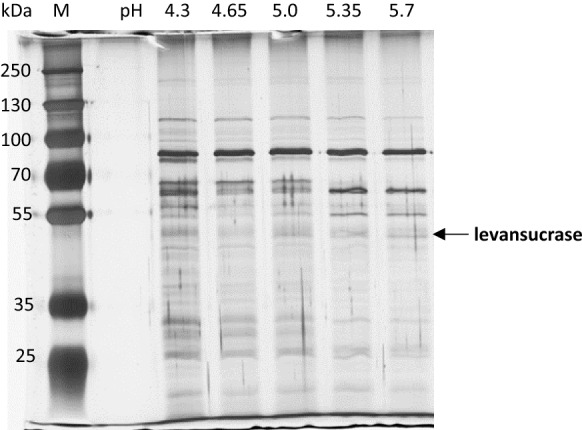
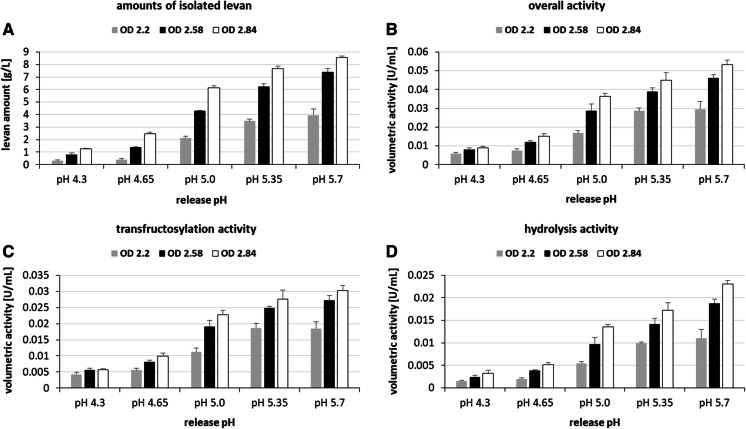
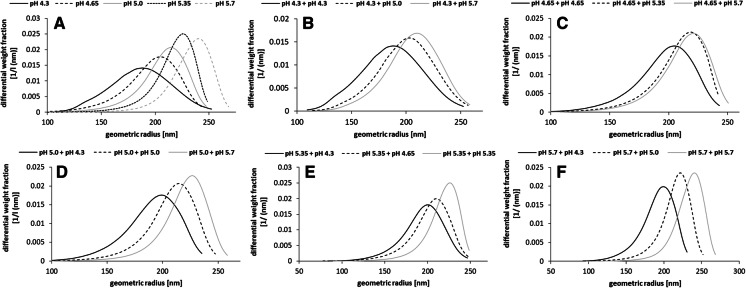
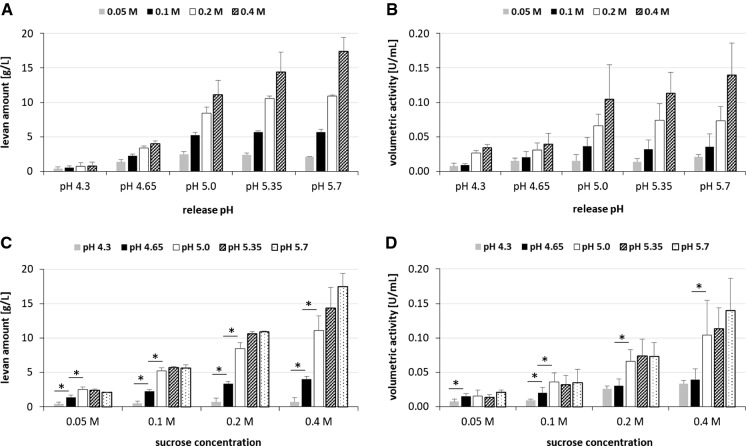
Many bacteria and archaea produce the polydisperse fructose polymer levan from sucrose upon biofilm formation via extracellular levansucrases (EC 2.4.1.10). We have investigated levansucrase-release and -activities as well as molecular size of the levan formed by the acetic acid bacterium Gluconobacter albidus TMW 2.1191 at varying environmental pH conditions to obtain insight in the ecological role of its constitutively expressed levansucrase and the produced levan. A buffer system was established enabling the recovery of levansucrase-containing supernatants from preincubated cell suspensions at pH 4.3-pH 5.7. The enzyme solutions were used to produce levans at different pH values and sucrose concentrations. Finally, the amounts and size distributions of the produced levans as well as the corresponding levansucrase activities were determined and correlated with each other. The data revealed that the levansucrase was released into the environment independently of its substrate sucrose, and that more levansucrase was released at pH ≥ 5.0. The glucose release and formation of high molecular weight levans (> 3.5 kDa) from 0.1 M initial sucrose was comparable between pH ~ 4.3-5.7 using equal amounts of released levansucrase. Hence, this type of levansucrase appears to be structurally adapted to changes in the extracellular pH and to exhibit a similar total activity over a wide acidic pH range, while it produced higher amounts of larger levan molecules at higher production pH and sucrose concentrations. These findings indicate the physiological adaptation of G. albidus TMW 2.1191 to efficient colonisation of sucrose-rich habitats via released levansucrases despite changing extracellular pH conditions in course of acid formation.
许多细菌和古菌在生物膜形成过程中通过胞外蔗糖转化酶(EC 2.4.1.10)从蔗糖中产生多分散果糖聚合物莱鲍迪苷。我们研究了在不同环境 pH 条件下,醋酸杆菌 Gluconobacter albidus TMW 2.1191 的蔗糖转化酶释放和活性以及形成的莱鲍迪苷的分子大小,以深入了解其组成型表达的蔗糖转化酶和产生的莱鲍迪苷的生态作用。建立了缓冲体系,使能够从 pH 4.3-pH 5.7 的预孵育细胞悬浮液中回收含有蔗糖转化酶的上清液。在不同 pH 值和蔗糖浓度下,用酶溶液生产莱鲍迪苷。最后,确定了产生的莱鲍迪苷的量和大小分布以及相应的蔗糖转化酶活性,并相互关联。数据表明,蔗糖转化酶独立于其底物蔗糖释放到环境中,并且在 pH≥5.0 时释放更多的蔗糖转化酶。在 0.1 M 初始蔗糖下,用等量释放的蔗糖转化酶,从 pH≈4.3-5.7 释放葡萄糖和形成高分子量莱鲍迪苷(>3.5 kDa)的量是可比的。因此,这种类型的蔗糖转化酶似乎在结构上适应了细胞外 pH 的变化,并在广泛的酸性 pH 范围内表现出相似的总活性,而在较高的生产 pH 和蔗糖浓度下,它产生了更多的较大莱鲍迪苷分子。这些发现表明,尽管在酸形成过程中外环境 pH 条件发生变化,但 G. albidus TMW 2.1191 能够通过释放的蔗糖转化酶适应富含蔗糖的栖息地的有效定植。