Institute of Biochemistry and Cell Biology, National Research Council (CNR), Via P. Castellino 111, 80131 Naples, Italy.
Institute of Food Safety, Animal Health and Environment "BIOR", Lejupes Street 3, LV-1076 Riga, Latvia.
Sensors (Basel). 2020 Mar 2;20(5):1365. doi: 10.3390/s20051365.
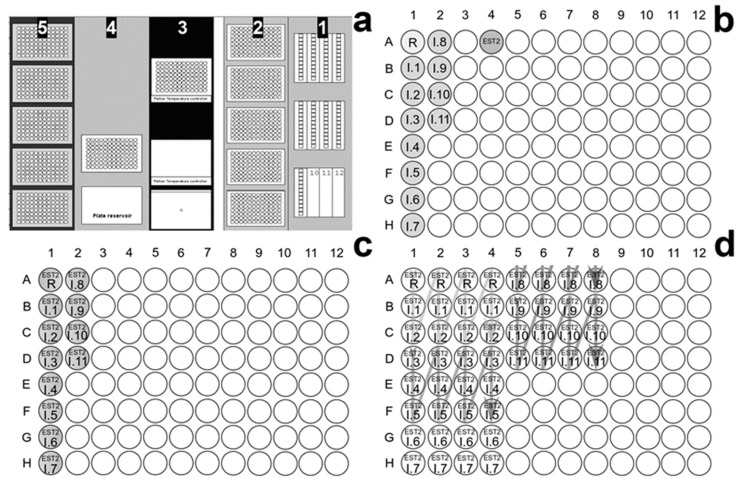
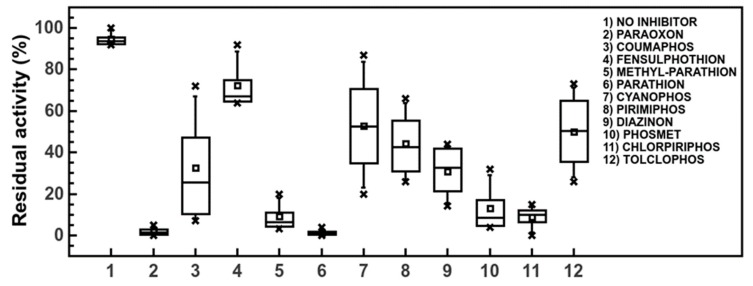
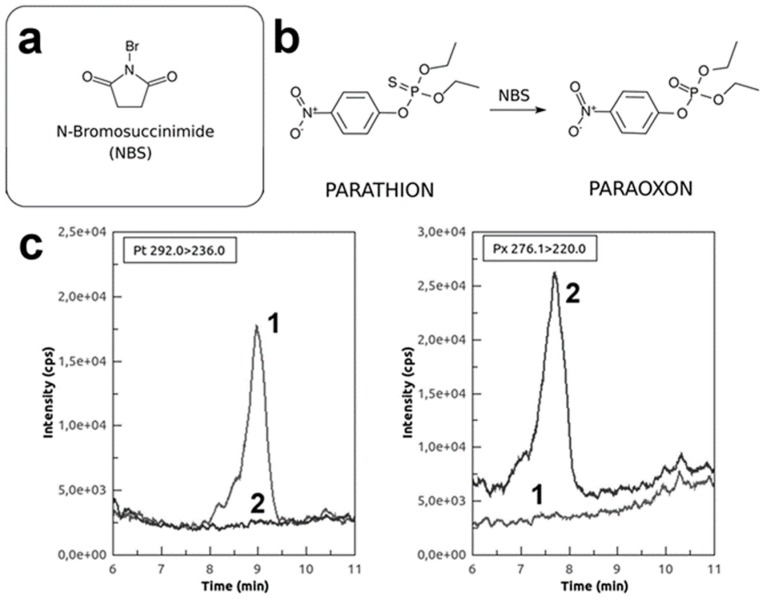
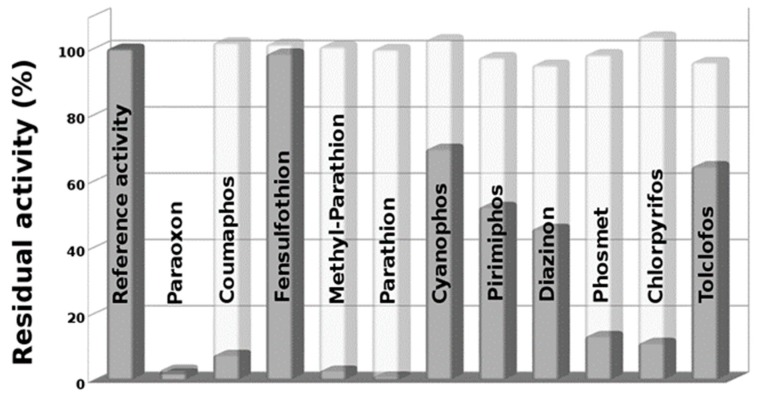
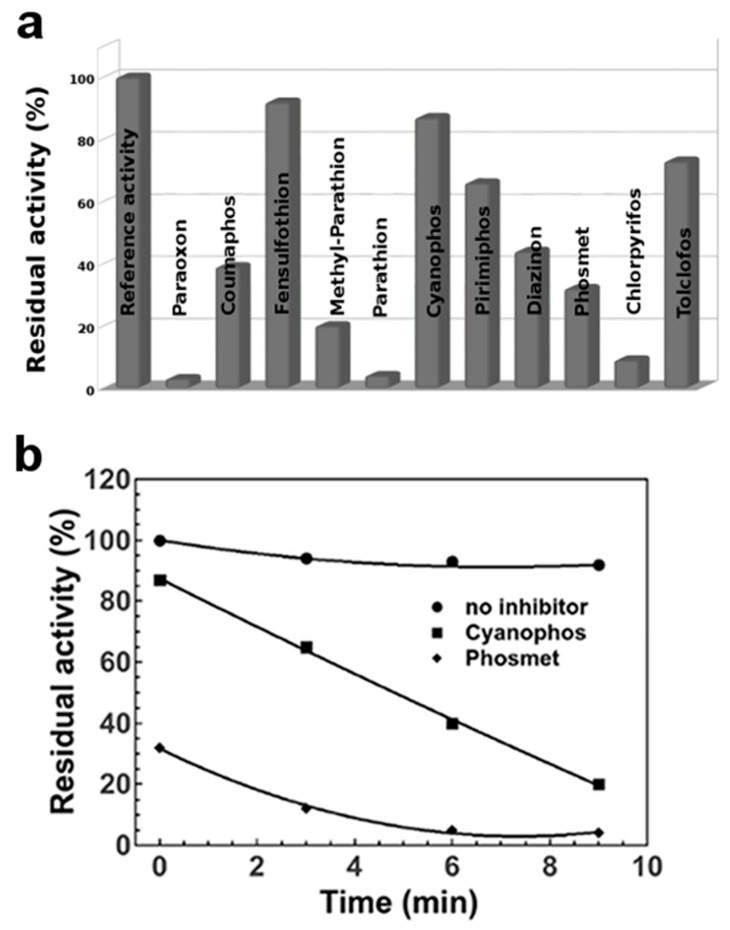
Pesticides represent some of the most common man-made chemicals in the world. Despite their unquestionable utility in the agricultural field and in the prevention of pest infestation in public areas of cities, pesticides and their biotransformation products are toxic to the environment and hazardous to human health. Esterase-based biosensors represent a viable alternative to the expensive and time-consuming systems currently used for their detection. In this work, we used the esterase-2 from as bioreceptor for a biosensing device based on an automated robotic approach. Coupling the robotic system with a fluorescence inhibition assay, in only 30 s of enzymatic assay, we accomplished the detection limit of 10 pmol for 11 chemically oxidized thio-organophosphates in solution. In addition, we observed differences in the shape of the inhibition curves determined measuring the decrease of esterase-2 residual activity over time. These differences could be used for the characterization and identification of thio-organophosphate pesticides, leading to a pseudo fingerprinting for each of these compounds. This research represents a starting point to develop technologies for automated screening of toxic compounds in samples from industrial sectors, such as the food industry, and for environmental monitoring.
农药是世界上最常见的人造化学品之一。尽管它们在农业领域和城市公共区域防止虫害方面的应用不可置疑,但农药及其生物转化产物对环境有毒,对人类健康有害。基于酯酶的生物传感器是目前用于检测的昂贵且耗时的系统的可行替代品。在这项工作中,我们使用来自 的酯酶-2 作为生物传感器的生物受体,该生物传感器基于自动化机器人方法。通过将机器人系统与荧光抑制测定法结合,在仅 30 秒的酶促测定中,我们实现了对 11 种化学氧化的硫代有机磷酸酯在溶液中的检测限为 10 pmol。此外,我们观察到通过测量随时间变化的酯酶-2 剩余活性来确定的抑制曲线的形状差异。这些差异可用于对硫代有机磷农药进行表征和鉴定,从而为这些化合物中的每一种生成伪指纹图谱。这项研究代表了开发用于自动筛选食品工业等工业部门以及环境监测样品中有毒化合物的技术的起点。