Department of Pulmonary and Critical Care Medicine, Shandong Provincial Chest Hospital, Shandong University, Jinan, 250002, China.
Division of Intensive Care Unit, Qilu Hospital, Shandong University, No. 107, Wenhua West Road 107, Lixia District, Jinan, 250002, China.
BMC Infect Dis. 2020 Mar 4;20(1):189. doi: 10.1186/s12879-020-4879-1.
Vitamin D deficiency has been related to the risk of sepsis. However, previous studies showed inconsistent results regarding the association between serum 25-hydroxyvitamin D (25 (OH) D) and mortality risk in septic patients. We aimed to evaluate the relationship between serum 25 (OH) D at admission and mortality risk in adult patients in a meta-analysis.
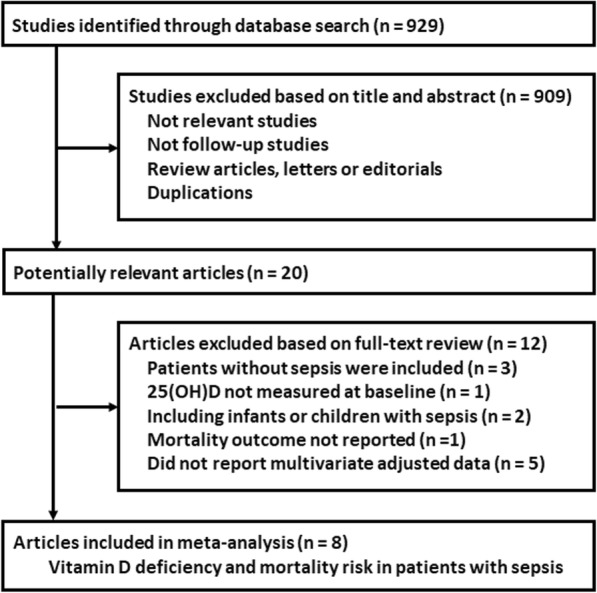
Follow-up studies that provided data of multivariate adjusted relative risk (RR) between serum 25 (OH) D and mortality risk in septic patients were retrieved via systematic search of PubMed and Embase databases. A random effect model was used to pool the results.
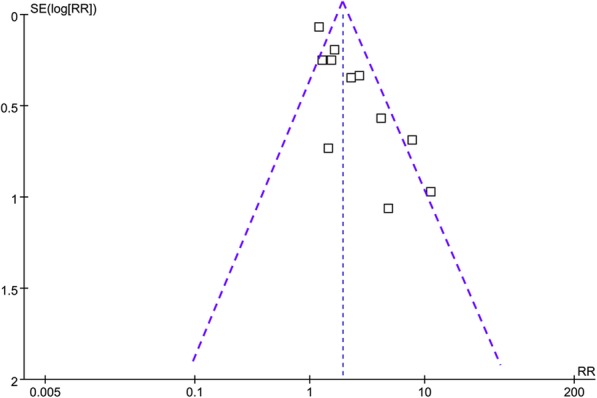
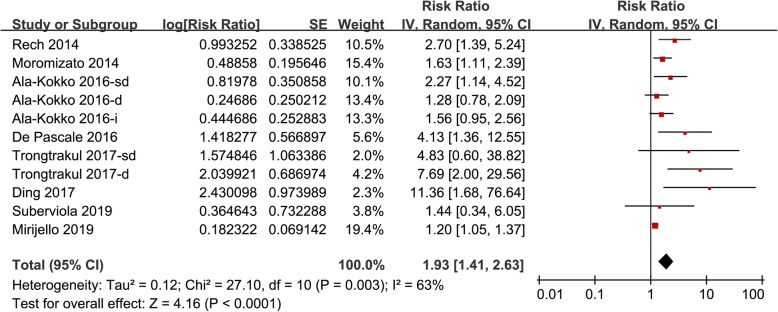
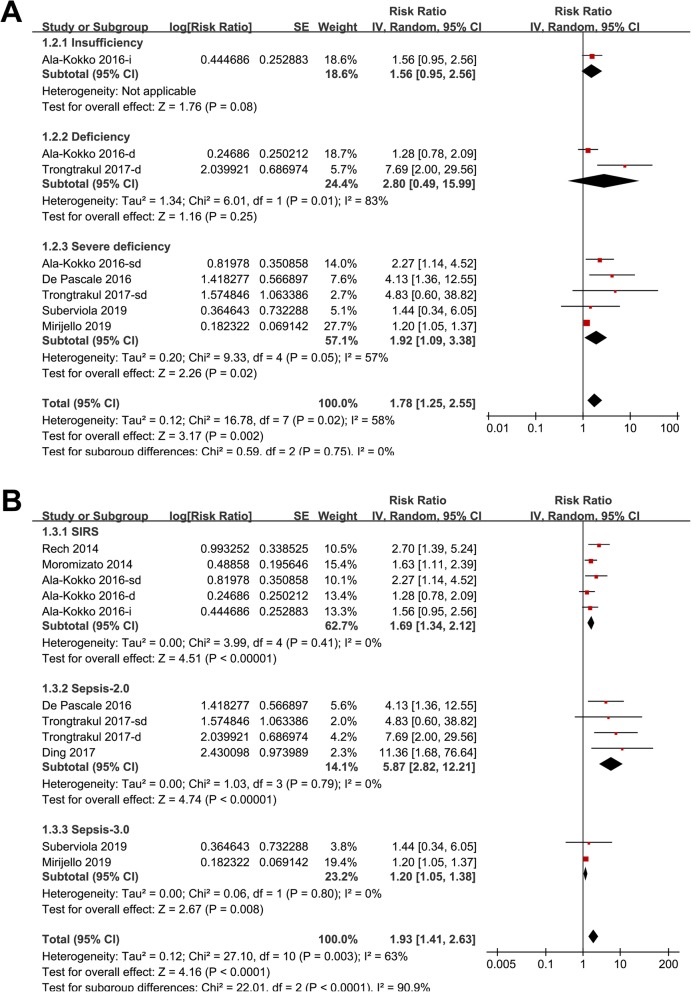
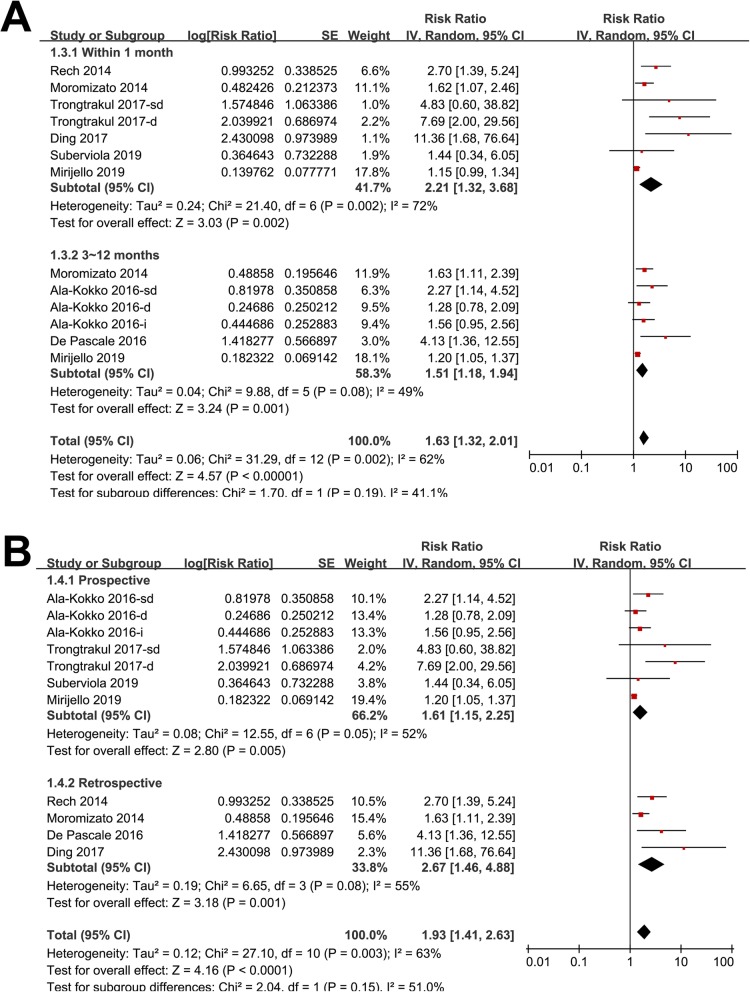
Eight studies with 1736 patients were included. Results of overall meta-analysis showed that lower 25 (OH) D at admission was independently associated with increased risk or mortality (adjusted RR: 1.93, p < 0.001; I = 63%) in patients with sepsis. Exploring subgroup association showed that patients with severe vitamin D deficiency (25 (OH) D < 10 ng/ml) was significantly associated with higher mortality risk (adjusted RR: 1.92, p < 0.001), but the associations were not significant for vitamin D insufficiency (25 (OH) D 2030 ng/ml) or deficiency (25 (OH) D 1020 ng/ml). Further analyses showed that the association between lower serum 25 (OH) D and higher mortality risk were consistent in studies applied different diagnostic criteria for sepsis (systemic inflammatory response syndrome, Sepsis-2.0, or Sepsis-3.0), short-term (within 1 month) and long-term studies (3~12 months), and in prospective and retrospective studies.
Severe vitamin D deficiency may be independently associated with increased mortality in adult patients with sepsis. Large-scale prospective studies are needed to validate our findings.
维生素 D 缺乏与脓毒症风险相关。然而,先前的研究表明血清 25-羟维生素 D(25(OH)D)与脓毒症患者的死亡风险之间的关联存在不一致的结果。我们旨在通过荟萃分析评估入院时血清 25(OH)D 与成年脓毒症患者死亡风险之间的关系。
通过系统搜索 PubMed 和 Embase 数据库,检索提供血清 25(OH)D 与脓毒症患者死亡风险之间多变量调整相对风险(RR)数据的随访研究。使用随机效应模型汇总结果。
共纳入 8 项研究,共计 1736 例患者。总体荟萃分析结果表明,入院时较低的 25(OH)D 与脓毒症患者死亡风险增加独立相关(调整 RR:1.93,p<0.001;I=63%)。探索亚组关联表明,严重维生素 D 缺乏(25(OH)D<10ng/ml)患者的死亡风险显著增加(调整 RR:1.92,p<0.001),但维生素 D 不足(25(OH)D 2030ng/ml)或缺乏(25(OH)D 1020ng/ml)患者的关联不显著。进一步分析表明,在应用不同的脓毒症诊断标准(全身炎症反应综合征、Sepsis-2.0 或 Sepsis-3.0)、短期(1 个月内)和长期(3~12 个月)、前瞻性和回顾性研究中,较低的血清 25(OH)D 与较高的死亡风险之间的关联是一致的。
严重维生素 D 缺乏可能与成年脓毒症患者的死亡率增加独立相关。需要进行大规模的前瞻性研究来验证我们的发现。