Department of Plant Pathology and the Genome Center, University of California, Davis, CA, 95616, USA.
Innovative Genomics Institute, Berkeley, CA, 94704, USA.
Nat Commun. 2020 Mar 4;11(1):1178. doi: 10.1038/s41467-020-14981-y.
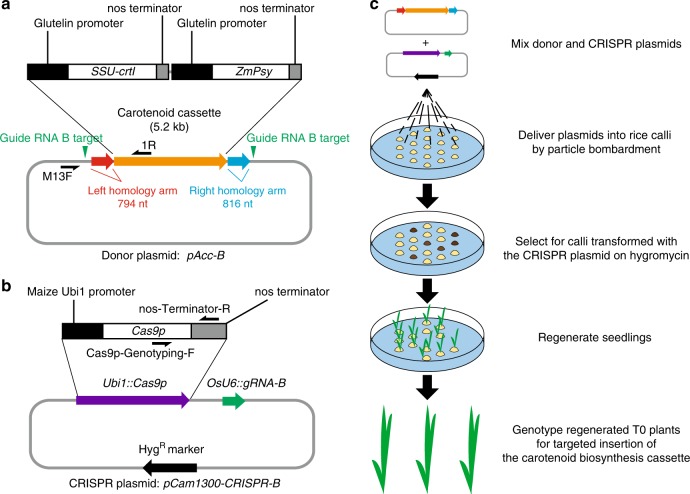
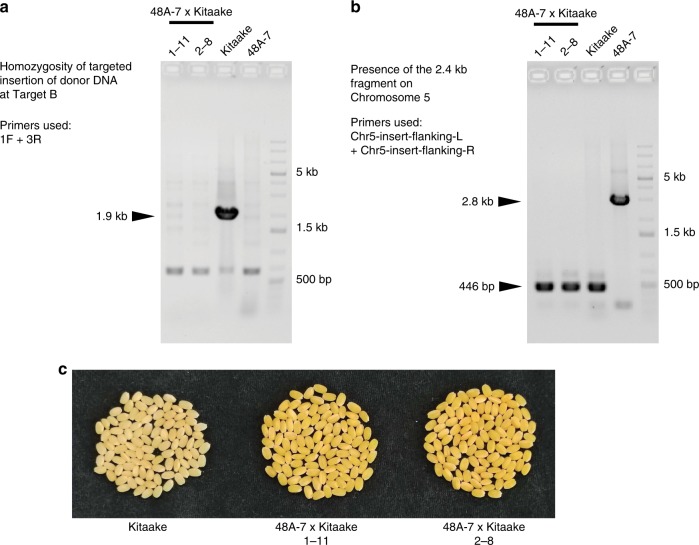
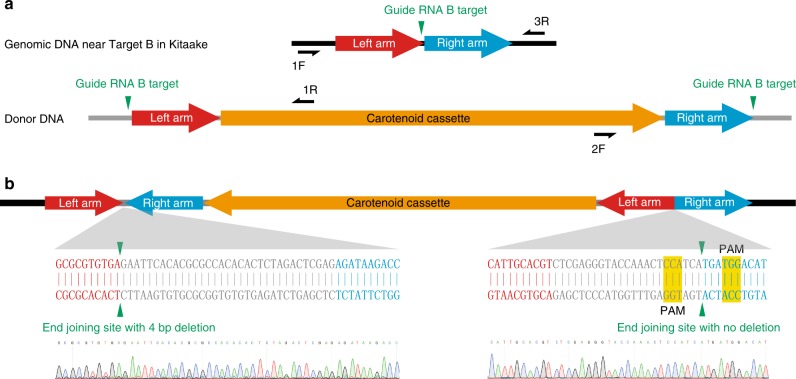
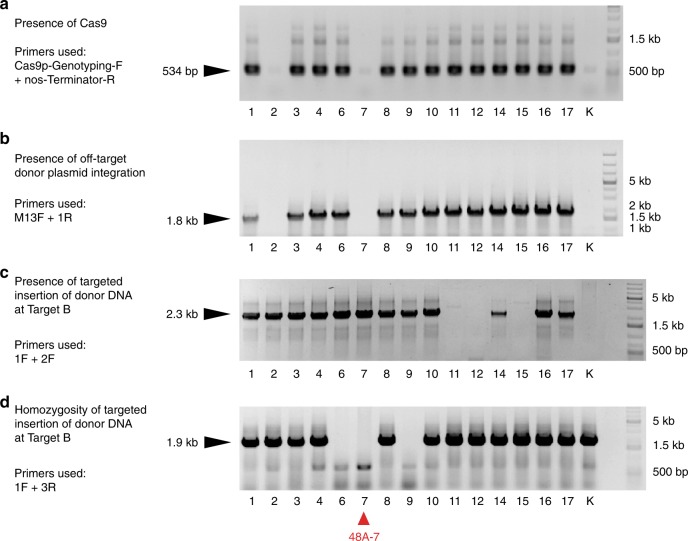
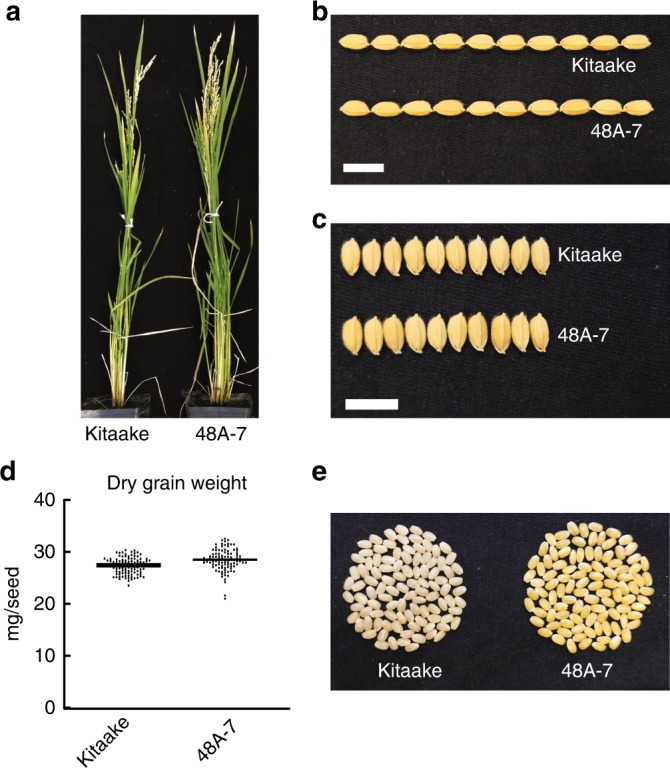
Targeted insertion of transgenes at pre-determined plant genomic safe harbors provides a desirable alternative to insertions at random sites achieved through conventional methods. Most existing cases of targeted gene insertion in plants have either relied on the presence of a selectable marker gene in the insertion cassette or occurred at low frequency with relatively small DNA fragments (<1.8 kb). Here, we report the use of an optimized CRISPR-Cas9-based method to achieve the targeted insertion of a 5.2 kb carotenoid biosynthesis cassette at two genomic safe harbors in rice. We obtain marker-free rice plants with high carotenoid content in the seeds and no detectable penalty in morphology or yield. Whole-genome sequencing reveals the absence of off-target mutations by Cas9 in the engineered plants. These results demonstrate targeted gene insertion of marker-free DNA in rice using CRISPR-Cas9 genome editing, and offer a promising strategy for genetic improvement of rice and other crops.
靶向插入转基因到植物基因组的安全港提供了一个理想的替代方法,即在随机位点插入通过常规方法。大多数现有的植物靶向基因插入的情况要么依赖于插入盒中的选择标记基因的存在,要么以相对较小的 DNA 片段(<1.8kb)的低频率发生。在这里,我们报告了使用优化的基于 CRISPR-Cas9 的方法来实现 5.2kb 类胡萝卜素生物合成盒在水稻两个基因组安全港的靶向插入。我们获得了无标记的水稻植株,其种子中类胡萝卜素含量高,形态或产量没有明显降低。全基因组测序显示工程植株中 Cas9 不存在脱靶突变。这些结果证明了使用 CRISPR-Cas9 基因组编辑在水稻中进行无标记 DNA 的靶向基因插入,并为水稻和其他作物的遗传改良提供了有希望的策略。