Ueha Rumi, Ueha Satoshi, Kondo Kenji, Nishijima Hironobu, Yamasoba Tatsuya
Department of Otolaryngology, The University of Tokyo, Tokyo, Japan.
Division of Molecular Regulation of Inflammatory and Immune Diseases, Research Institute for Biomedical Sciences, Tokyo University of Science, Chiba, Japan.
Front Neurosci. 2020 Feb 18;14:126. doi: 10.3389/fnins.2020.00126. eCollection 2020.
Cigarette smoke (CS) exposure reportedly enhances allergic airway inflammation. However, some studies have shown an association between current cigarette smoke exposure and a low risk for allergic rhinitis. Thus, the impact of CS exposure on allergic rhinitis remains poorly understood. The purpose of this study was to investigate the effects of CS on the respiratory mucosa (RM) and the olfactory epithelium (OE) of mice with allergic rhinitis, as the effects may differ depending on the nasal histological compartments.
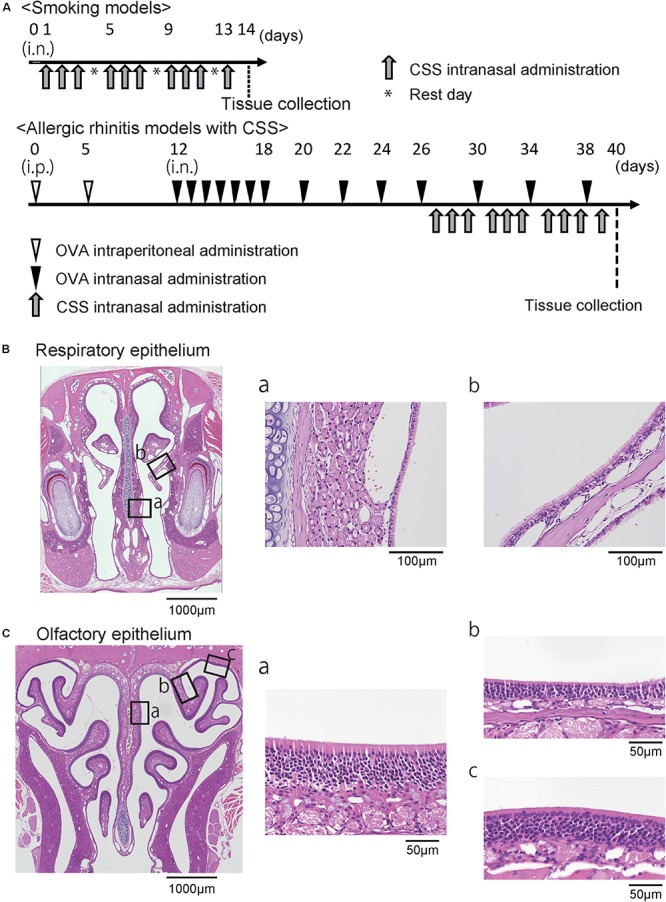
Eight-week-old male BALB/c mice were used for this study. We developed a mouse model of smoking by intranasally administering 10 doses of a CS solution (CSS), and a mouse model of allergic rhinitis by sensitization with intraperitoneal ovalbumin (OVA) injection and intranasal challenge with OVA. We examined the effects of CS on the nasal RM and OE in mice with or without allergic rhinitis using histological, serum, and genetic analyses. First, we examine whether CSS exposure induces allergic responses and then, examined allergic responses in the OVA-sensitized allergic rhinitis mice with or without CSS exposure.
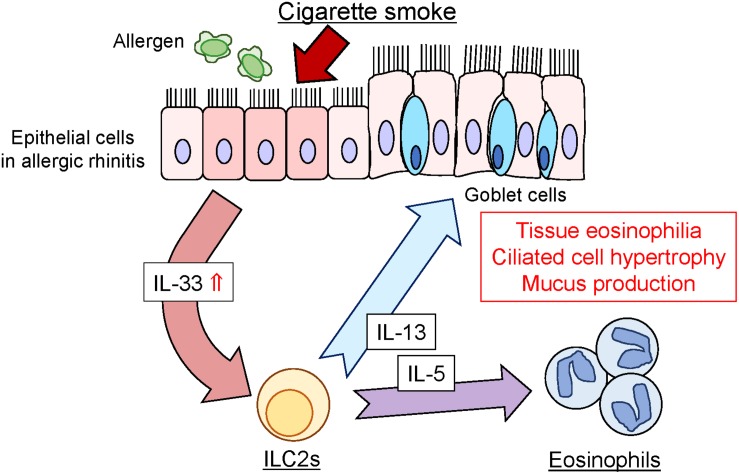
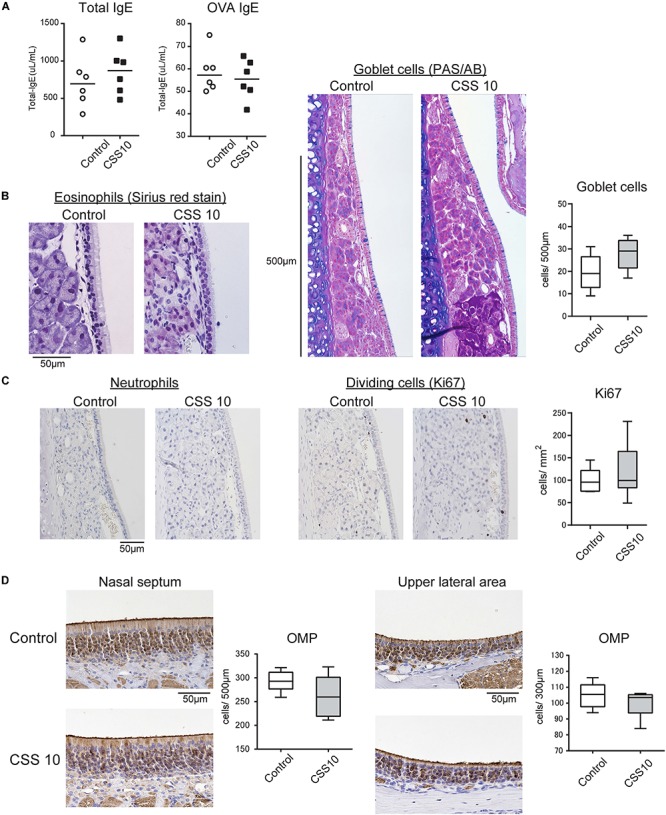
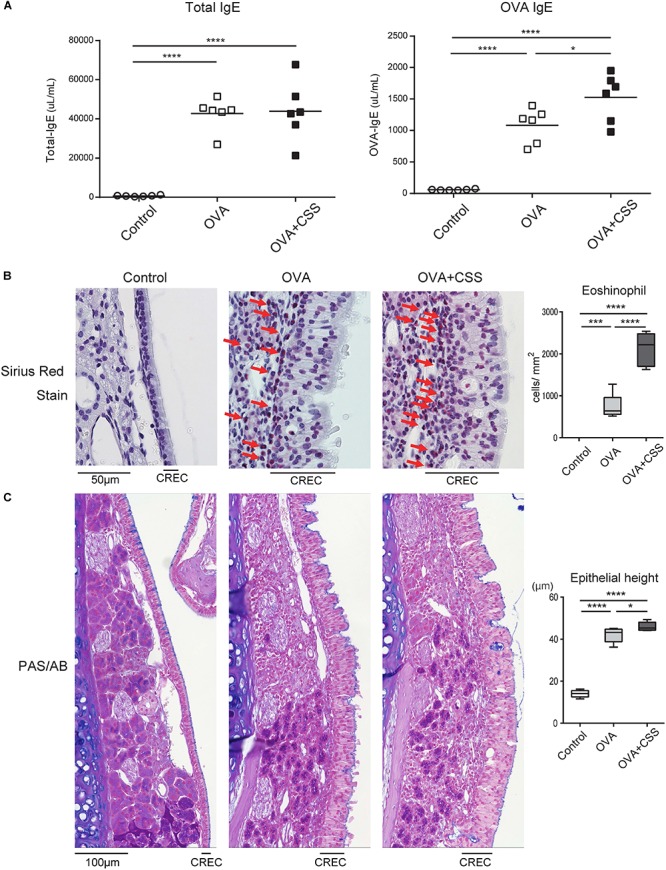
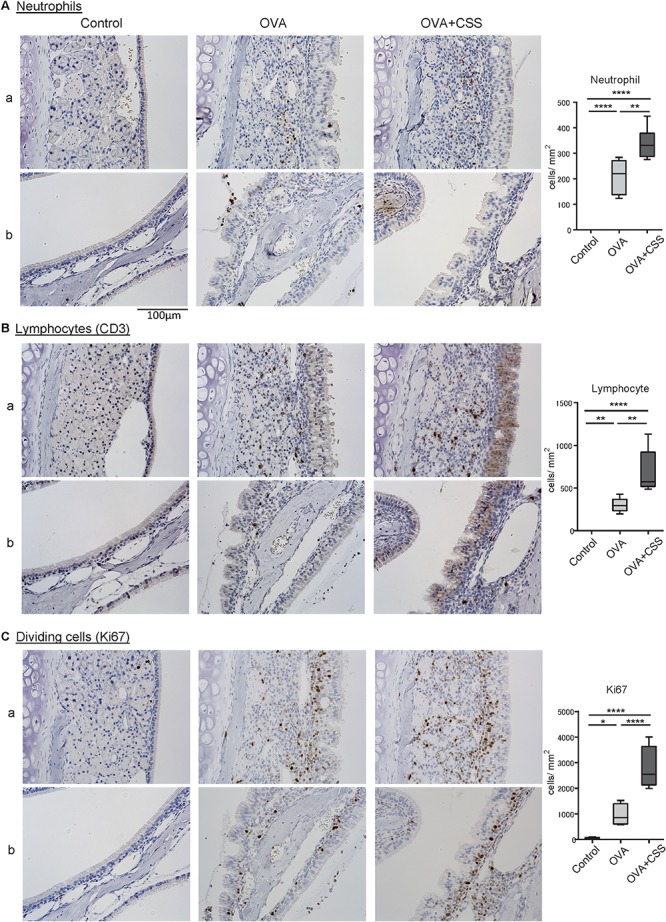
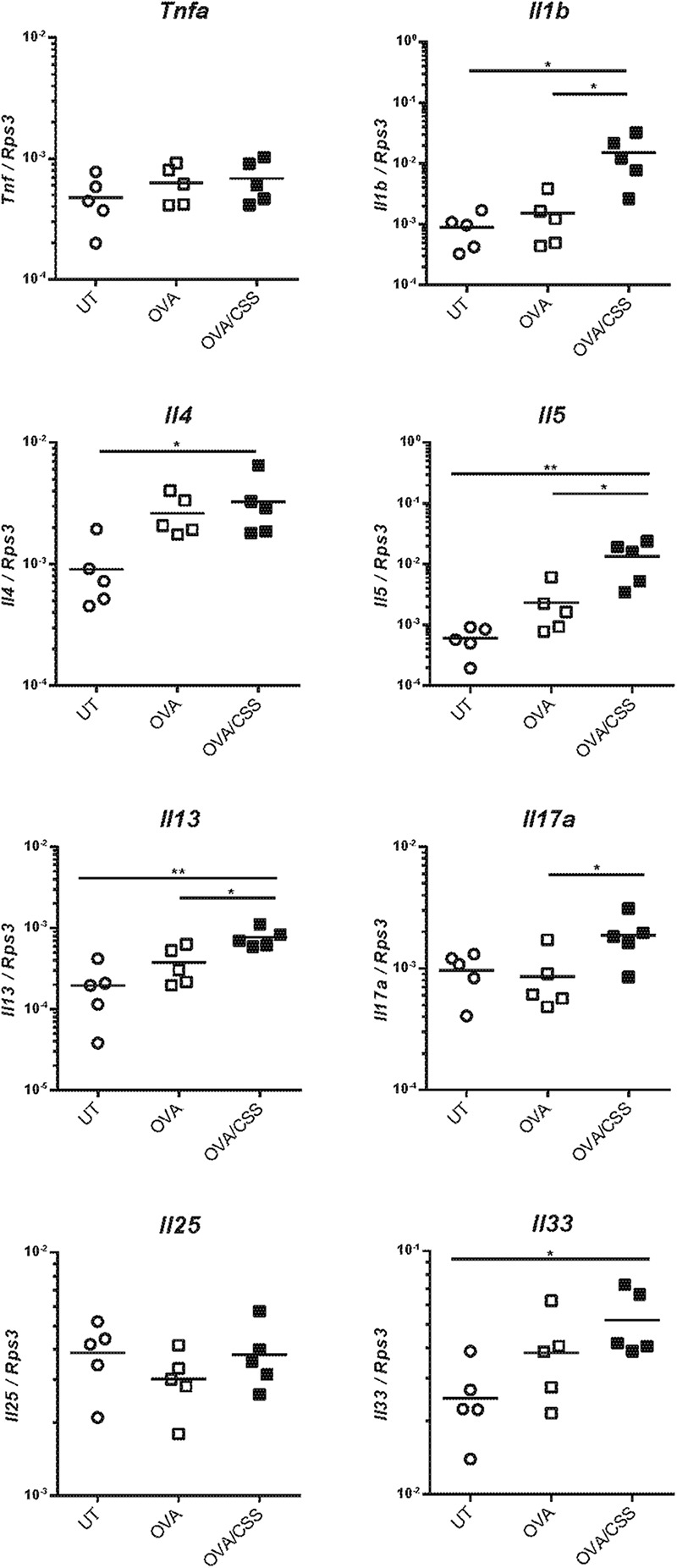
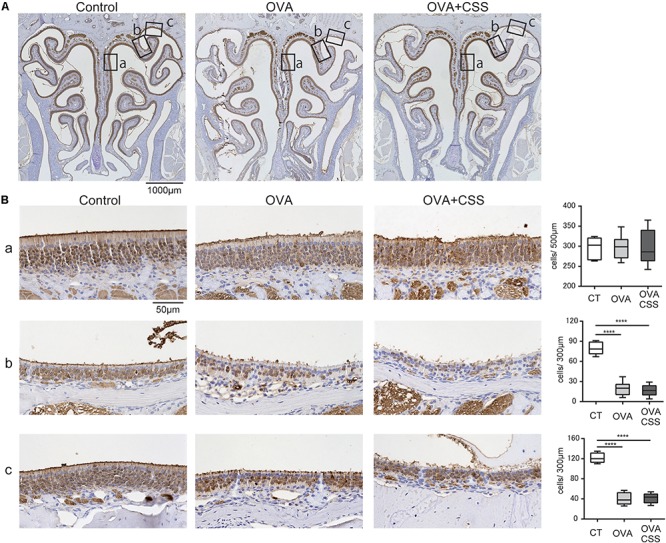
Short-term CSS administration intensified allergic responses including increased infiltration of eosinophils and inflammatory cells and upregulation of interleukin-5 expression in the nasal RM of OVA-immunized mice, although only CSS induced neither allergic responses nor impairment of the RM and OE. Notably, repetitive OVA-immunization partially impaired the OE in the upper-lateral area, but CSS administration did not reinforce this impairment in OVA-induced allergic mice.
Short-term CSS exposure strengthened allergic responses in the nasal RM and did not change the structure of the OE. These results suggest that patients with allergic rhinitis could experience exacerbation of allergic symptoms after CS exposure.
据报道,接触香烟烟雾(CS)会加剧过敏性气道炎症。然而,一些研究表明,目前接触香烟烟雾与过敏性鼻炎的低风险之间存在关联。因此,CS暴露对过敏性鼻炎的影响仍知之甚少。本研究的目的是调查CS对过敏性鼻炎小鼠呼吸黏膜(RM)和嗅上皮(OE)的影响,因为其影响可能因鼻腔组织学区域而异。
本研究使用8周龄雄性BALB/c小鼠。我们通过鼻内给予10剂CS溶液(CSS)建立了吸烟小鼠模型,并通过腹腔注射卵清蛋白(OVA)致敏和鼻内给予OVA激发建立了过敏性鼻炎小鼠模型。我们使用组织学、血清学和基因分析方法,研究了CS对有无过敏性鼻炎小鼠鼻腔RM和OE的影响。首先,我们检查CSS暴露是否会诱发过敏反应,然后,检查有无CSS暴露的OVA致敏过敏性鼻炎小鼠的过敏反应。
短期给予CSS会加剧过敏反应,包括OVA免疫小鼠鼻腔RM中嗜酸性粒细胞和炎性细胞浸润增加以及白细胞介素-5表达上调,尽管仅给予CSS既不会诱发过敏反应,也不会损害RM和OE。值得注意的是,重复OVA免疫会部分损害上外侧区域的OE,但给予CSS并不会加重OVA诱导的过敏性小鼠的这种损害。
短期CSS暴露会增强鼻腔RM中的过敏反应,且不会改变OE的结构。这些结果表明,过敏性鼻炎患者在接触CS后可能会出现过敏症状加重的情况。