Golshahi Hannaneh, Araghi Atefeh, Baghban Farshad, Farzad-Mohajeri Saeed
Nanobiotechnology Research Center, Avicenna Research Institute, ACECR, Tehran, Iran.
Department of Clinical Sciences, Faculty of Veterinary Medicine, Amol University of Special Modern Technologies, Amol, Iran.
Iran J Basic Med Sci. 2019 Dec;22(12):1400-1407. doi: 10.22038/IJBMS.2019.13987.
Hepatic ischemia/reperfusion injury (IRI) is one of the major causes of hepatic failure during liver transplantation, trauma, and infections. The present study investigated the protective effect of intra-portal administration of 2-methoxycinnamaldehyde (2-MCA) on hepatic IRI in rats.
Twenty-four rats were equally divided into four groups; 1) sham group, (no IRI or transfusion), 2) Hepatic IRI (60 min ischemia + 120 min reperfusion, 3) Hepatic IRI+ NS (IRI + normal saline), 4) Hepatic IRI+2-MCA, (IRI + 2-MCA). In groups 3 and 4, 1 ml/kg normal saline and 2-MCA were administered slowly into the vein of the left lateral and median lobes of the liver 10 min before induction of hepatic reperfusion (upper the site of clumping), respectively. The harvest time points were at 2 hours post-reperfusion in all groups.
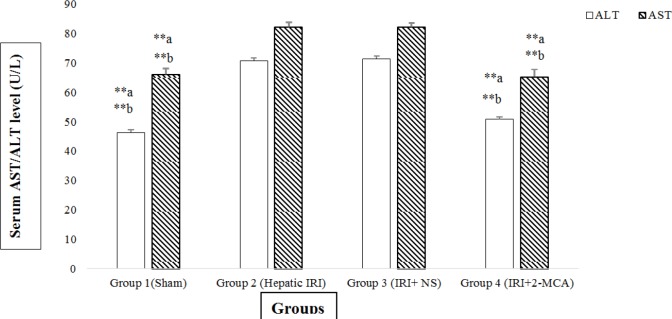
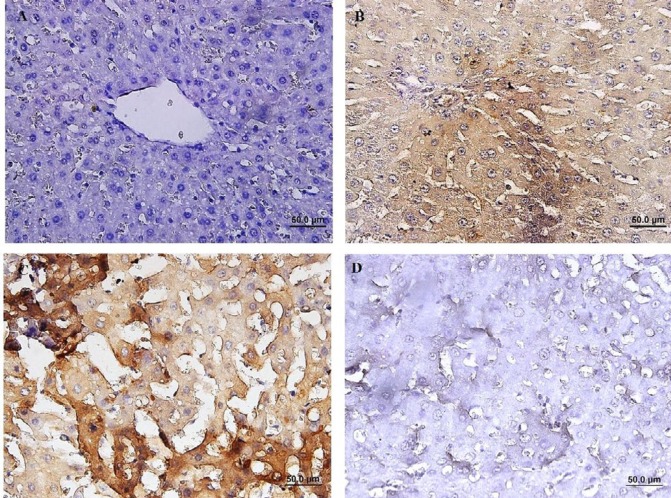
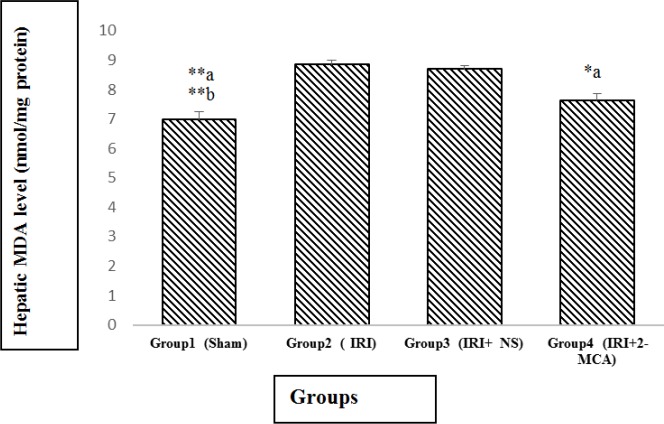
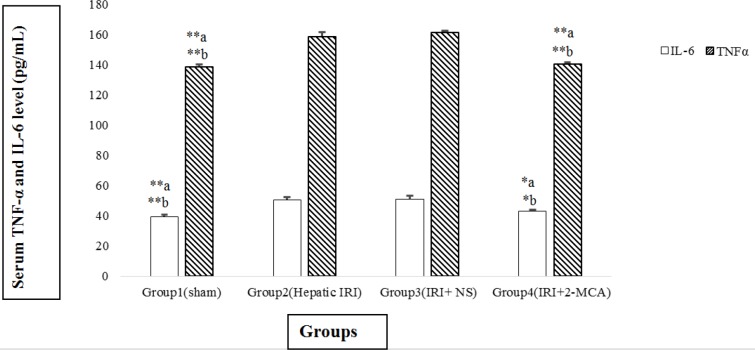
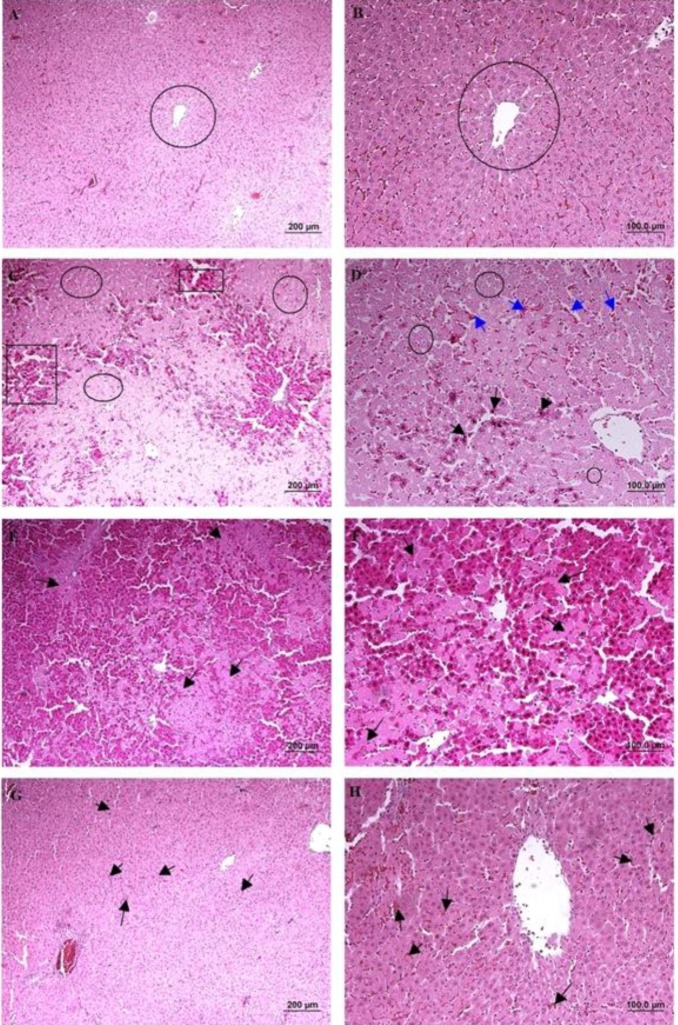
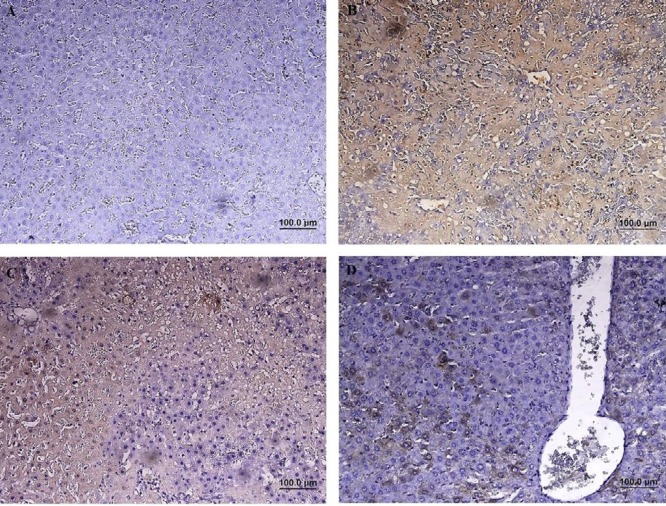
Histologically, cell death, degenerative changes, sinusoidal dilatation, congestion, hemorrhage, and infiltration of inflammatory cells were observed in IRI group, while these pathological changes were attenuated in the 2-MCA administrated group. The level of alanine transaminase, aspartate transaminase, tumor necrosis factor- α and interleukin-6 in serum and hepatic malondialdehyde were significantly increased by IRI, and 2-MCA administration reduced all these markers. In addition, caspase-3 and nuclear factor κB (NF-κB) expression were investigated immunohistochemically. Administration of 2-MCA considerably decreased caspase-3 positive cells and NF-κB activity in comparison with IRI group.
As a conclusion, in situ administration of 2-MCA protects against hepatic IRI via anti-inflammatory, and anti-apoptotic properties.
肝缺血/再灌注损伤(IRI)是肝移植、创伤和感染期间肝衰竭的主要原因之一。本研究探讨门静脉注射2-甲氧基肉桂醛(2-MCA)对大鼠肝IRI的保护作用。
24只大鼠平均分为四组;1)假手术组(无IRI或输血),2)肝IRI组(60分钟缺血+120分钟再灌注),3)肝IRI+生理盐水组(IRI+生理盐水),4)肝IRI+2-MCA组(IRI+2-MCA)。在第3组和第4组中,分别在肝再灌注诱导前10分钟(在结扎部位上方)将1ml/kg生理盐水和2-MCA缓慢注入肝左外叶和中叶静脉。所有组的采集时间点均为再灌注后2小时。
组织学上,IRI组观察到细胞死亡、退行性改变、肝血窦扩张、充血、出血和炎性细胞浸润,而在2-MCA给药组中这些病理变化减弱。IRI显著增加血清中丙氨酸转氨酶、天冬氨酸转氨酶、肿瘤坏死因子-α和白细胞介素-6水平以及肝丙二醛水平,而2-MCA给药降低了所有这些指标。此外,通过免疫组织化学研究了半胱天冬酶-3和核因子κB(NF-κB)的表达。与IRI组相比,2-MCA给药显著减少了半胱天冬酶-3阳性细胞和NF-κB活性。
总之,原位给予2-MCA通过抗炎和抗凋亡特性预防肝IRI。