Do Eun Young, Gwon Mi-Ri, Kim Bo Kyung, Ohk Boram, Lee Hae Won, Kang Woo Youl, Seong Sook Jin, Kim Hyun-Ju, Yoon Young-Ran
Department of Biomedical Science, BK21 Plus KNU Bio-Medical Convergence Program for Creative Talent, Cell and Matrix Research Institute, and Clinical Trial Center, Kyungpook National University Graduate School and Hospital, Daegu 41944, Korea.
Transl Clin Pharmacol. 2017 Jun;25(2):67-73. doi: 10.12793/tcp.2017.25.2.67. Epub 2017 Jun 15.
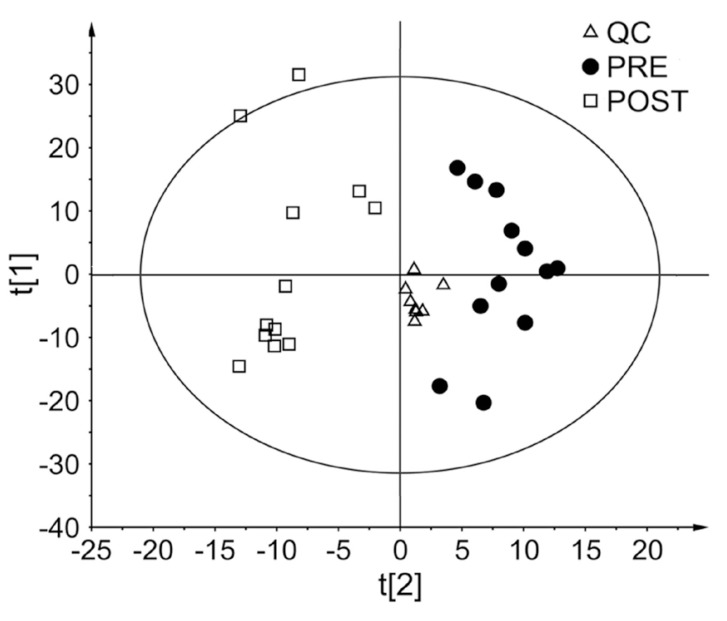
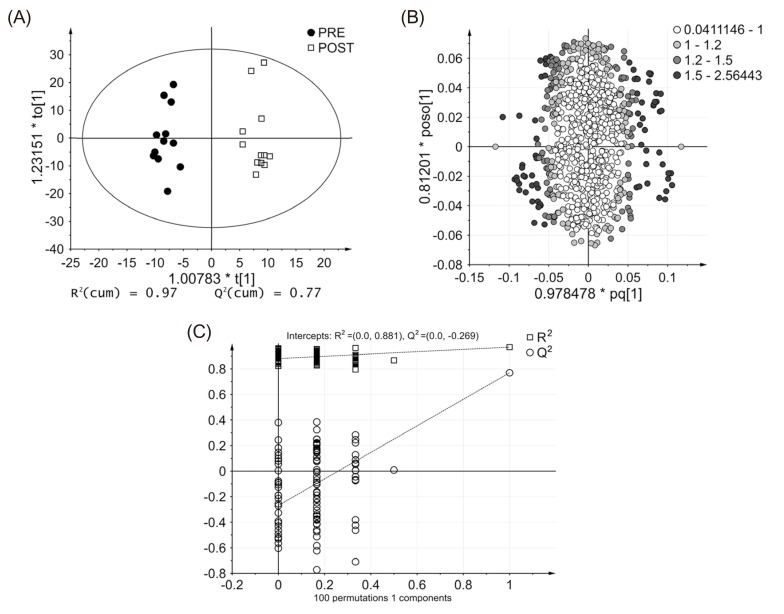
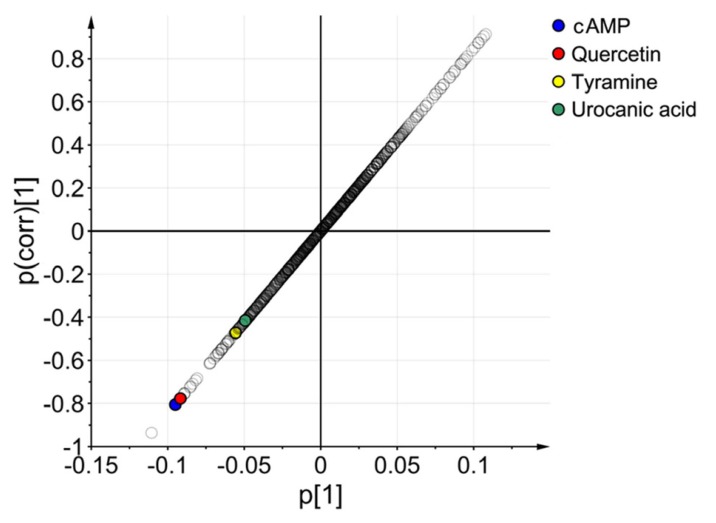
Glimepiride, a third generation sulfonylurea, is an antihyperglycemic agent widely used to treat type 2 diabetes mellitus. In this study, an untargeted urinary metabolomic analysis was performed to identify endogenous metabolites affected by glimepiride administration. Urine samples of twelve healthy male volunteers were collected before and after administration of 2 mg glimepiride. These samples were analyzed by liquid chromatography-tandem mass spectrometry (LC-MS/MS), and then subjected to multivariate data analysis including principal component analysis and orthogonal partial least squares discriminant analysis. Through this metabolomic profiling, we identified several endogenous metabolites such as adenosine 3', 5'-cyclic monophosphate (cAMP), quercetin, tyramine, and urocanic acid, which exhibit significant metabolomic changes between pre- and posturine samples. Among these, cAMP, which is known to be related to insulin secretion, was the most significantly altered metabolite following glimepiride administration. In addition, the pathway analysis showed that purine, tyrosine, and histidine metabolism was affected by pharmacological responses to glimepiride. Together, the results suggest that the pharmacometabolomic approach, based on LC-MS/MS, is useful in understanding the alterations in biochemical pathways associated with glimepiride action.
格列美脲是一种第三代磺脲类药物,是一种广泛用于治疗2型糖尿病的降糖药。在本研究中,进行了非靶向尿液代谢组学分析,以鉴定受格列美脲给药影响的内源性代谢物。收集了12名健康男性志愿者在服用2 mg格列美脲前后的尿液样本。这些样本通过液相色谱-串联质谱(LC-MS/MS)进行分析,然后进行包括主成分分析和正交偏最小二乘判别分析在内的多变量数据分析。通过这种代谢组学分析,我们鉴定了几种内源性代谢物,如3',5'-环磷酸腺苷(cAMP)、槲皮素、酪胺和尿刊酸,它们在尿液样本前后表现出显著的代谢组学变化。其中,已知与胰岛素分泌有关的cAMP是格列美脲给药后变化最显著的代谢物。此外,通路分析表明嘌呤、酪氨酸和组氨酸代谢受到对格列美脲药理反应的影响。总之,结果表明基于LC-MS/MS的药物代谢组学方法有助于理解与格列美脲作用相关的生化途径的改变。