Aguilera-Rojas Matias, Sharbati Soroush, Stein Torsten, Einspanier Ralf
Institute of Veterinary Biochemistry, Department of Veterinary Medicine, Freie Universität Berlin, Germany.
FEBS Open Bio. 2020 May;10(5):802-816. doi: 10.1002/2211-5463.12831. Epub 2020 Apr 1.
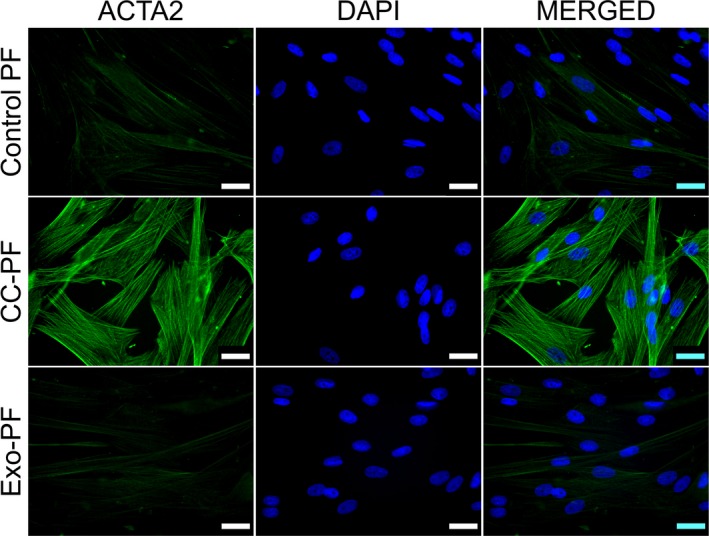
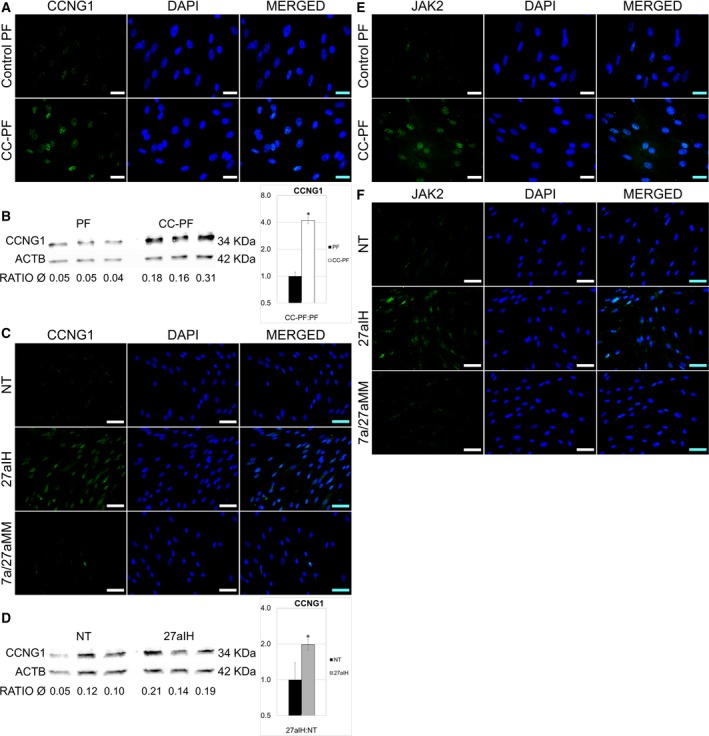
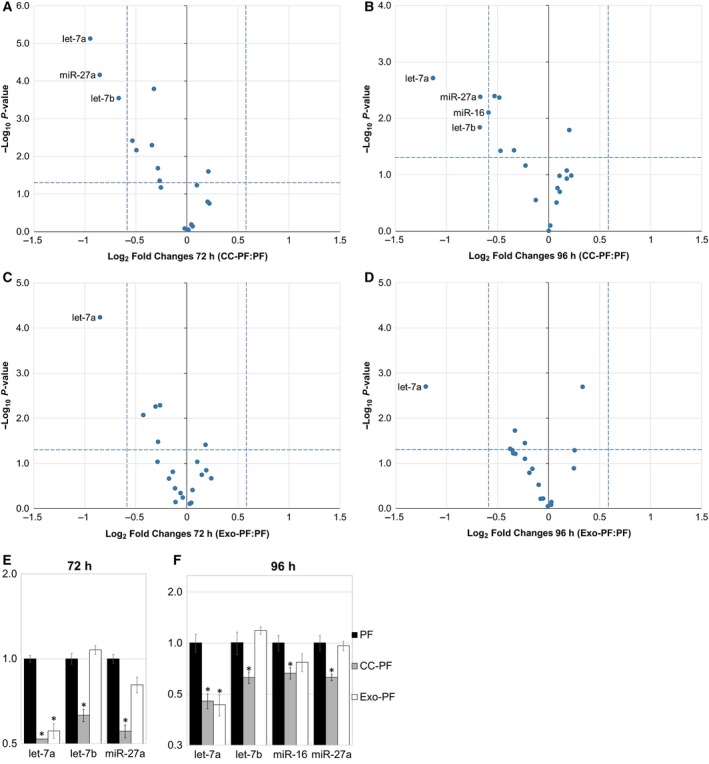
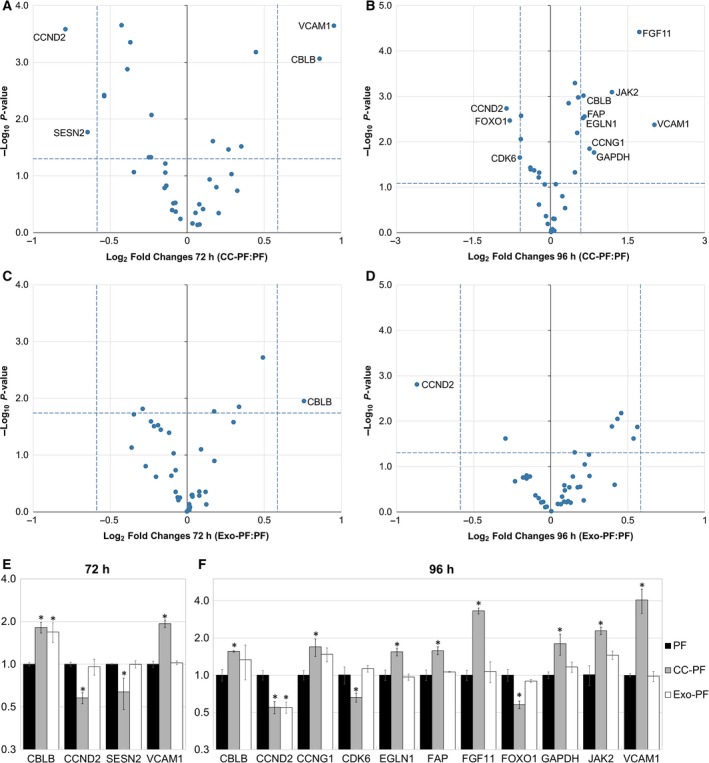
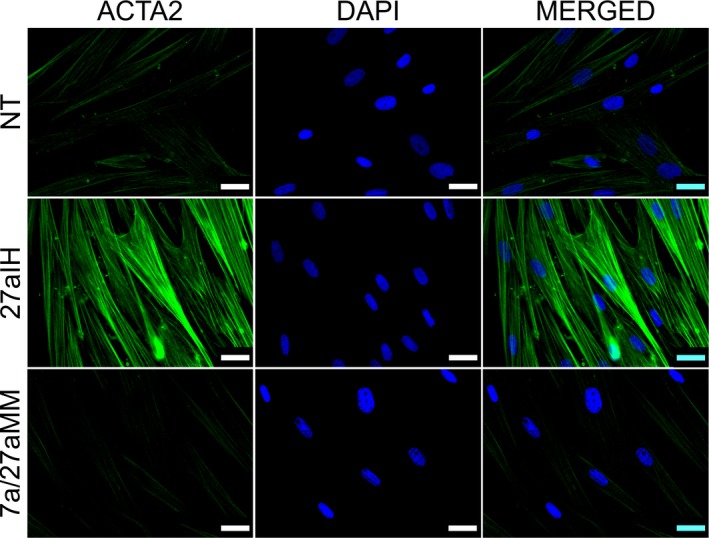
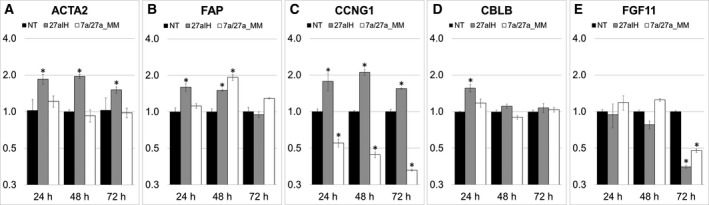
The tumour microenvironment comprises a diverse range of cells, including fibroblasts, immune cells and endothelial cells, along with extracellular matrix. In particular, fibroblasts are of significant interest as these cells are reprogrammed during tumorigenesis to become cancer-associated fibroblasts (CAFs), which in turn support cancer cell growth. MicroRNAs (miRNAs) have been shown to be involved in this intercellular crosstalk in humans. To assess whether miRNAs are also involved in the activation of fibroblasts in dogs, we cocultured primary canine skin fibroblasts with the canine mast cell tumour cell line C2 directly or with C2-derived exosomes, and measured differential abundance of selected miRNAs. Expression of the CAF markers alpha-smooth muscle actin (ACTA2) and stanniocalcin 1 confirmed the activation of our fibroblasts after coculture. We show that fibroblasts displayed significant downregulation of miR-27a and let-7 family members. These changes correlated with significant upregulation of predicted target mRNAs. Furthermore, RNA interference knockdown of miR-27a revealed that cyclin G1 (CCNG1) exhibited negative correlation at the mRNA and protein level, suggesting that CCNG1 is a target of miR-27a in canine fibroblasts and involved in their activation. Importantly, miR-27a knockdown itself resulted in fibroblast activation, as demonstrated by the formation of ACTA2 filaments. In addition, interleukin-6 (IL-6) was strongly induced in our fibroblasts when cocultured, indicating potential reciprocal signalling. Taken together, our findings are consistent with canine fibroblasts being reprogrammed into CAFs to further support cancer development and that downregulation of miR-27a may play an important role in the tumour-microenvironment crosstalk.
肿瘤微环境由多种细胞组成,包括成纤维细胞、免疫细胞和内皮细胞,以及细胞外基质。特别值得关注的是成纤维细胞,因为这些细胞在肿瘤发生过程中会被重新编程,成为癌症相关成纤维细胞(CAF),进而支持癌细胞生长。在人类中,微小RNA(miRNA)已被证明参与这种细胞间的相互作用。为了评估miRNA是否也参与犬类成纤维细胞的激活,我们将原代犬皮肤成纤维细胞与犬肥大细胞瘤细胞系C2直接共培养,或与C2衍生的外泌体共培养,并测量所选miRNA的差异丰度。共培养后,CAF标志物α-平滑肌肌动蛋白(ACTA2)和骨钙素1的表达证实了我们的成纤维细胞被激活。我们发现,成纤维细胞中miR-27a和let-7家族成员显著下调。这些变化与预测靶mRNA的显著上调相关。此外,miR-27a的RNA干扰敲低显示,细胞周期蛋白G1(CCNG1)在mRNA和蛋白质水平呈负相关,这表明CCNG1是犬成纤维细胞中miR-27a的靶标,并参与其激活。重要的是,正如ACTA2细丝的形成所表明的,miR-27a敲低本身导致了成纤维细胞的激活。此外,共培养时,我们的成纤维细胞中白细胞介素-6(IL-6)被强烈诱导,表明存在潜在的相互信号传导。综上所述,我们的研究结果表明,犬成纤维细胞被重新编程为CAF以进一步支持癌症发展,miR-27a的下调可能在肿瘤微环境的相互作用中发挥重要作用。