Program in Genetics, W. M. Keck Center for Behavioral Biology and Department of Biological Sciences, North Carolina State University, Raleigh, North Carolina, United States of America.
PLoS Biol. 2020 Mar 5;18(3):e3000645. doi: 10.1371/journal.pbio.3000645. eCollection 2020 Mar.
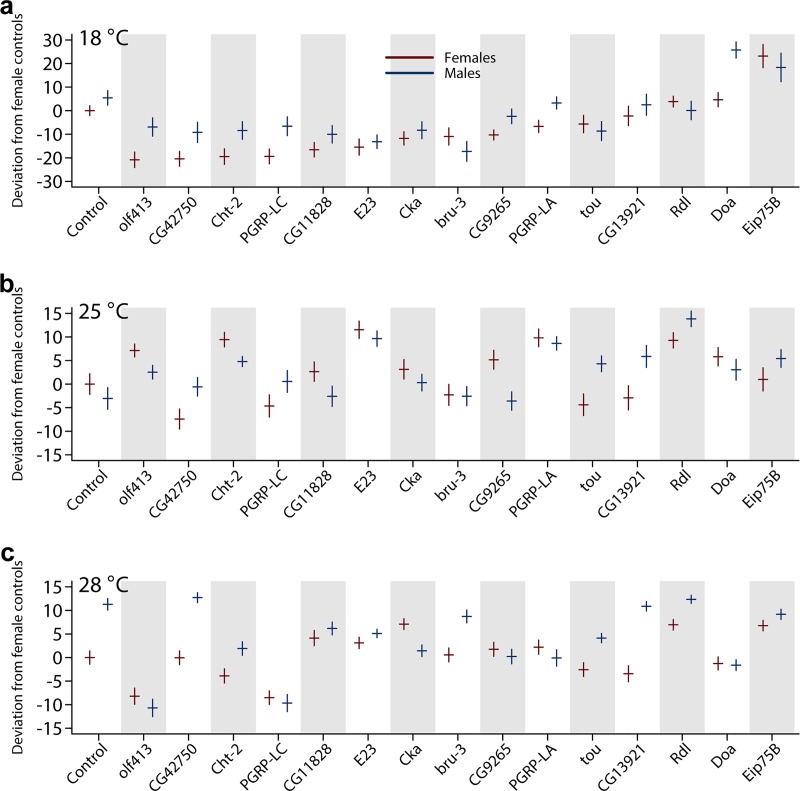
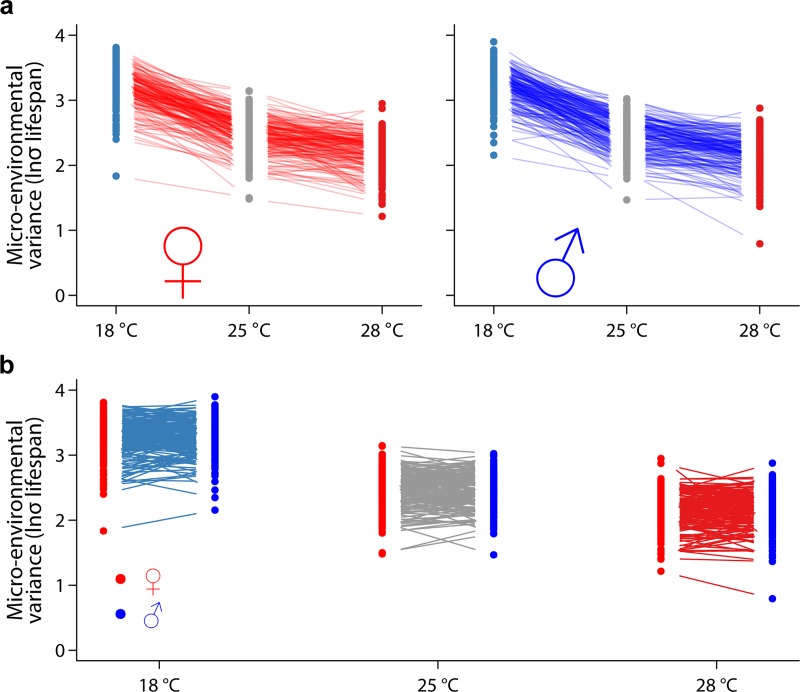
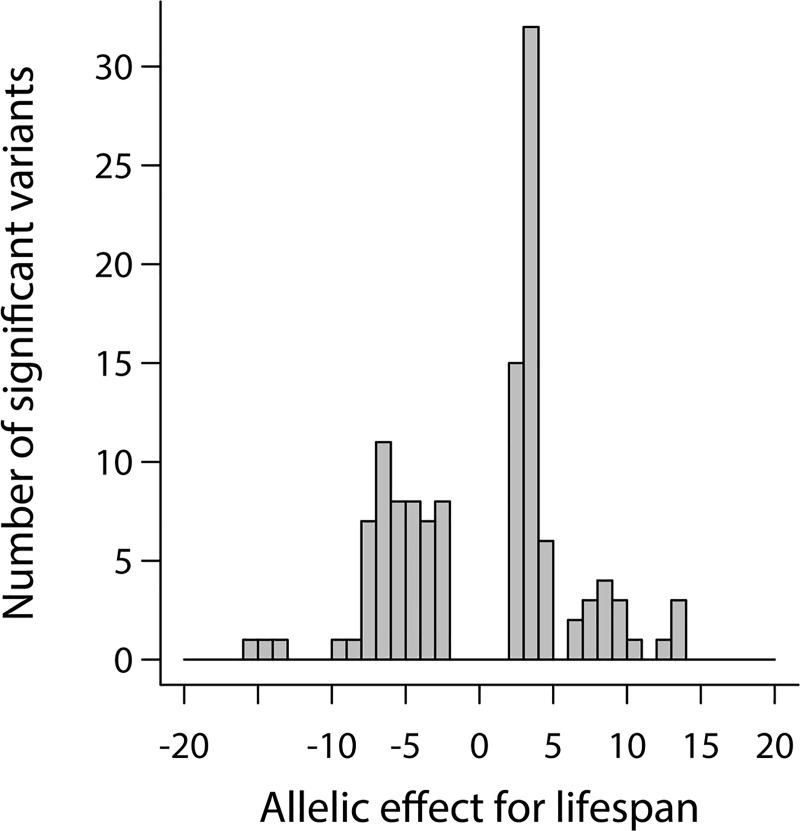
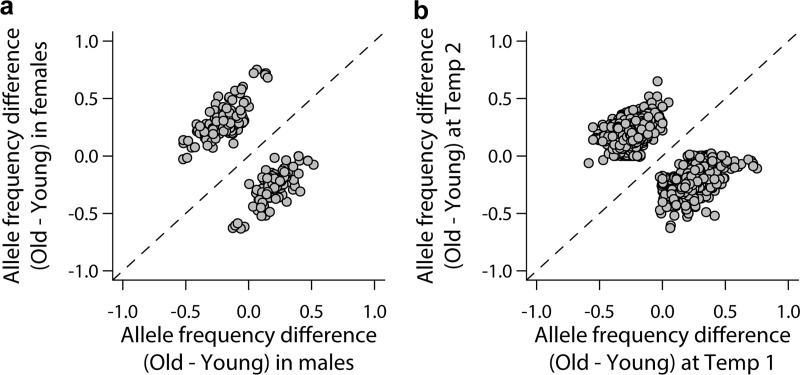
Understanding the genetic basis of variation in life span is a major challenge that is difficult to address in human populations. Evolutionary theory predicts that alleles affecting natural variation in life span will have properties that enable them to persist in populations at intermediate frequencies, such as late-life-specific deleterious effects, antagonistic pleiotropic effects on early and late-age fitness components, and/or sex- and environment-specific or antagonistic effects. Here, we quantified variation in life span in males and females reared in 3 thermal environments for the sequenced, inbred lines of the Drosophila melanogaster Genetic Reference Panel (DGRP) and an advanced intercross outbred population derived from a subset of DGRP lines. Quantitative genetic analyses of life span and the micro-environmental variance of life span in the DGRP revealed significant genetic variance for both traits within each sex and environment, as well as significant genotype-by-sex interaction (GSI) and genotype-by-environment interaction (GEI). Genome-wide association (GWA) mapping in both populations implicates over 2,000 candidate genes with sex- and environment-specific or antagonistic pleiotropic allelic effects. Over 1,000 of these genes are associated with variation in life span in other D. melanogaster populations. We functionally assessed the effects of 15 candidate genes using RNA interference (RNAi): all affected life span and/or micro-environmental variance of life span in at least one sex and environment and exhibited sex-and environment-specific effects. Our results implicate novel candidate genes affecting life span and suggest that variation for life span may be maintained by variable allelic effects in heterogeneous environments.
理解寿命变异的遗传基础是一个重大挑战,在人类群体中很难解决。进化理论预测,影响寿命自然变异的等位基因将具有使其在中等频率的种群中持续存在的特性,例如晚年特异性的有害效应、对早期和晚期适应成分的拮抗多效性效应,以及/或性别和环境特异性或拮抗效应。在这里,我们量化了在 3 种热环境中饲养的雄性和雌性果蝇 melanogaster 遗传参考面板(DGRP)的测序、近交系和从 DGRP 部分系衍生的高级杂交群体的寿命和寿命微环境方差的变异。DGRP 中寿命和寿命微环境方差的定量遗传分析显示,每个性别和环境中的这两个特征都具有显著的遗传方差,以及显著的基因型与性别的互作(GSI)和基因型与环境的互作(GEI)。在这两个群体中进行的全基因组关联(GWA)图谱分析表明,超过 2000 个候选基因具有性别和环境特异性或拮抗多效性等位基因效应。其中超过 1000 个基因与其他 D. melanogaster 群体的寿命变异有关。我们使用 RNA 干扰(RNAi)对 15 个候选基因的功能进行了评估:所有基因都影响了至少一个性别和环境中的寿命和/或寿命的微环境方差,并且表现出性别和环境特异性的影响。我们的结果表明,一些新的候选基因影响着寿命,这表明在异质环境中,寿命的变异可能是由可变的等位基因效应维持的。