Graduate School of Applied Informatics, University of Hyogo, Kobe, Japan.
PLoS One. 2020 Mar 5;15(3):e0229890. doi: 10.1371/journal.pone.0229890. eCollection 2020.
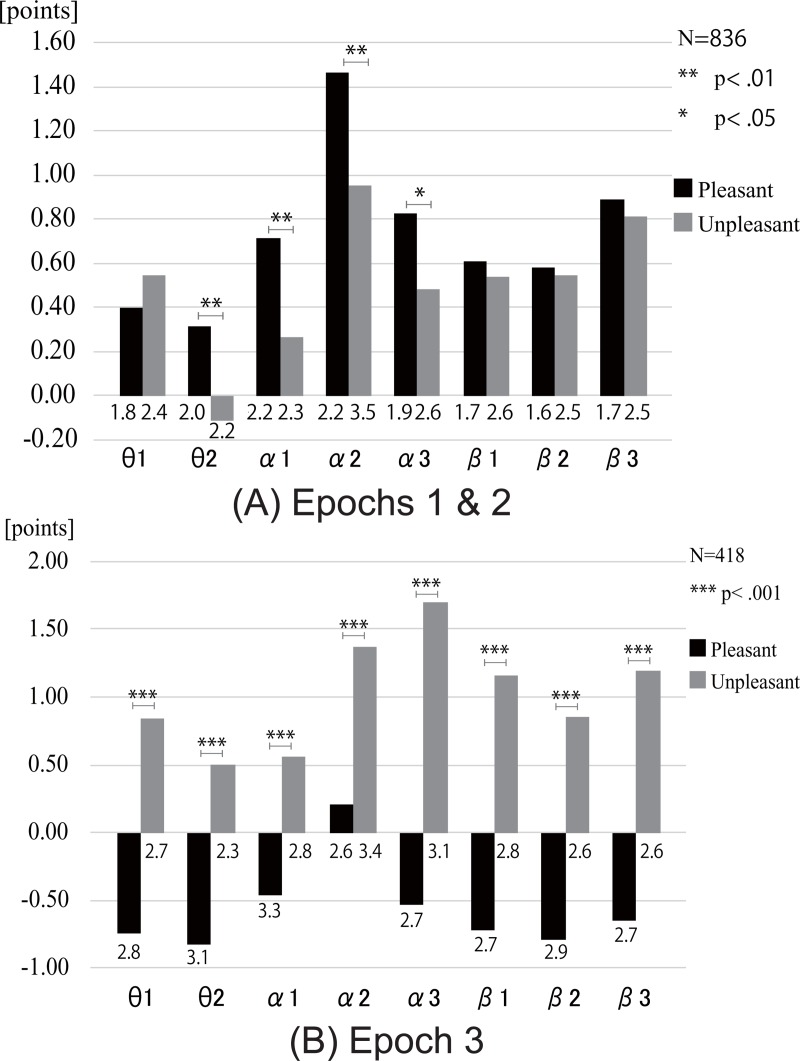
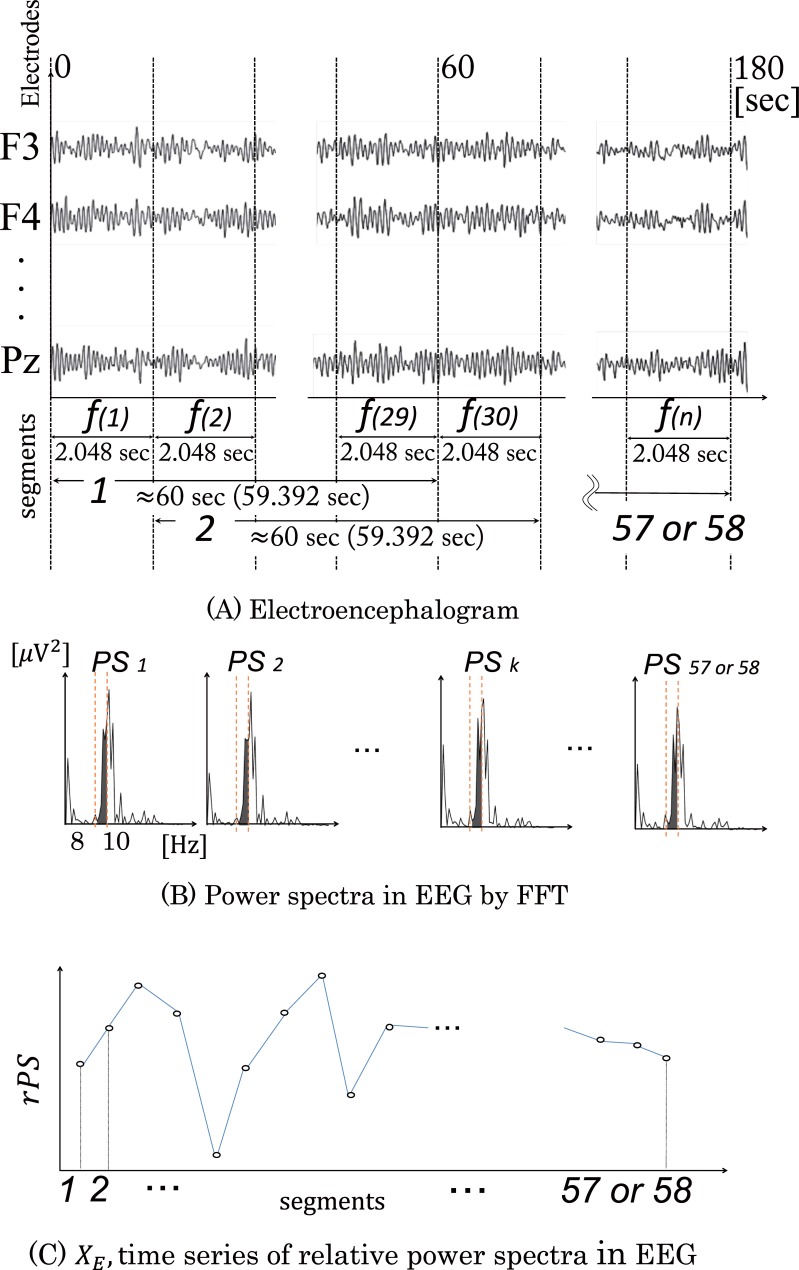
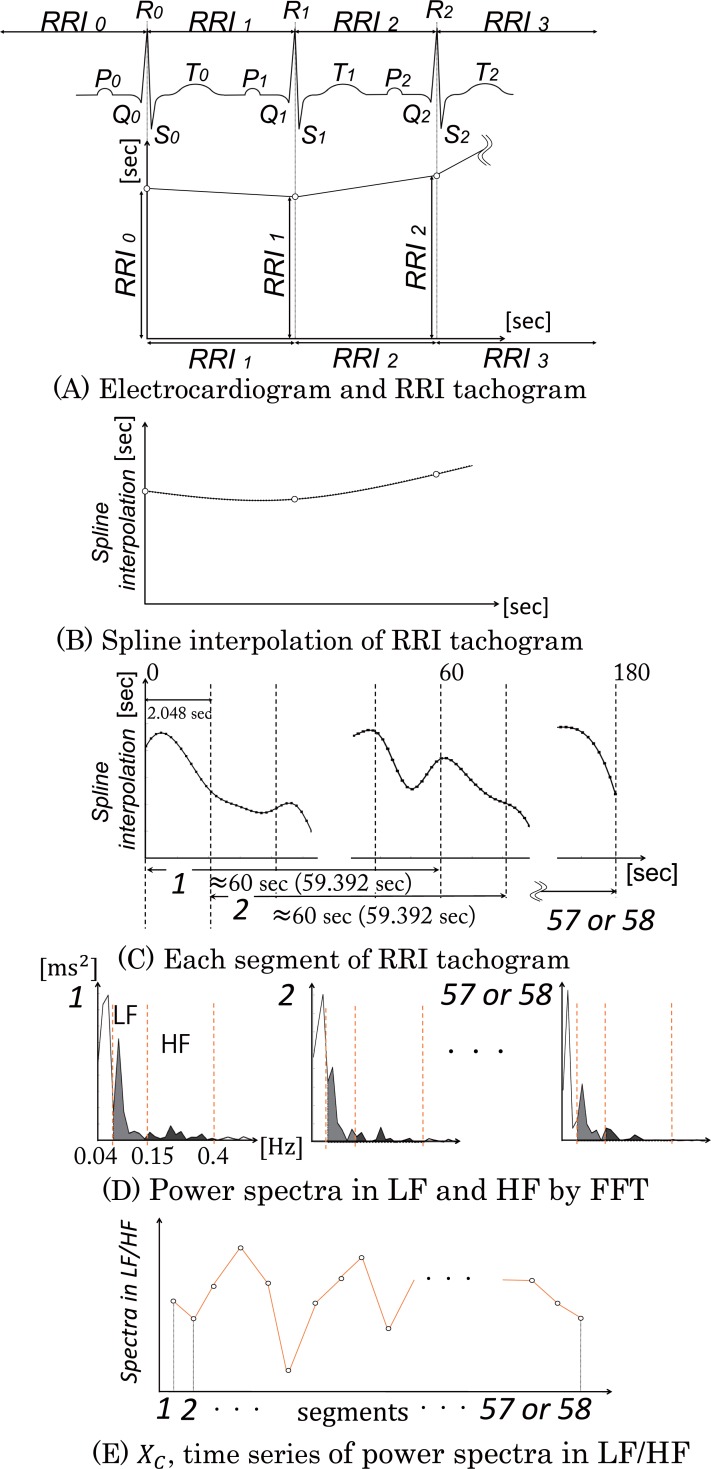
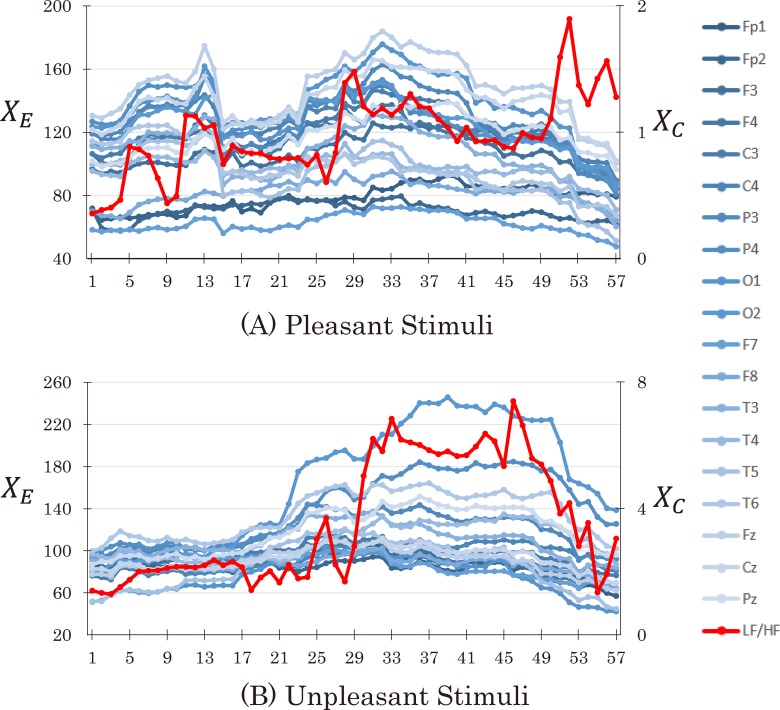
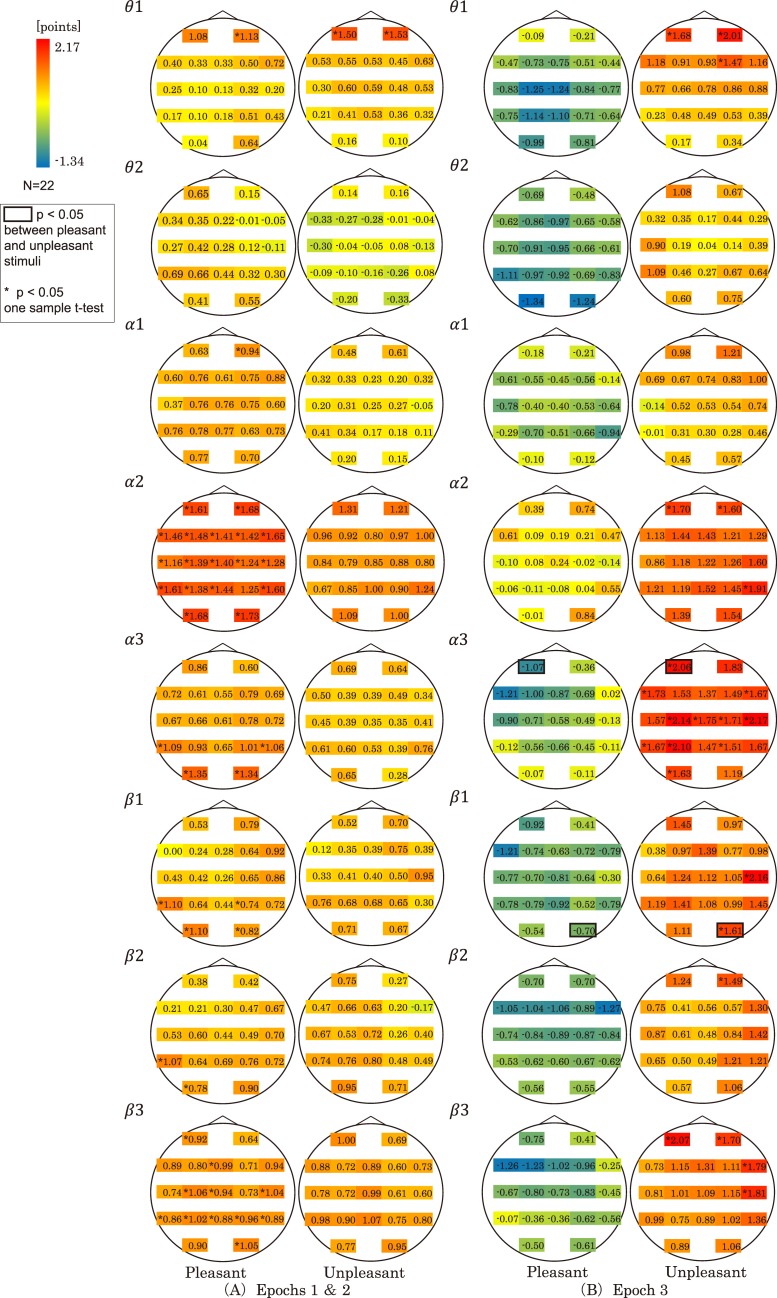
Psychiatric symptoms are often accompanied by somatic symptoms induced by the activity of the autonomic nervous system (ANS). The aim of this study was to calculate the time lag between electroencephalography (EEG) and electrocardiography (ECG) responses, to clarify the changes in the relationship between the cerebral cortex (CC) and the sympathetic nervous system (SNS) during emotional recall processing. Twenty-two healthy young adults were examined. Their EEG and ECG data were simultaneously recorded during emotional audiovisual recall tasks using pleasant and unpleasant stimuli for 180 s, with three repetitions (Epochs 1 & 2 and Epoch 3). The EEG data were analyzed using a fast Fourier transform (FFT) to obtain a time series of relative power spectra, XE, in the theta 1, theta 2, alpha 1, alpha 2, alpha 3, beta 1, beta 2, and beta 3 bands. Time series of RR (inter-beat) intervals (time intervals between successive R waves) derived from the ECG spectral analysis using FFT was applied to the resampled time series of RR intervals over about 60 s to obtain a time series of power spectra for the ratio low frequency/high frequency (LH/HF), XC, which reflects the activity of the sympathetic nervous function. The time lag between XE and XC was calculated using wavelet-crosscorrelation analysis. The results demonstrated that the brain responded to unfamiliar emotionally pleasant stimuli in Epochs 1 & 2 earlier than the SNS, whereas the brain and SNS responded to unfamiliar unpleasant stimuli nearly simultaneously. The brain was activated rapidly in response to familiar unpleasant stimuli, although SNS responded more rapidly to familiar pleasant stimuli than the brain in Epoch 3. Our results quantitatively describe the relationship between the CC and the ANS during emotional recall.
精神症状常伴有自主神经系统(ANS)活动引起的躯体症状。本研究旨在计算脑电图(EEG)和心电图(ECG)反应之间的时间滞后,以阐明情绪回忆处理过程中大脑皮层(CC)与交感神经系统(SNS)之间关系的变化。检查了 22 名健康的年轻成年人。在使用愉快和不愉快刺激的情绪视听回忆任务中,同时记录他们的 EEG 和 ECG 数据,持续 180 秒,重复 3 次(Epoch 1 & 2 和 Epoch 3)。使用快速傅里叶变换(FFT)分析 EEG 数据以获得相对功率谱 XE 的时间序列,在 theta 1、theta 2、alpha 1、alpha 2、alpha 3、beta 1、beta 2 和 beta 3 波段。从 ECG 频谱分析中使用 FFT 获得 RR(心跳)间隔(连续 R 波之间的时间间隔)的时间序列,并将其应用于约 60 秒的 RR 间隔的重采样时间序列,以获得反映交感神经功能活动的比值低频/高频(LH/HF)XC 的功率谱时间序列。使用小波互相关分析计算 XE 和 XC 之间的时间滞后。结果表明,大脑对陌生的情绪愉快刺激的反应在 Epoch 1 & 2 中比 SNS 更早,而大脑和 SNS 对陌生的不愉快刺激的反应几乎是同时的。大脑对熟悉的不愉快刺激迅速激活,尽管 SNS 在 Epoch 3 中对熟悉的愉快刺激的反应比大脑更快。我们的结果定量描述了情绪回忆过程中 CC 和 ANS 之间的关系。