Department of Biomedical Engineering, School of Life Science and Technology, Xi'an Jiaotong University, Xi'an, China.
School of Computer Science and Technology, Xidian University, Xi'an, China.
BMC Bioinformatics. 2020 Mar 5;21(1):97. doi: 10.1186/s12859-020-3421-1.
With the rapid development of whole exome sequencing (WES), an increasing number of tools are being proposed for copy number variation (CNV) detection based on this technique. However, no comprehensive guide is available for the use of these tools in clinical settings, which renders them inapplicable in practice. To resolve this problem, in this study, we evaluated the performances of four WES-based CNV tools, and established a guideline for the recommendation of a suitable tool according to the application requirements.
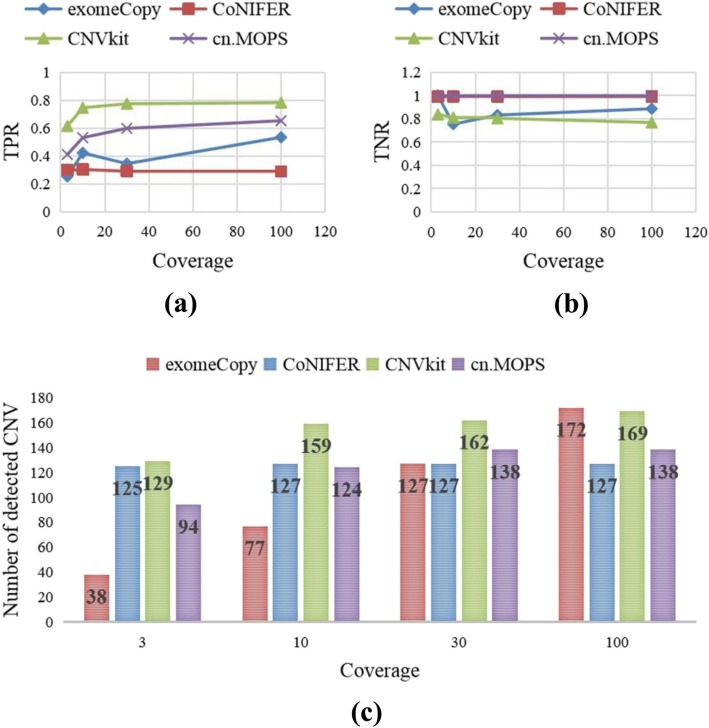
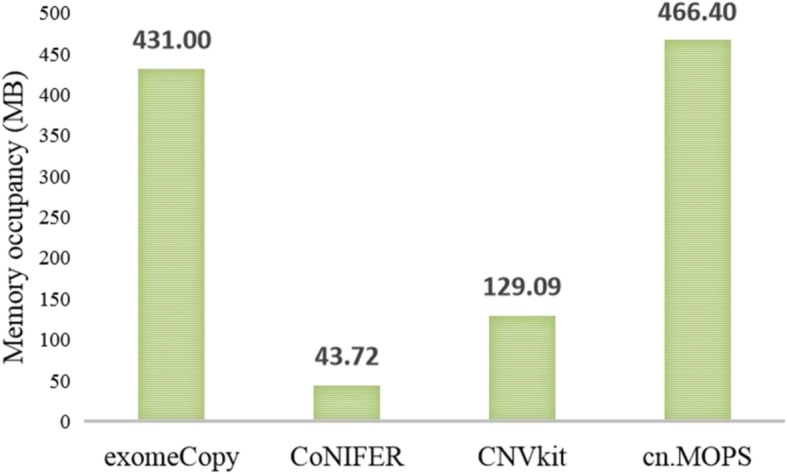
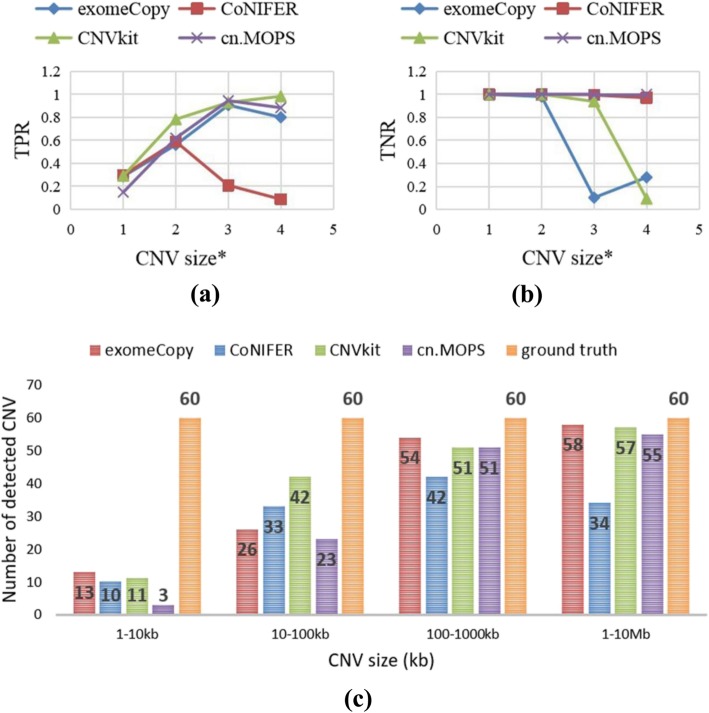
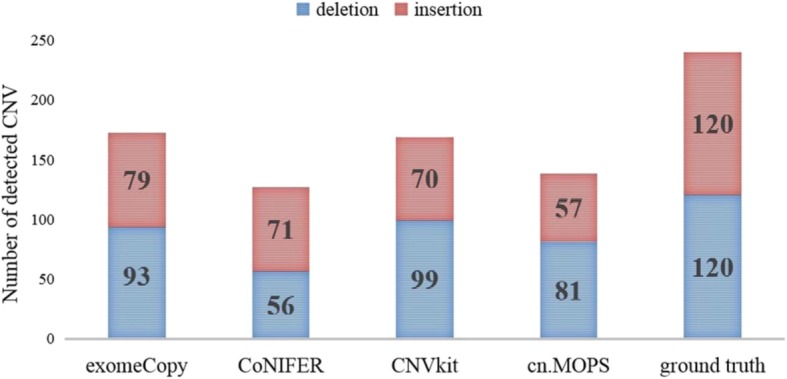
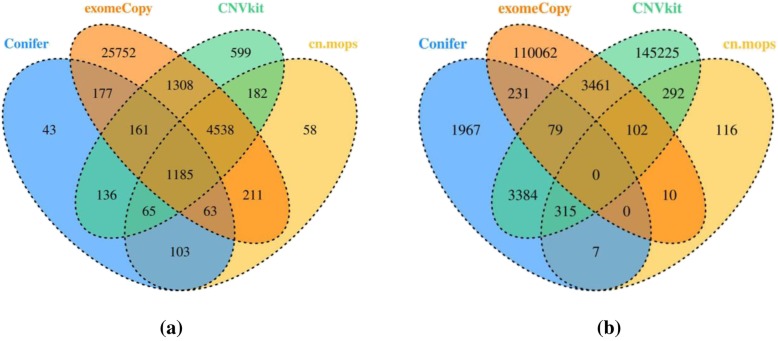
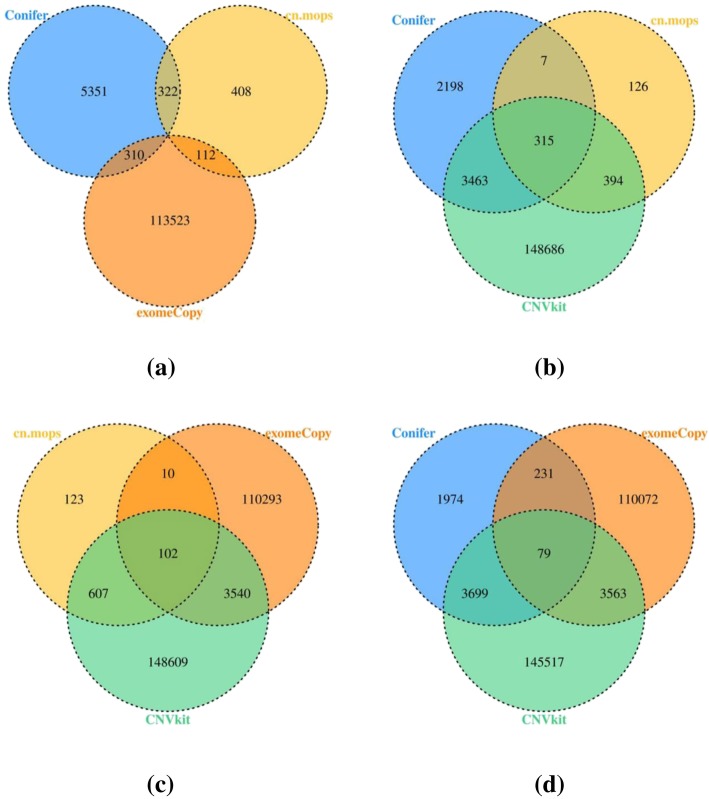
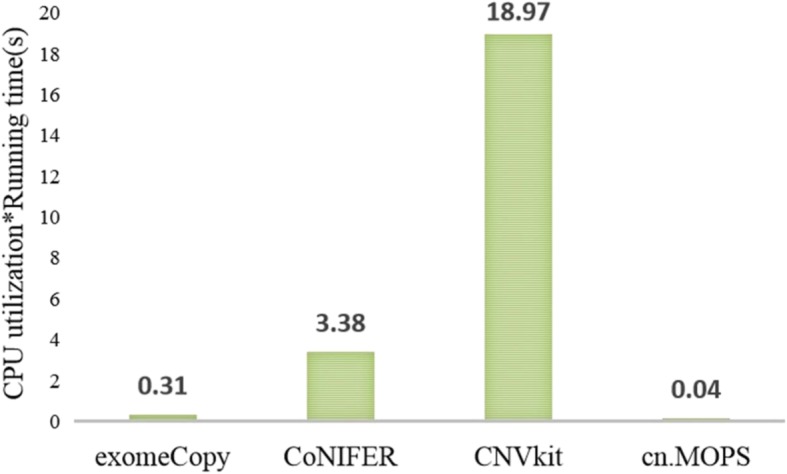
In this study, first, we selected four WES-based CNV detection tools: CoNIFER, cn.MOPS, CNVkit and exomeCopy. Then, we evaluated their performances in terms of three aspects: sensitivity and specificity, overlapping consistency and computational costs. From this evaluation, we obtained four main results: (1) The sensitivity increases and subsequently stabilizes as the coverage or CNV size increases, while the specificity decreases. (2) CoNIFER performs better for CNV insertions than for CNV deletions, while the remaining tools exhibit the opposite trend. (3) CoNIFER, cn.MOPS and CNVkit realize satisfactory overlapping consistency, which indicates their results are trustworthy. (4) CoNIFER has the best space complexity and cn.MOPS has the best time complexity among these four tools. Finally, we established a guideline for tools' usage according to these results.
No available tool performs excellently under all conditions; however, some tools perform excellently in some scenarios. Users can obtain a CNV tool recommendation from our paper according to the targeted CNV size, the CNV type or computational costs of their projects, as presented in Table 1, which is helpful even for users with limited knowledge of computer science.
随着外显子组测序(WES)的快速发展,越来越多的工具被提出用于基于该技术的拷贝数变异(CNV)检测。然而,在临床环境中使用这些工具尚无综合指南,导致它们在实践中无法应用。为了解决这个问题,在本研究中,我们评估了四种基于 WES 的 CNV 工具的性能,并根据应用要求制定了推荐合适工具的指南。
在本研究中,我们首先选择了四种基于 WES 的 CNV 检测工具:CoNIFER、cn.MOPS、CNVkit 和 exomeCopy。然后,我们从三个方面评估了它们的性能:灵敏度和特异性、重叠一致性和计算成本。从这个评估中,我们得到了四个主要结果:(1)随着覆盖度或 CNV 大小的增加,灵敏度增加,随后趋于稳定,而特异性降低。(2)CoNIFER 在 CNV 插入方面的性能优于 CNV 缺失,而其余工具则表现出相反的趋势。(3)CoNIFER、cn.MOPS 和 CNVkit 实现了令人满意的重叠一致性,这表明它们的结果是可信的。(4)在这四种工具中,CoNIFER 具有最佳的空间复杂度,而 cn.MOPS 具有最佳的时间复杂度。最后,我们根据这些结果建立了工具使用指南。
没有一种可用的工具在所有情况下都表现出色;然而,一些工具在某些场景下表现出色。根据表 1 中靶向 CNV 大小、CNV 类型或项目的计算成本,用户可以从我们的论文中获得 CNV 工具推荐,即使对于计算机科学知识有限的用户也是如此。