Yuzefpolskaya Melana, Bohn Bruno, Nasiri Mojdeh, Zuver Amelia M, Onat Drew D, Royzman Eugene A, Nwokocha Joseph, Mabasa Melissa, Pinsino Alberto, Brunjes Danielle, Gaudig Antonia, Clemons Autumn, Trinh Pauline, Stump Stephania, Giddins Marla J, Topkara Veli K, Garan A Reshad, Takeda Koji, Takayama Hiroo, Naka Yoshifumi, Farr Maryjane A, Nandakumar Renu, Uhlemann Anne-Catrin, Colombo Paolo C, Demmer Ryan T
Division of Cardiology, Department of Medicine, New York Presbyterian Hospital, Columbia University, New York City, New York.
Division of Epidemiology and Community Health, School of Public Health, University of Minnesota, Minneapolis, Minnesota.
J Heart Lung Transplant. 2020 Sep;39(9):880-890. doi: 10.1016/j.healun.2020.02.004. Epub 2020 Feb 13.
Gut microbial imbalance may contribute to endotoxemia, inflammation, and oxidative stress in heart failure (HF). Changes occurring in the intestinal microbiota and inflammatory/oxidative milieu during HF progression and following left ventricular assist device (LVAD) or heart transplantation (HT) are unknown. We aimed to investigate variation in gut microbiota and circulating biomarkers of endotoxemia, inflammation, and oxidative stress in patients with HF (New York Heart Association, Class I-IV), LVAD, and HT.
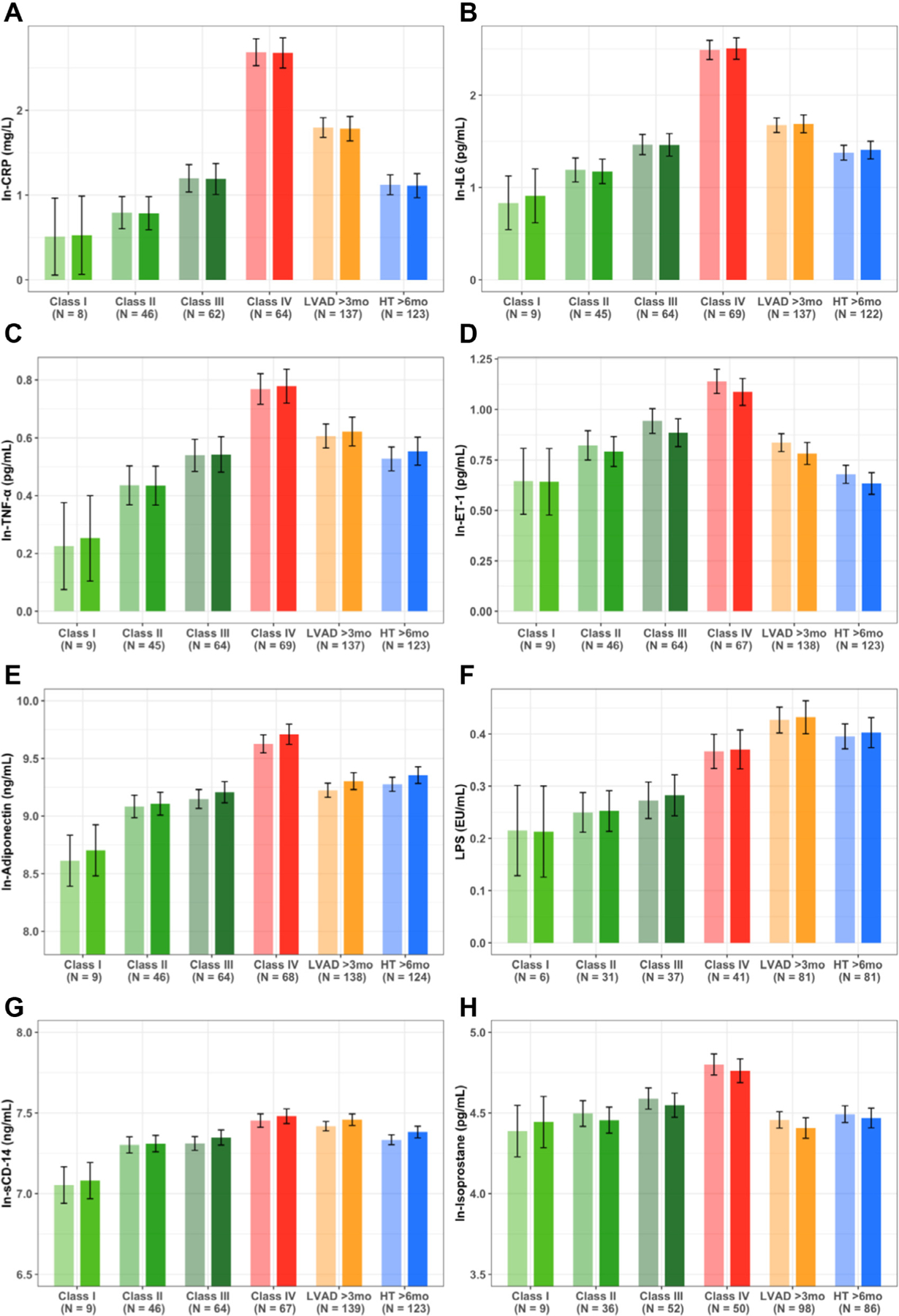
We enrolled 452 patients. Biomarkers of endotoxemia (lipopolysaccharide and soluble [sCD14]), inflammation (C-reactive protein, interleukin-6, tumor necrosis factor-α, and endothelin-1 adiponectin), and oxidative stress (isoprostane) were measured in 644 blood samples. A total of 304 stool samples were analyzed using 16S rRNA sequencing.
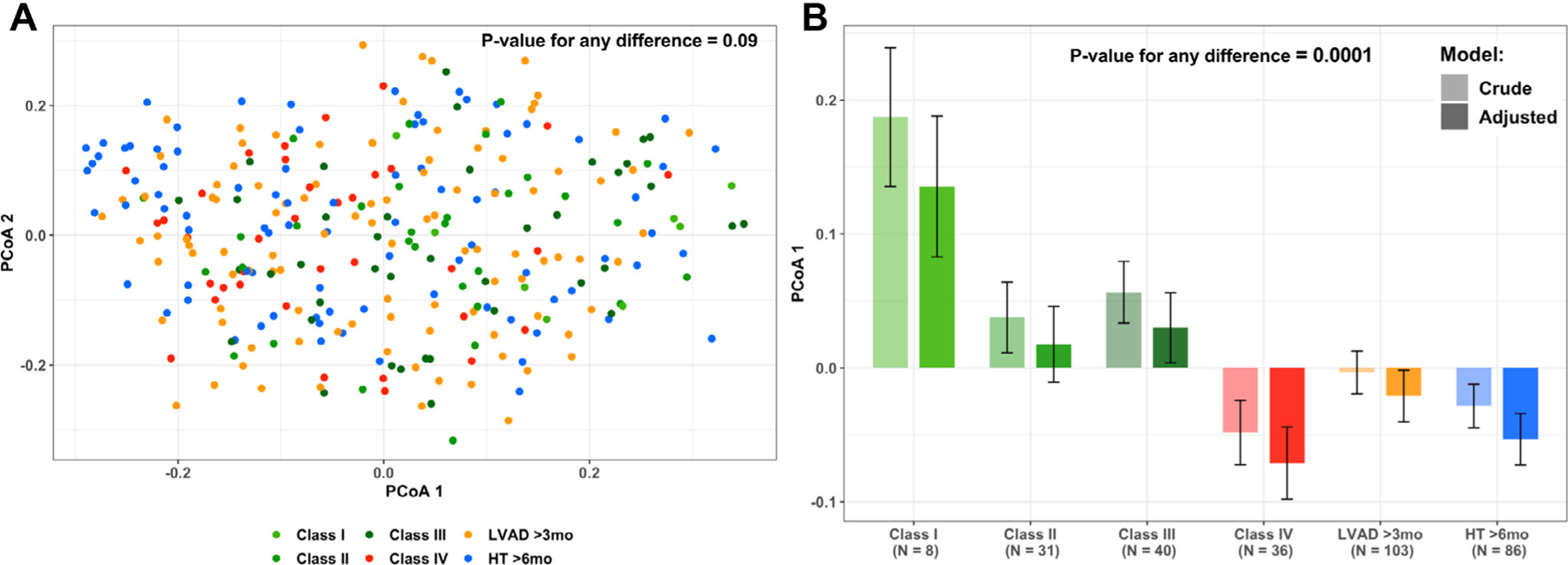
Gut microbial community measures of alpha diversity were progressively lower across worsening HF class and were similarly reduced in patients with LVAD and HT (p < 0.05). Inflammation and oxidative stress were elevated in patients with Class IV HF vs all other groups (all p < 0.05). Lipopolysaccharide was elevated in patients with Class IV HF (vs Class I-III) as well as in patients with LVAD and HT (p < 0.05). sCD14 was elevated in patients with Class IV HF and LVAD (vs Class I-III, p < 0.05) but not in patients with HT.
Reduced gut microbial diversity and increased endotoxemia, inflammation, and oxidative stress are present in patients with Class IV HF. Inflammation and oxidative stress are lower among patients with LVAD and HT relative to patients with Class IV HF, whereas reduced gut diversity and endotoxemia persist in LVAD and HT.
肠道微生物失衡可能导致心力衰竭(HF)患者出现内毒素血症、炎症和氧化应激。HF进展过程中以及左心室辅助装置(LVAD)植入后或心脏移植(HT)后肠道微生物群以及炎症/氧化环境的变化尚不清楚。我们旨在研究HF(纽约心脏协会I-IV级)、LVAD和HT患者肠道微生物群的变化以及内毒素血症、炎症和氧化应激的循环生物标志物。
我们纳入了452例患者。在644份血样中检测了内毒素血症(脂多糖和可溶性[sCD14])、炎症(C反应蛋白、白细胞介素-6、肿瘤坏死因子-α和内皮素-1脂联素)和氧化应激(异前列腺素)的生物标志物。使用16S rRNA测序分析了总共304份粪便样本。
随着HF分级加重,肠道微生物群落的α多样性测量值逐渐降低,LVAD和HT患者的α多样性测量值也同样降低(p<0.05)。与所有其他组相比,IV级HF患者的炎症和氧化应激升高(所有p<0.05)。IV级HF患者(与I-III级相比)以及LVAD和HT患者的脂多糖升高(p<0.05)。IV级HF和LVAD患者的sCD14升高(与I-III级相比,p<0.05),但HT患者未升高。
IV级HF患者存在肠道微生物多样性降低以及内毒素血症、炎症和氧化应激增加的情况。相对于IV级HF患者,LVAD和HT患者的炎症和氧化应激较低,而LVAD和HT患者肠道多样性降低和内毒素血症持续存在。