Division of Hematology, Mayo Clinic, Rochester, MN, USA.
Department of Health Sciences Research, Mayo Clinic, Rochester, MN, USA.
Leukemia. 2021 Feb;35(2):522-533. doi: 10.1038/s41375-020-0766-4. Epub 2020 Mar 5.
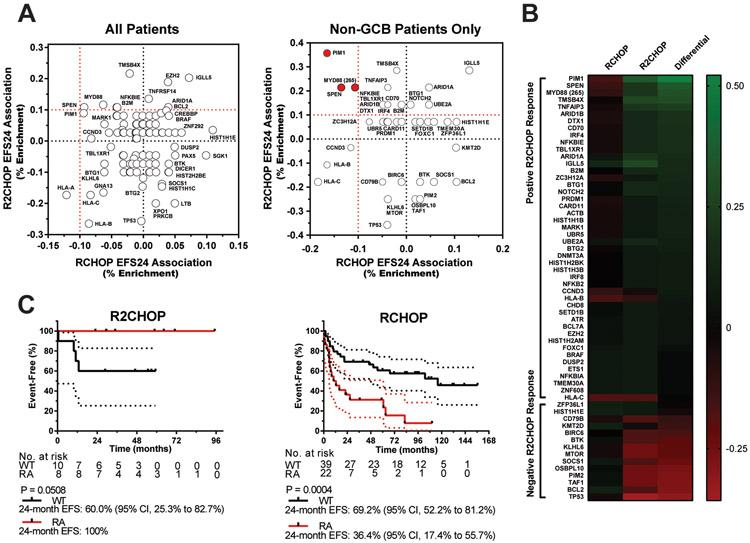
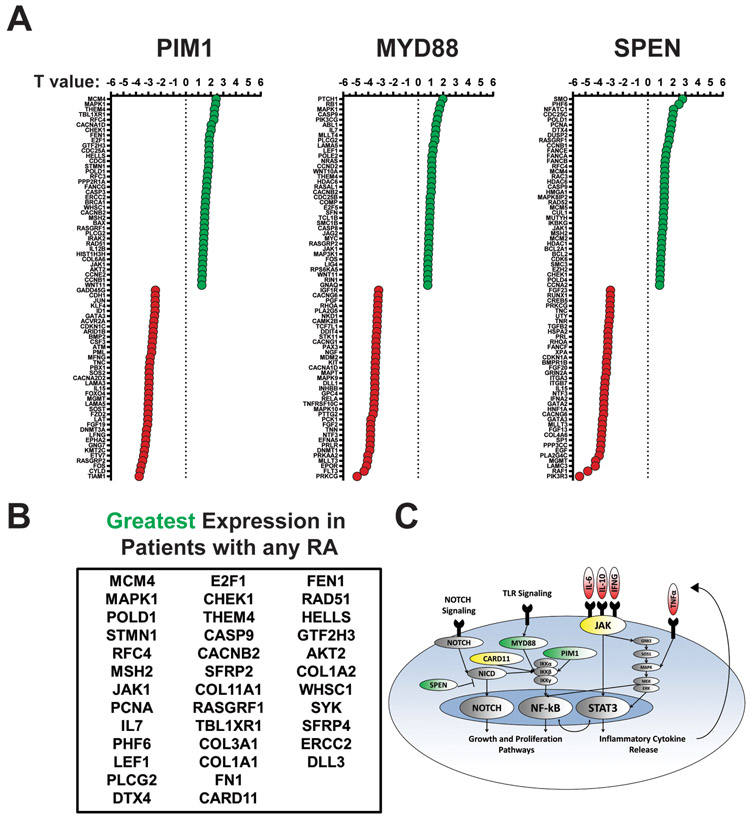
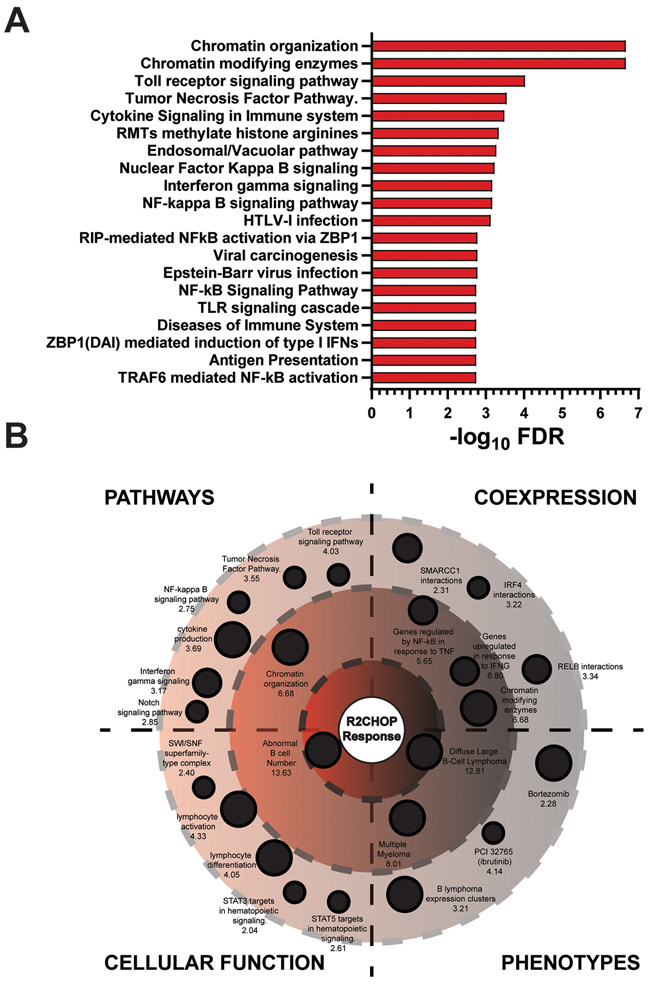
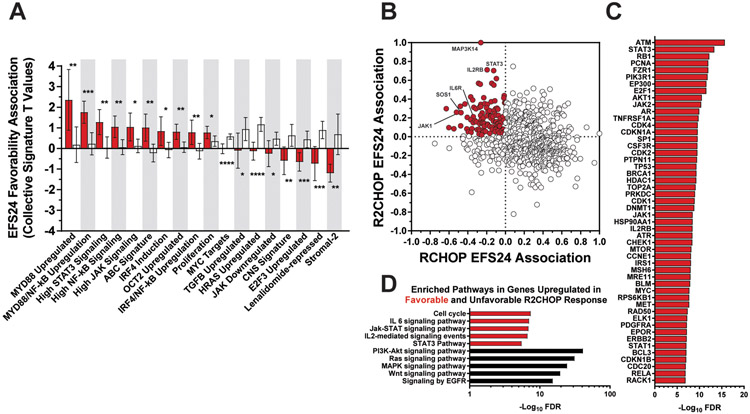
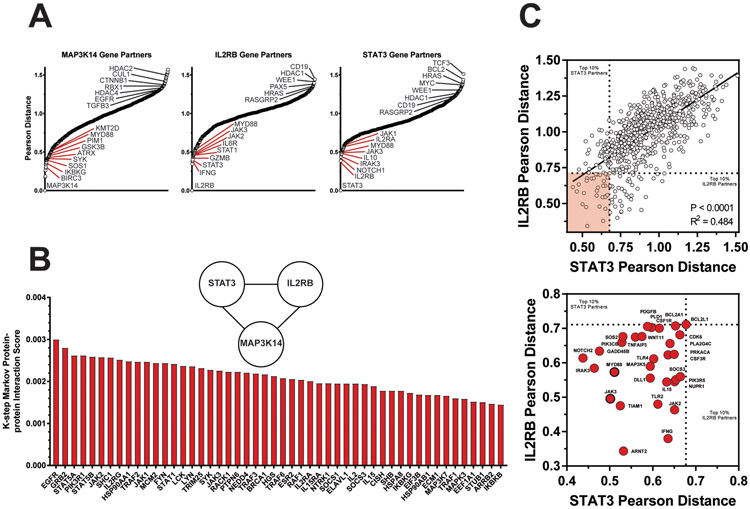
Diffuse large B-cell lymphoma (DLBCL) is the most common lymphoma, and front line therapies have not improved overall outcomes since the advent of immunochemotherapy. By pairing DNA and gene expression data with clinical response data, we identified a high-risk subset of non-GCB DLBCL patients characterized by genomic alterations and expression signatures capable of sustaining an inflammatory environment. These mutational alterations (PIM1, SPEN, and MYD88 [L265P]) and expression signatures (NF-κB, IRF4, and JAK-STAT engagement) were associated with proliferative signaling, and were found to be enriched in patients treated with RCHOP that experienced unfavorable outcomes. However, patients with these high-risk mutations had more favorable outcomes when the immunomodulatory agent lenalidomide was added to RCHOP (R2CHOP). We are the first to report the genomic validation of a high-risk phenotype with a preferential response towards R2CHOP therapy in non-GCB DLBCL patients. These conclusions could be translated to a clinical setting to identify the ~38% of non-GCB patients that could be considered high-risk, and would benefit from alternative therapies to standard RCHOP based on personalized genomic data.
弥漫性大 B 细胞淋巴瘤(DLBCL)是最常见的淋巴瘤,自免疫化学疗法问世以来,一线疗法并未改善整体预后。通过将 DNA 和基因表达数据与临床反应数据相结合,我们确定了非生发中心 B 细胞(non-GCB)DLBCL 患者的一个高危亚组,其特征是具有能够维持炎症环境的基因组改变和表达特征。这些突变改变(PIM1、SPEN 和 MYD88 [L265P])和表达特征(NF-κB、IRF4 和 JAK-STAT 参与)与增殖信号有关,并且在接受 RCHOP 治疗后出现不良结局的患者中更为丰富。然而,当免疫调节剂来那度胺添加到 RCHOP(R2CHOP)中时,具有这些高危突变的患者具有更好的结局。我们是第一个报告非生发中心 B 细胞 DLBCL 患者中具有高风险表型的基因组验证,并对 R2CHOP 治疗具有优先反应的研究。这些结论可以转化为临床环境,以确定约 38%的非生发中心 B 细胞患者可以被认为是高危患者,并可以根据个性化基因组数据从标准 RCHOP 治疗中受益于替代疗法。