Liu Ye, Xin Jingjing, Liu Lina, Song Aiping, Guan Zhiyong, Fang Weimin, Chen Fadi
State Key Laboratory of Crop Genetics and Germplasm Enhancement, Key Laboratory of Landscaping, Ministry of Agriculture and Rural Affairs, College of Horticulture, Nanjing Agricultural University, Nanjing, China.
Hortic Res. 2020 Mar 1;7:23. doi: 10.1038/s41438-020-0245-0. eCollection 2020.
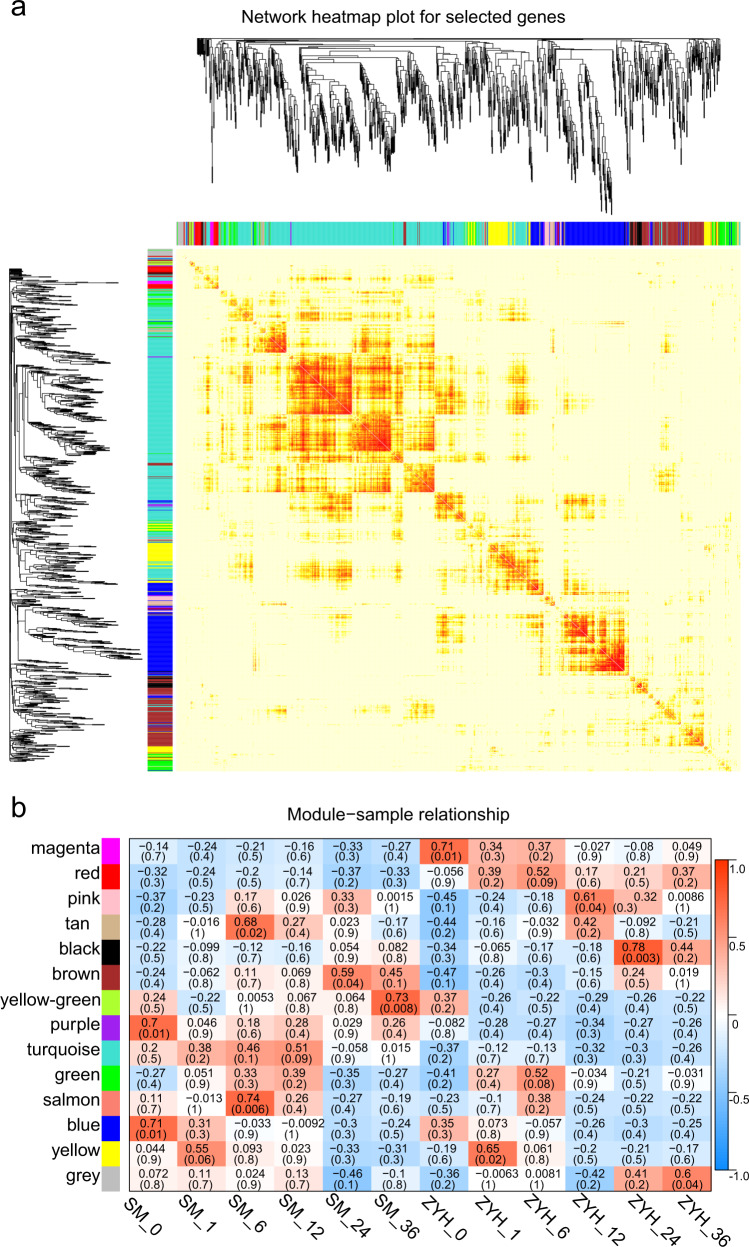
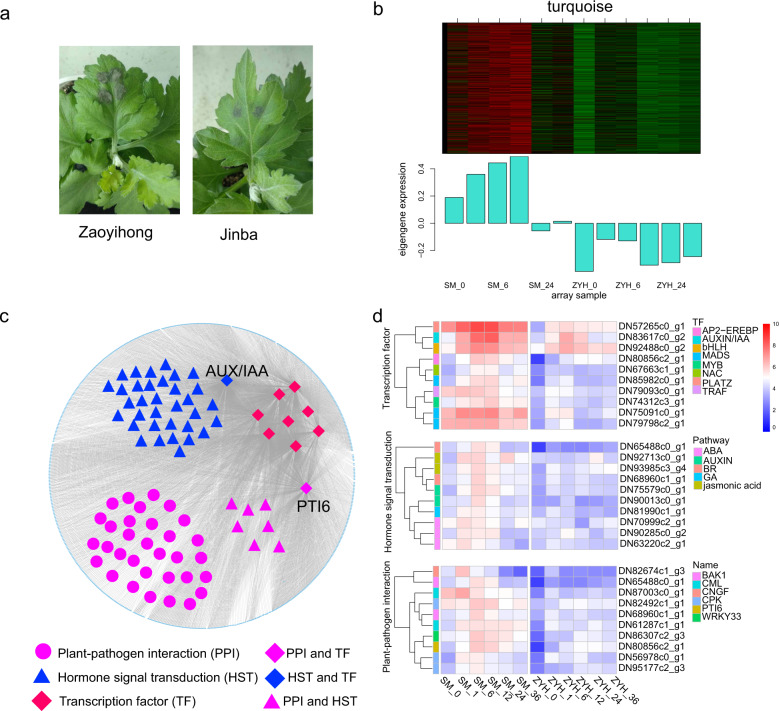
Chrysanthemum () black spot disease (CBS) poses a major threat to Chrysanthemum cultivation owing to suitable climate conditions and current lack of resistant cultivars for greenhouse cultivation. In this study, we identified a number of genes that respond to infection in resistant and susceptible Chrysanthemum cultivars. Based on RNA sequencing technology and a weighted gene coexpression network analysis (WGCNA), we constructed a model to elucidate the response of Chrysanthemum leaves to infection at different stages and compared the mapped response of the resistant cultivar 'Jinba' to that of the susceptible cultivar 'Zaoyihong'. In the early stage of infection, when lesions had not yet formed, abscisic acid (ABA), salicylic acid (SA) and EDS1-mediated resistance played important roles in the Chrysanthemum defense system. With the formation of necrotic lesions, ethylene (ET) metabolism and the Ca signal transduction pathway strongly responded to infection. During the late stage, when necrotic lesions continued to expand, members of the multidrug and toxic compound extrusion (MATE) gene family were highly expressed, and their products may be involved in defense against invasion by exporting toxins produced by the pathogen, which plays important roles in the pathogenicity of . Furthermore, the function of hub genes was verified by qPCR and transgenic assays. The identification of hub genes at different stages, the comparison of hub genes between the two cultivars and the highly expressed genes in the resistant cultivar 'Jinba' provide a theoretical basis for breeding cultivars resistant to CBS.
菊花黑斑病(CBS)由于适宜的气候条件以及目前缺乏适合温室栽培的抗病品种,对菊花种植构成了重大威胁。在本研究中,我们鉴定了一些在抗病和感病菊花品种中对感染有响应的基因。基于RNA测序技术和加权基因共表达网络分析(WGCNA),我们构建了一个模型来阐明菊花叶片在不同阶段对感染的响应,并比较了抗病品种‘锦白’和感病品种‘早乙红’的映射响应。在感染早期,当病斑尚未形成时,脱落酸(ABA)、水杨酸(SA)和EDS1介导的抗性在菊花防御系统中发挥重要作用。随着坏死病斑的形成,乙烯(ET)代谢和钙信号转导途径对感染有强烈响应。在后期,当坏死病斑持续扩大时,多药和有毒化合物外排(MATE)基因家族成员高度表达,其产物可能通过输出病原体产生的毒素参与抵御感染,这在病原菌的致病性中起重要作用。此外,通过qPCR和转基因试验验证了枢纽基因的功能。不同阶段枢纽基因的鉴定、两个品种之间枢纽基因的比较以及抗病品种‘锦白’中的高表达基因,为培育抗CBS的品种提供了理论依据。