State Key Laboratory of Tree Genetics and Breeding (Northeast Forestry University), 26 Hexing Road, Harbin, 150040, China.
BMC Plant Biol. 2022 Aug 25;22(1):413. doi: 10.1186/s12870-022-03793-5.
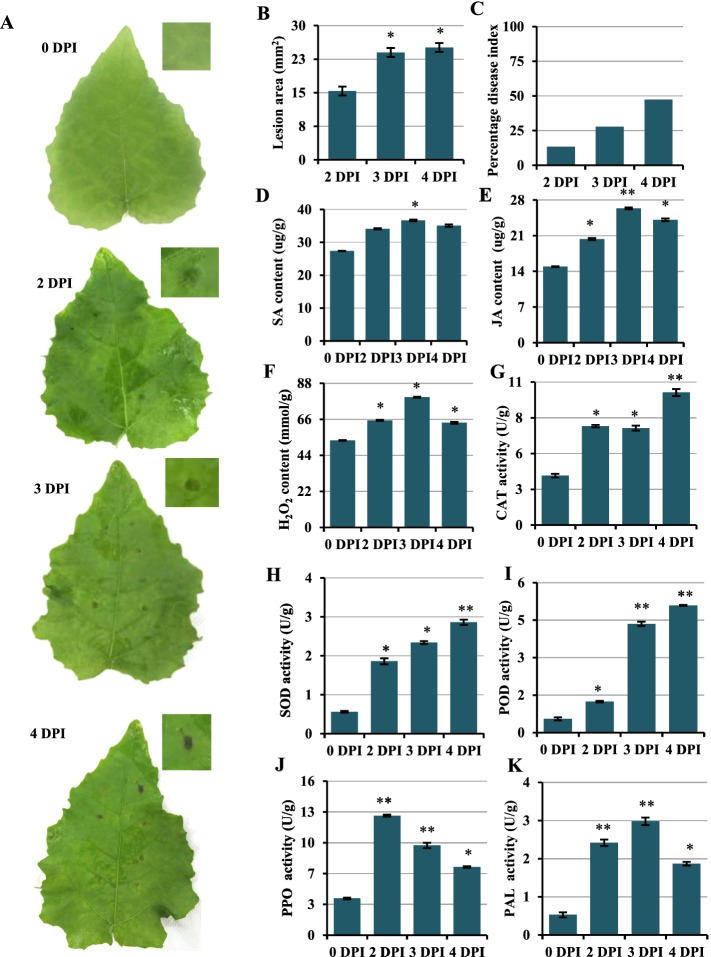
Populus davidiana × P. bollena is a species of poplar from northeastern China that is characterized by cold resistance and fast growth but now suffers from pathogen infections. Leaf blight caused by Alternaria alternata has become a common poplar disease that causes serious economic impacts, but the molecular mechanisms of resistance to A. alternata in P. davidiana × P. bollena are still unclear.
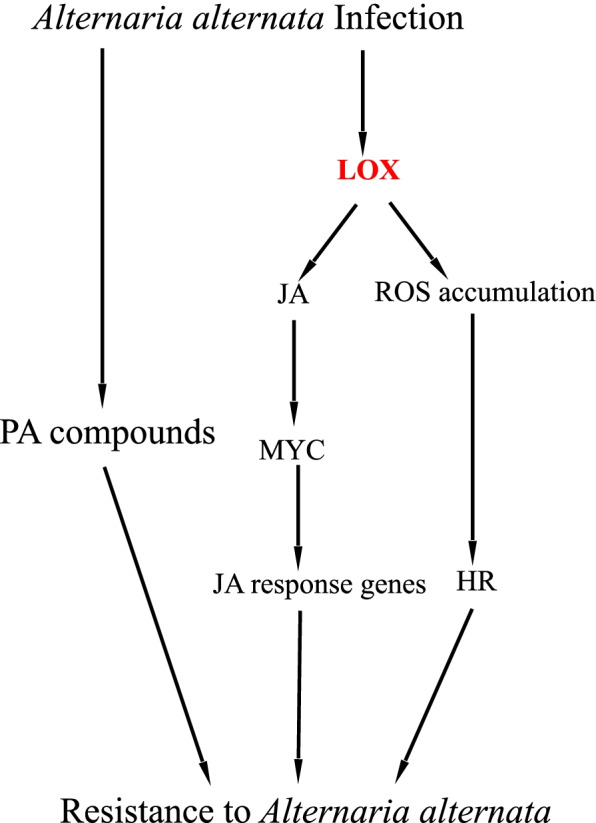
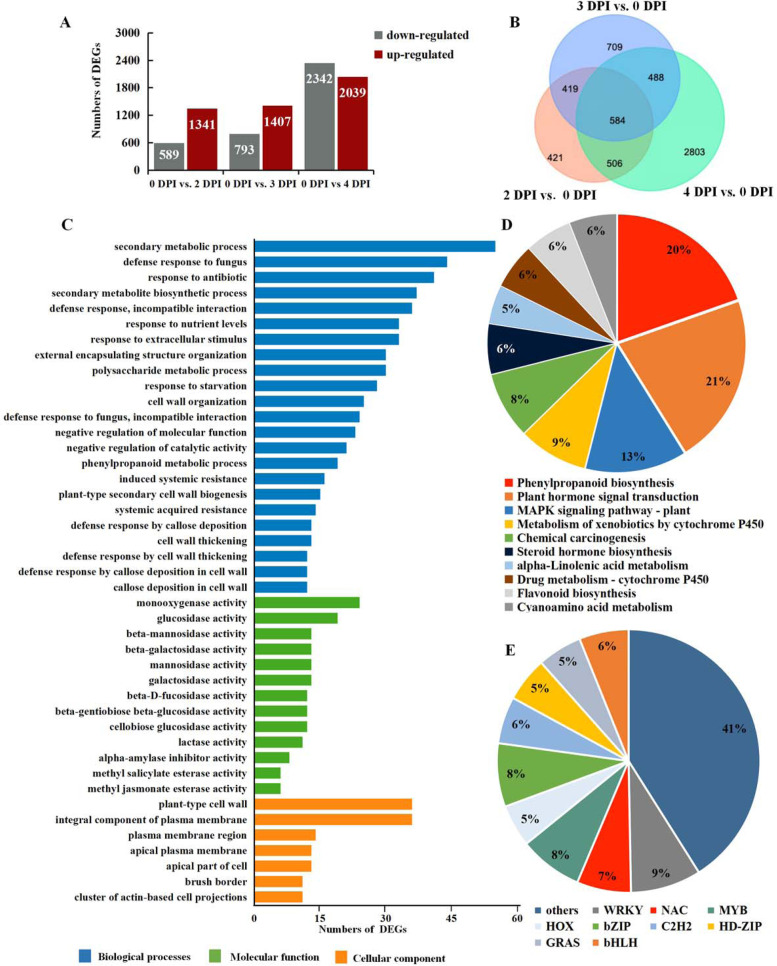
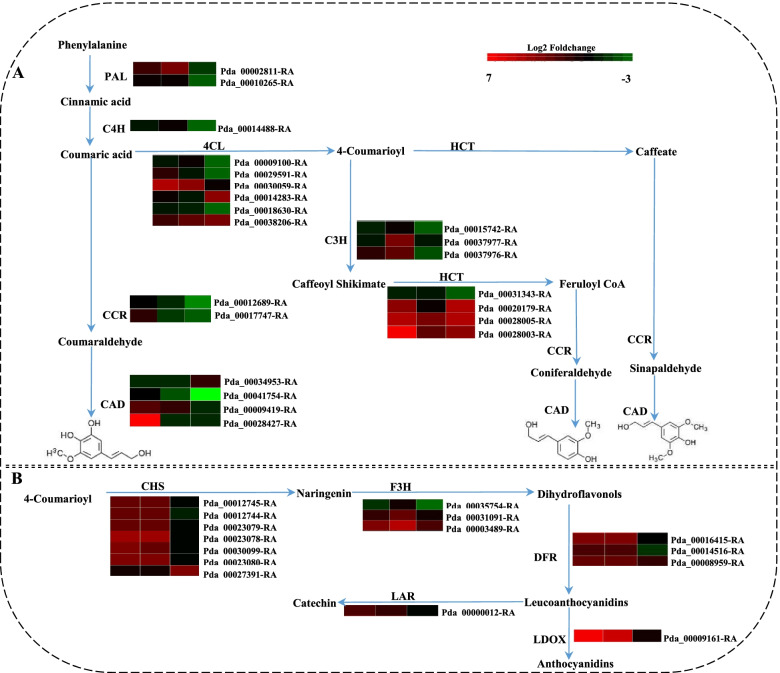
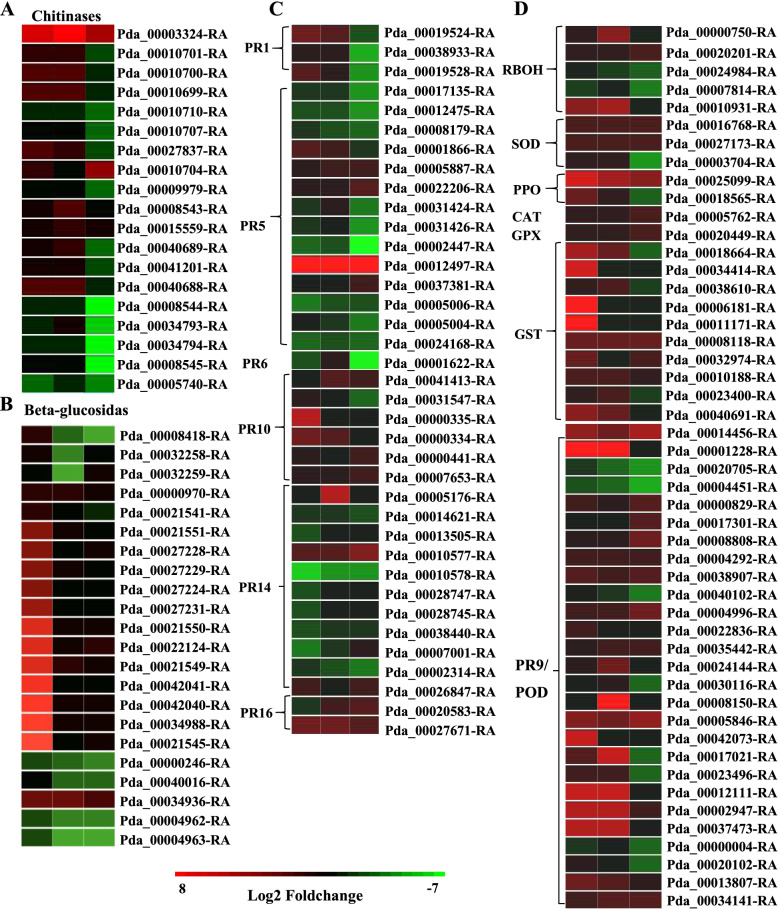
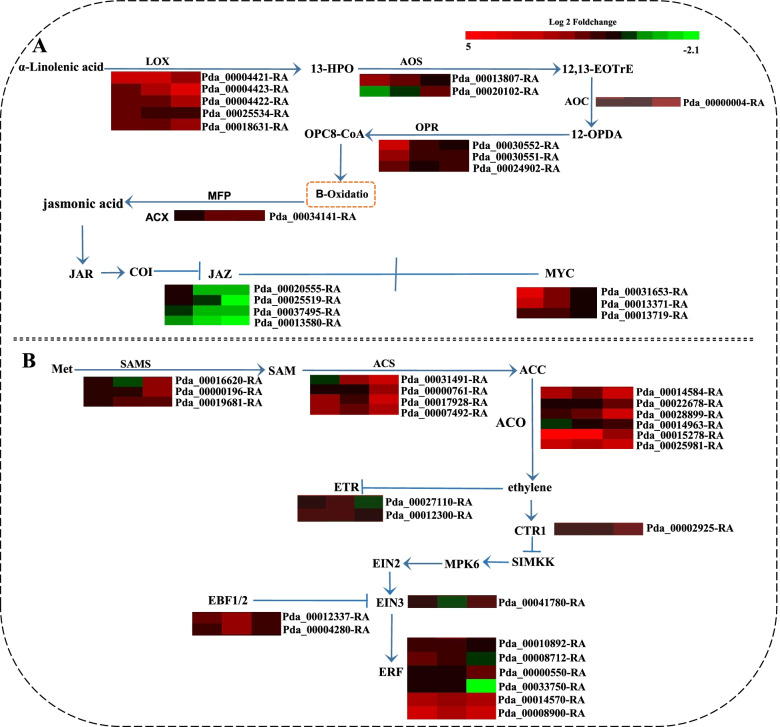
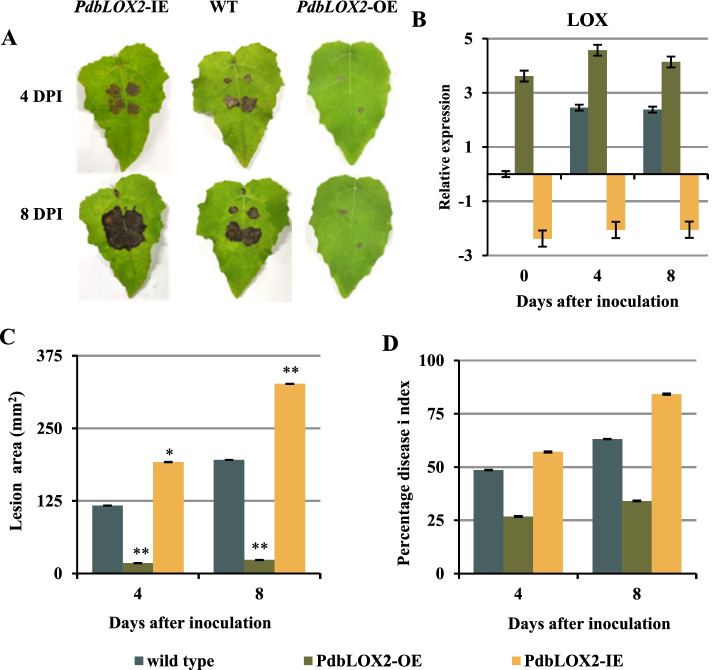
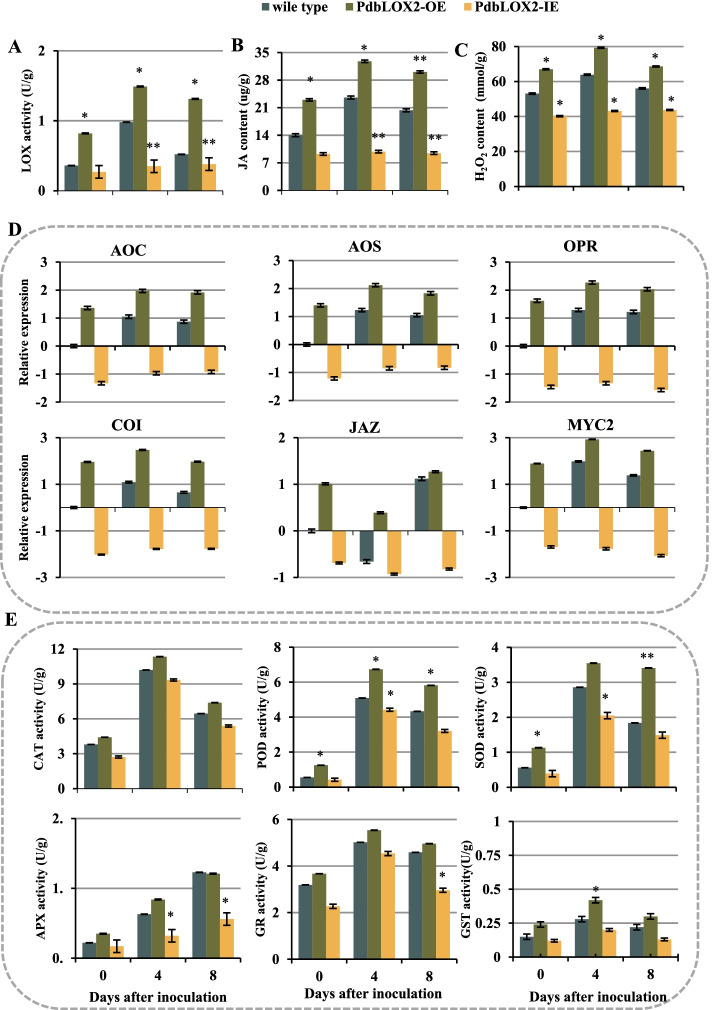
In this study, the transcriptomic response of P. davidiana × P. bollena to A. alternata infection was determined via RNA-Seq. Twelve cDNA libraries were generated from RNA isolated from three biological replicates at four time points (0, 2, 3, and 4 d post inoculation), and a total of 5,930 differentially expressed genes (DEGs) were detected (| log fold change |≥ 1 and FDR values < 0.05). Functional analysis revealed that the DEGs were mainly enriched for the "plant hormone signal transduction" pathway, followed by the "phenylpropanoid biosynthesis" pathway. In addition, DEGs that encode defense-related proteins and are related to ROS metabolism were also identified. Numerous transcription factors, such as the bHLH, WRKY and MYB families, were also induced by A. alternata infection. Among these DEGs, those related to JA biosynthesis and JA signal transduction were consistently activated. Therefore, the lipoxygenase gene PdbLOX2, which is involved in JA biosynthesis, was selected for functional characterization. Overexpression of PdbLOX2 enhanced the resistance of P. davidiana × P. bollena to A. alternata, whereas silencing this gene enhanced susceptibility to A. alternata infection.
These results provide new insight into the molecular mechanisms of poplar resistance to A. alternata infection and provide candidate genes for breeding resistant cultivars using genetic engineering.
山杨×毛白杨是中国东北地区的一种杨树,具有耐寒和生长迅速的特点,但现在受到病原体感染的困扰。由交链格孢菌引起的叶斑病已成为一种常见的杨树病害,造成严重的经济影响,但山杨×毛白杨对交链格孢菌的抗性的分子机制仍不清楚。
本研究通过 RNA-Seq 测定了山杨×毛白杨对交链格孢菌感染的转录组响应。从三个生物学重复的 RNA 中生成了 12 个 cDNA 文库,在接种后 0、2、3 和 4 d 四个时间点检测到总共 5930 个差异表达基因(| log 倍变化|≥1 和 FDR 值<0.05)。功能分析表明,DEGs 主要富集在“植物激素信号转导”途径,其次是“苯丙烷生物合成”途径。此外,还鉴定出编码防御相关蛋白并与 ROS 代谢相关的 DEGs。许多转录因子,如 bHLH、WRKY 和 MYB 家族,也被交链格孢菌感染诱导。在这些 DEGs 中,与 JA 生物合成和 JA 信号转导相关的基因持续被激活。因此,选择参与 JA 生物合成的脂氧合酶基因 PdbLOX2 进行功能表征。PdbLOX2 的过表达增强了山杨×毛白杨对交链格孢菌的抗性,而该基因的沉默则增强了对交链格孢菌感染的敏感性。
这些结果为杨树对交链格孢菌感染的抗性分子机制提供了新的见解,并为利用遗传工程培育抗性品种提供了候选基因。