
用于抗癌药物递送纳米颗粒设计的“理念”
" philosophy" for the design of anticancer drug delivery nanoparticles.
作者信息
Ai Yanwen, Tian Yuan, Qiao Jiaming, Wang Changnan, Li Huafei
机构信息
School of Lifesciences, Shanghai University, Shanghai, China.
出版信息
Biomater Transl. 2024 Jun 28;5(2):144-156. doi: 10.12336/biomatertransl.2024.02.005. eCollection 2024.
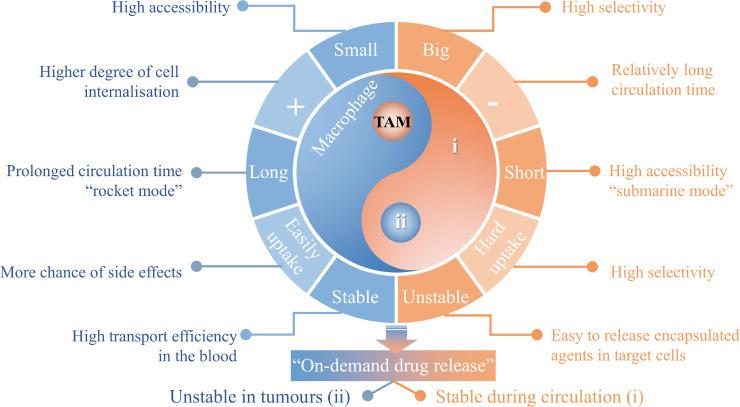
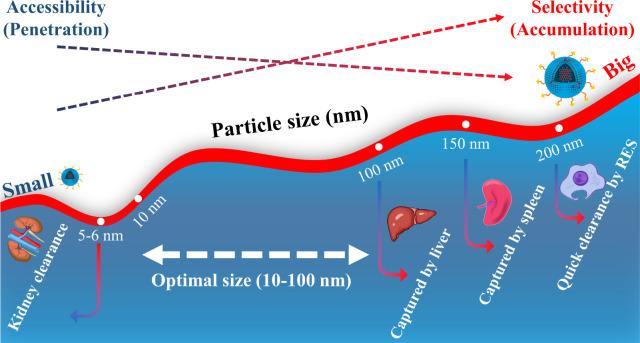
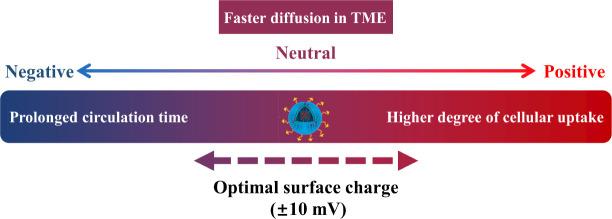
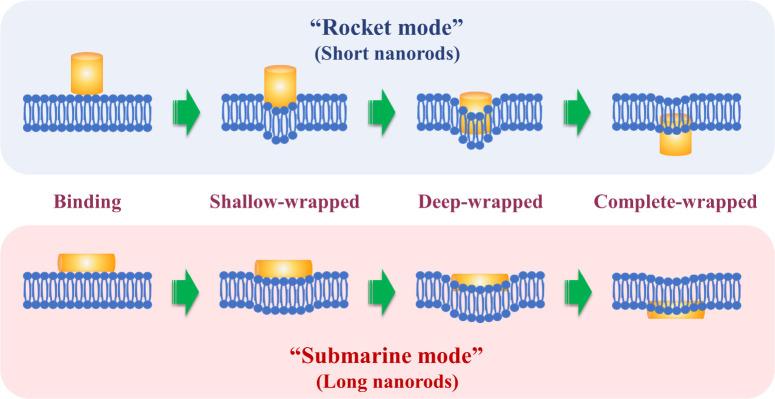
Understanding the in vivo transport process provides guidelines for designing ideal nanoparticles (NPs) with higher efficacy and fewer off-target effects. Many factors, such as particle size, morphology, surface potential, structural stability, and etc., may influence the delivering process of NPs due to the existence of various physiological barriers within the body. Herein, we summarise the distinct influences of NP physicochemical properties on the four consecutive in vivo transport steps: (1) navigating with bloodstream within blood vessels, (2) transport across vasculature walls into tumour tissues, (3) intratumoural transport through the interstitial space, and (4) cellular uptake & intracellular delivery by cancerous cells. We found that the philosophy behind the current consensus for NP design has certain similarities to the "Yin-Yang" theory in traditional Chinese culture. Almost all physicochemical properties, regardless of big or small sizes, long or short length, positive or negative zeta potentials, are double-edged swords. The balance of potential benefits and side effects, drug selectivity and accessibility should be fully considered when optimising particle design, similar to the "Yin-Yang harmony". This paper presents a comprehensive review of the advancements in NPs research, focusing on their distinct features in tumour targeting, drug delivery, and cell uptake. Additionally, it deliberates on future developmental trends and potential obstacles, thereby aiming to uncover the ways these characteristics influence the NPs' biological activity and provide theoretical guidance for the targeted delivery of NPs.
了解体内转运过程可为设计疗效更高、脱靶效应更少的理想纳米颗粒(NPs)提供指导。由于体内存在各种生理屏障,许多因素,如颗粒大小、形态、表面电位、结构稳定性等,可能会影响纳米颗粒的递送过程。在此,我们总结了纳米颗粒物理化学性质对体内连续四个转运步骤的不同影响:(1)在血管内随血流移动;(2)穿过血管壁进入肿瘤组织;(3)通过间质空间在肿瘤内转运;(4)癌细胞的细胞摄取和细胞内递送。我们发现,当前纳米颗粒设计共识背后的理念与中国传统文化中的“阴阳”理论有一定相似之处。几乎所有的物理化学性质,无论大小、长短、zeta电位正负,都是双刃剑。在优化颗粒设计时,应充分考虑潜在益处与副作用、药物选择性与可及性之间的平衡,这类似于“阴阳调和”。本文全面综述了纳米颗粒研究的进展,重点关注其在肿瘤靶向、药物递送和细胞摄取方面的独特特征。此外,还探讨了未来的发展趋势和潜在障碍,旨在揭示这些特性如何影响纳米颗粒的生物活性,并为纳米颗粒的靶向递送提供理论指导。

 Zotero 插件