Elagin Vadim, Kuznetsova Daria, Grebenik Ekaterina, Zolotov Denis A, Istranov Leonid, Zharikova Tatiana, Istranova Elena, Polozova Anastasia, Reunov Dmitry, Kurkov Alexandr, Shekhter Anatoly, Gafarova Elvira R, Asadchikov Victor, Borisov Sergey M, Dmitriev Ruslan I, Zagaynova Elena, Timashev Peter
Institute of Experimental Oncology and Biomedical Technologies, Privolzhsky Research Medical University, Nizhny Novgorod, Russia.
Institute for Regenerative Medicine, Sechenov First Moscow State Medical University, Moscow, Russia.
Front Bioeng Biotechnol. 2020 Feb 19;8:107. doi: 10.3389/fbioe.2020.00107. eCollection 2020.
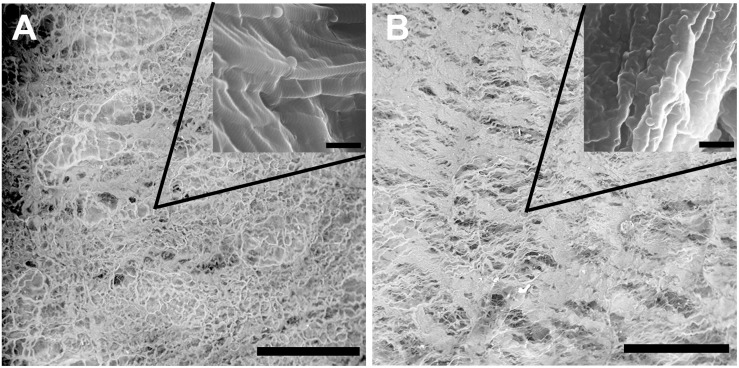
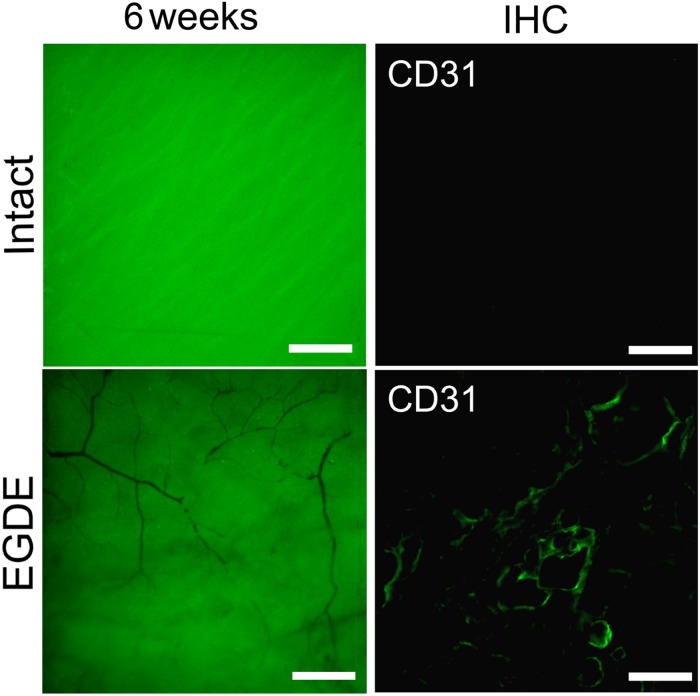
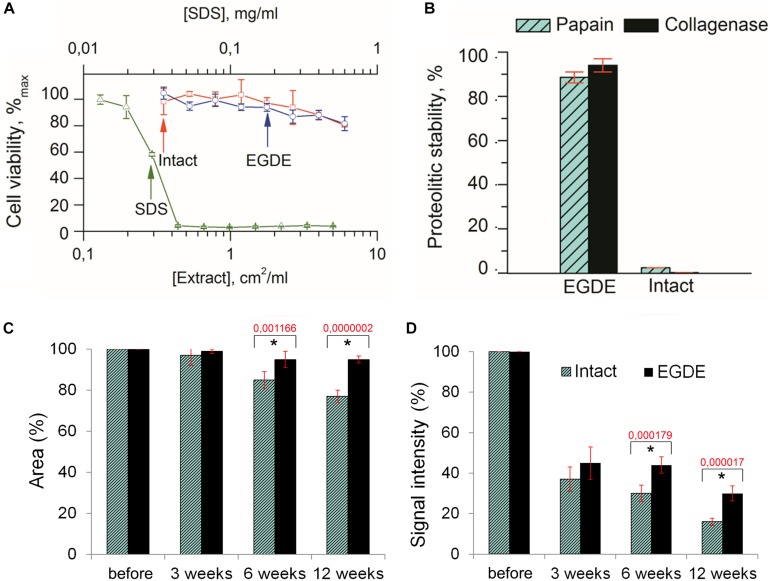
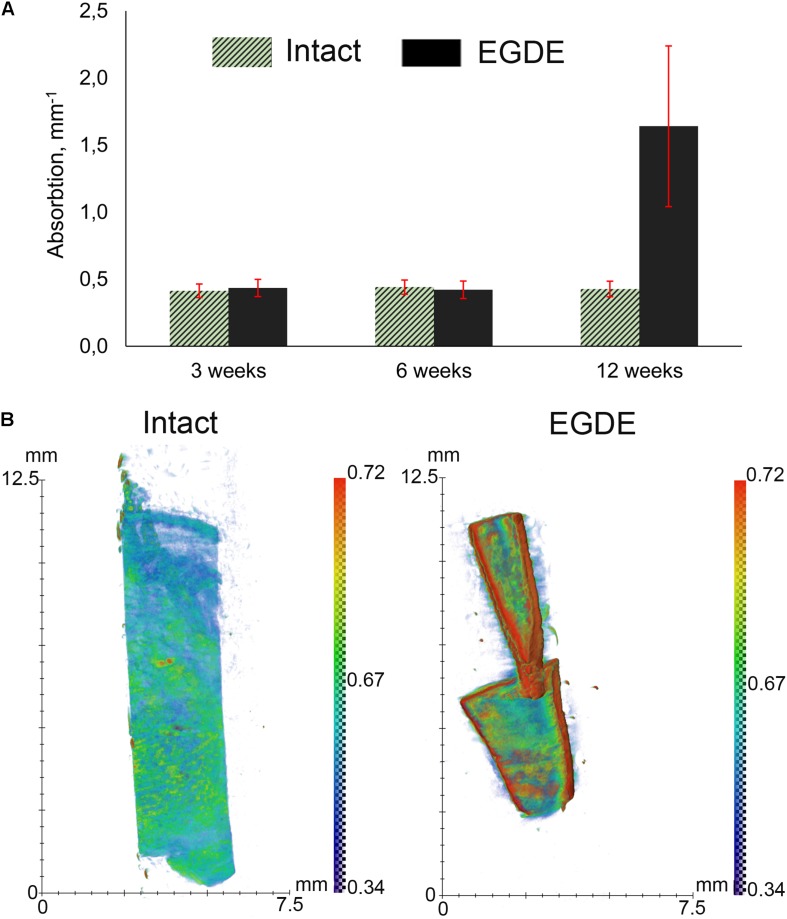
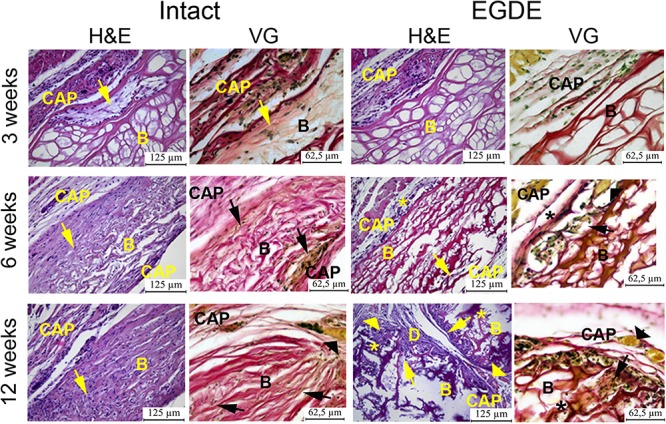
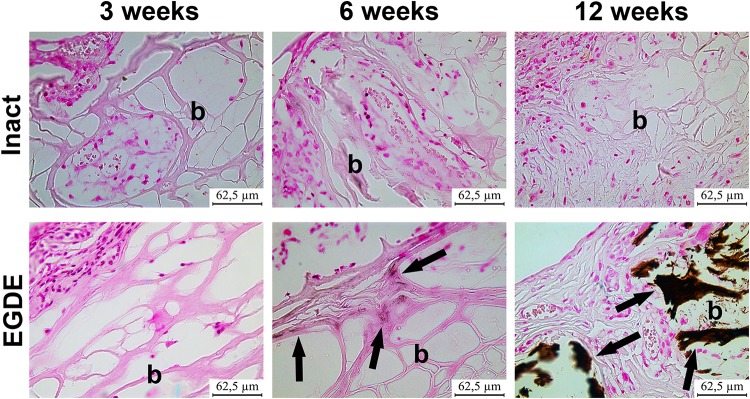
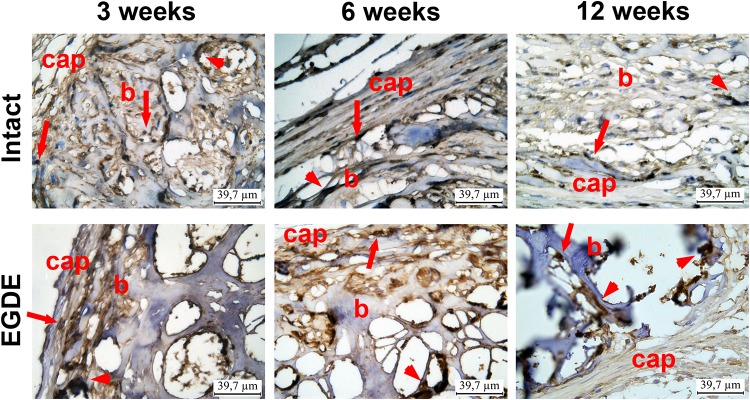
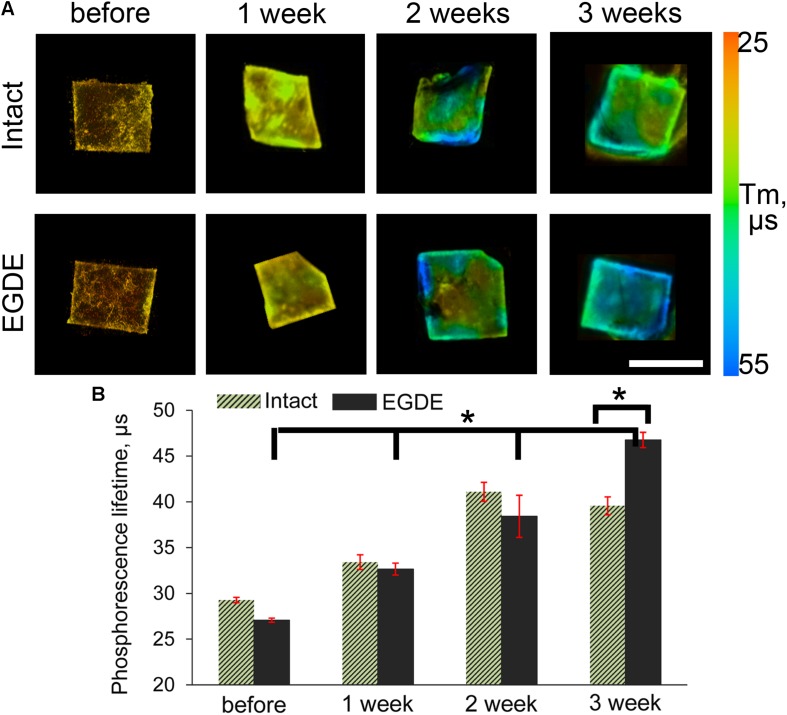
Biomeshes based on decellularized bovine pericardium (DBP) are widely used in reconstructive surgery due to their wide availability and the attractive biomechanical properties. However, their efficacy in clinical applications is often affected by the uncontrolled immunogenicity and proteolytic degradation. To address this issue, we present here multiparametric imaging analysis of epoxy crosslinked DBPs to reveal their fate after implantation. We first analyzed the structure of the crosslinked DBP using scanning electron microscopy and evaluated proteolytic stability and cytotoxicity. Next, using combination of fluorescence and hypoxia imaging, X-ray computed microtomography and histology techniques we studied the fate of DBPs after subcutaneous implantation in animals. Our approach revealed high resistance to biodegradation, gradual remodeling of a surrounding tissue forming the connective tissue capsule and calcification of crosslinked DBPs. These changes were concomitant to the development of hypoxia in the samples within 3 weeks after implantation and subsequent induction of angiogenesis and vascularization. Collectively, presented approach provides new insights on the transplantation of the epoxy crosslinked biomeshes, the risks associated with its applications in soft-tissue reconstruction and can be transferred to studies of other types of implants.
基于脱细胞牛心包(DBP)的生物补片因其广泛可得性和吸引人的生物力学特性而在重建手术中被广泛使用。然而,它们在临床应用中的效果常常受到无法控制的免疫原性和蛋白水解降解的影响。为了解决这个问题,我们在此展示对环氧交联DBP的多参数成像分析,以揭示其植入后的转归。我们首先使用扫描电子显微镜分析交联DBP的结构,并评估蛋白水解稳定性和细胞毒性。接下来,通过荧光和缺氧成像、X射线计算机显微断层扫描和组织学技术相结合,我们研究了DBP在动物皮下植入后的转归。我们的方法揭示了对生物降解的高抗性、形成结缔组织囊的周围组织的逐渐重塑以及交联DBP的钙化。这些变化与植入后3周内样本中缺氧的发展以及随后血管生成和血管化的诱导相伴发生。总体而言,所展示的方法为环氧交联生物补片的移植、其在软组织重建应用中相关的风险提供了新的见解,并且可以应用于其他类型植入物的研究。