Pettinger Katherine J, Mayers Katie, McKechnie Liz, Phillips Bob
Bradford Neonatal Unit, Bradford Royal Infirmary, Duckworth Lane BD9 6RJ, Bradford, UK.
Leeds Centre for Newborn Care, Leeds General Infirmary, Great George St, Leeds LS1 3EX, UK.
EClinicalMedicine. 2019 Dec 22;19:100227. doi: 10.1016/j.eclinm.2019.11.020. eCollection 2020 Feb.
Determining which babies should receive antibiotics for potential early onset sepsis (EOS) is challenging. We performed a meta-analysis quantifying how many EOS cases might be 'missed' using the Kaiser Permanente electronic calculator, compared with National Institute for Health and Care Excellence (NICE) guidelines.
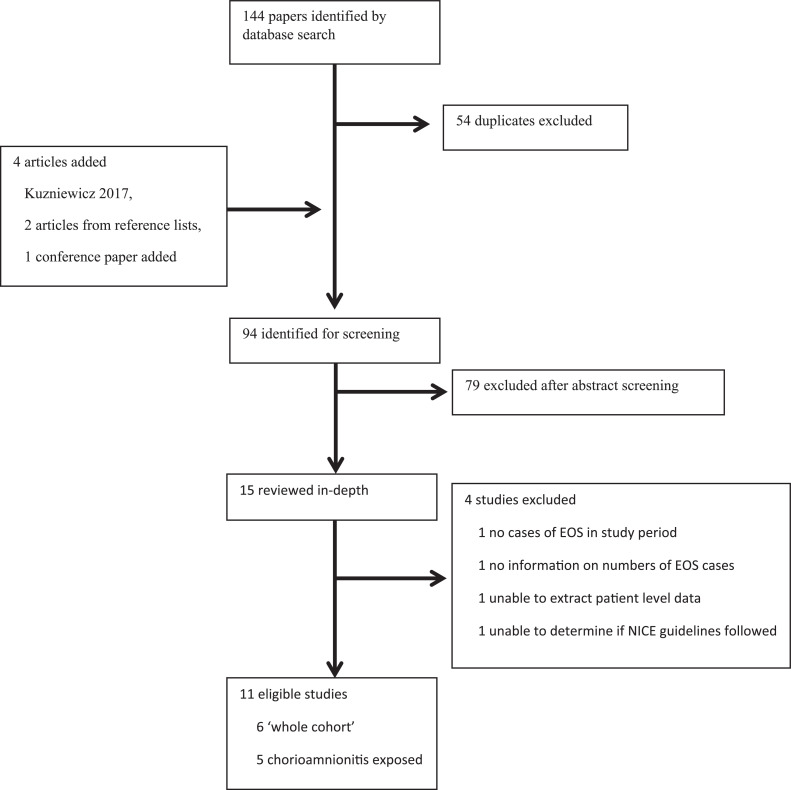
A systematic literature search was carried out for studies citing the article in which the calculator was publicised. Studies were eligible if they presented data evaluating the calculator, either by retrospective case review or prospective cohort study. The primary outcome measure was numbers of culture positive EOS cases where the calculator did not recommend empirical antibiotics, but NICE guidelines would have. Data were pooled using a random effect meta-analysis. A subgroup analysis was performed using data from studies of babies exposed to chorioamnionitis.
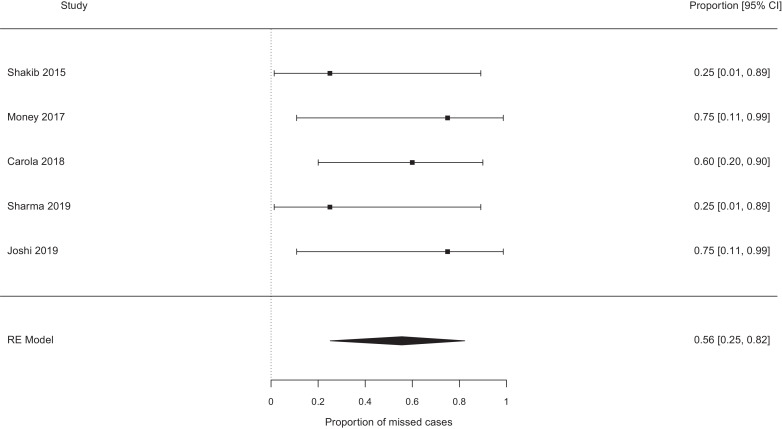
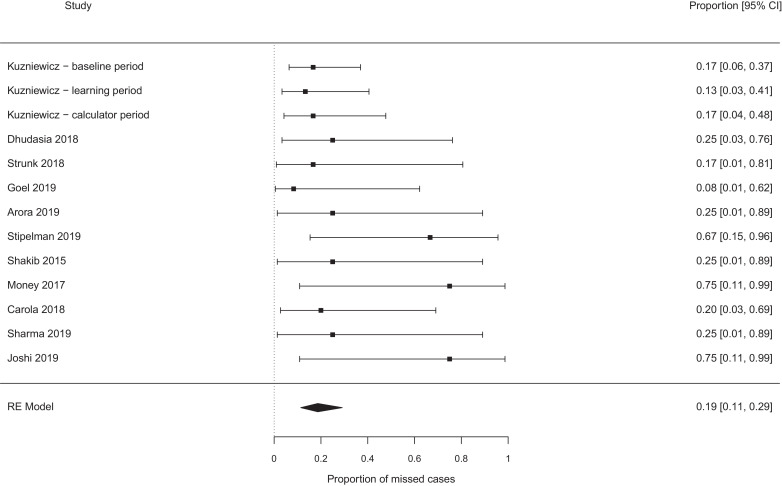
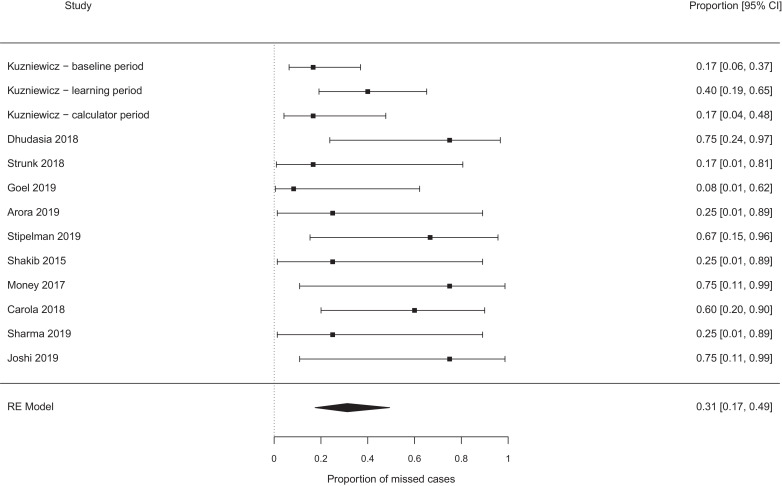
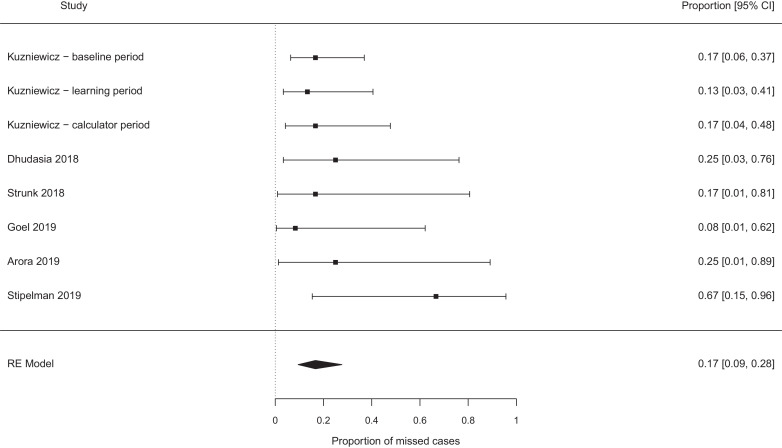
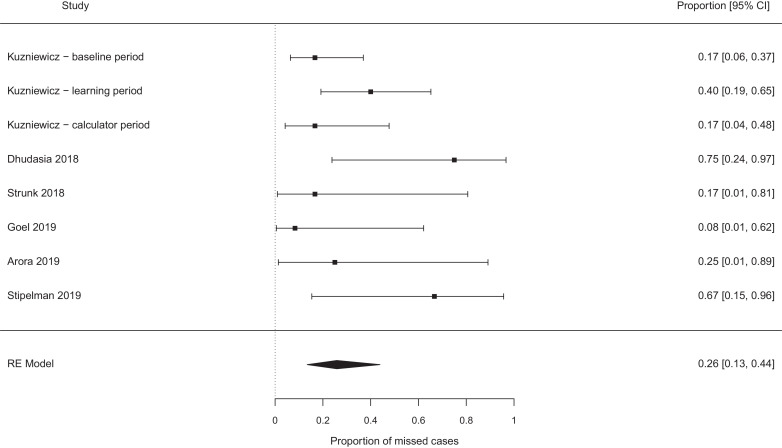
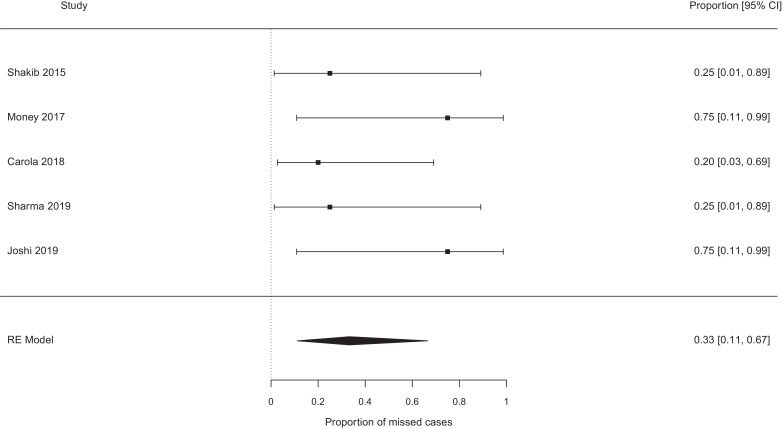
Eleven studies were included. There were a total of 75 EOS cases across the studies and a minimum of 14 (best case scenario), and a maximum of 22 (worst case scenario) cases where use of the calculator would have resulted in delayed or missed treatment, compared to if NICE guidelines had been followed. The probability of missed/delayed treatment for an EOS case were best case 0.19 [95% confidence intervals 0.11 - 0.29], worst case 0.31 [95% CI 0.17 - 0.49]. The probability of missing cases was significantly more in babies exposed to chorioamnionitis.
A large proportion of EOS cases were 'missed' by the calculator. Further evaluation of the calculator is recommended before it is introduced into UK clinical practice.
None.
确定哪些婴儿因潜在的早发性败血症(EOS)应接受抗生素治疗具有挑战性。我们进行了一项荟萃分析,以量化与英国国家卫生与临床优化研究所(NICE)指南相比,使用凯撒医疗电子计算器可能会“漏诊”多少例EOS病例。
对引用该计算器相关文章的研究进行了系统的文献检索。如果研究通过回顾性病例审查或前瞻性队列研究提供了评估该计算器的数据,则这些研究符合纳入标准。主要结局指标是计算器未推荐经验性抗生素但NICE指南会推荐的培养阳性EOS病例数。使用随机效应荟萃分析汇总数据。使用来自暴露于绒毛膜羊膜炎婴儿研究的数据进行亚组分析。
纳入了11项研究。这些研究中共有75例EOS病例,与遵循NICE指南相比,使用该计算器可能导致治疗延迟或漏诊的病例最少为14例(最佳情况),最多为22例(最差情况)。EOS病例漏诊/延迟治疗的概率在最佳情况下为0.19[95%置信区间0.11 - 0.29],最差情况下为0.31[95%CI 0.17 - 0.49]。暴露于绒毛膜羊膜炎的婴儿漏诊病例的概率明显更高。
该计算器“漏诊”了很大一部分EOS病例。在将其引入英国临床实践之前,建议对该计算器进行进一步评估。
无。