College of Horticulture, Qingdao Agricultural University, No. 700 Changcheng Road, Qingdao, 266109, China.
Qingdao Key Laboratory of Genetic Improvement and Breeding in Horticulture Plants, Qingdao, 266109, China.
BMC Plant Biol. 2020 Mar 6;20(1):109. doi: 10.1186/s12870-020-2323-8.
The steroidal hormones brassinosteroids (BRs) play important roles in plant growth and development. The pathway and genes involved in BR biosynthesis have been identified primarily in model plants like Arabidopsis, but little is known about BR biosynthesis in woody fruits such as pear.
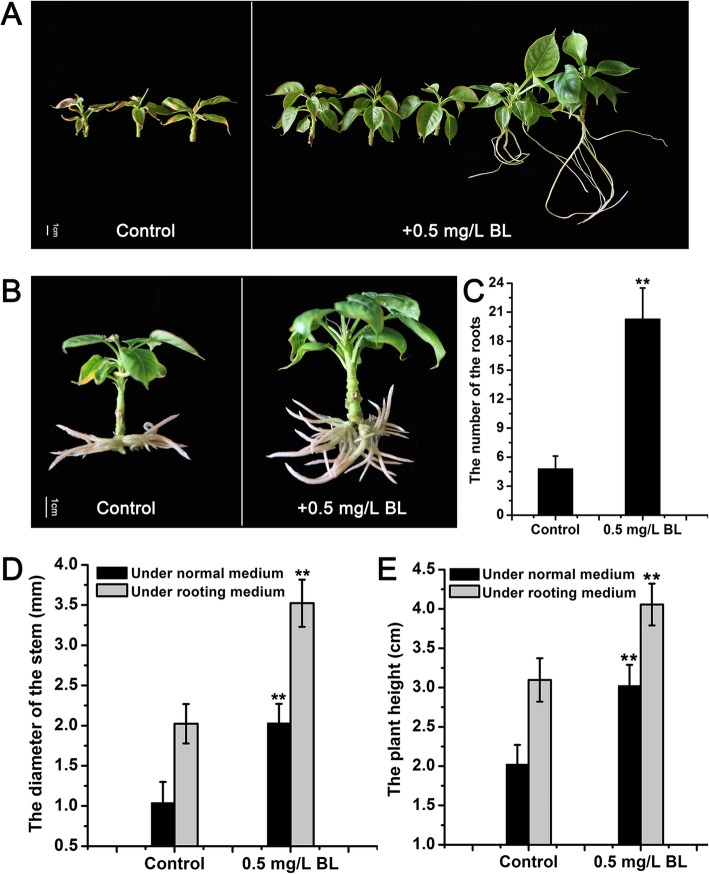
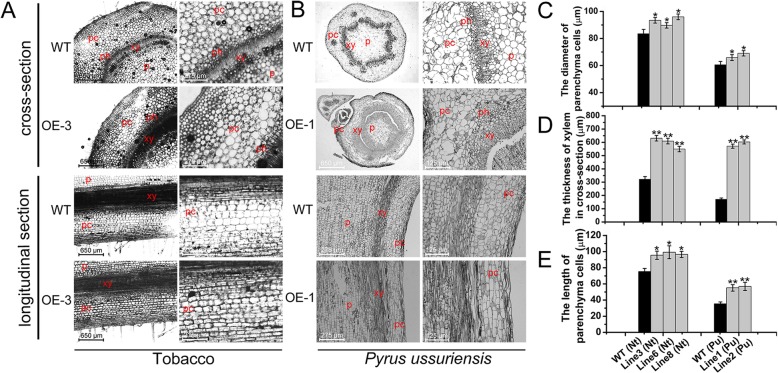
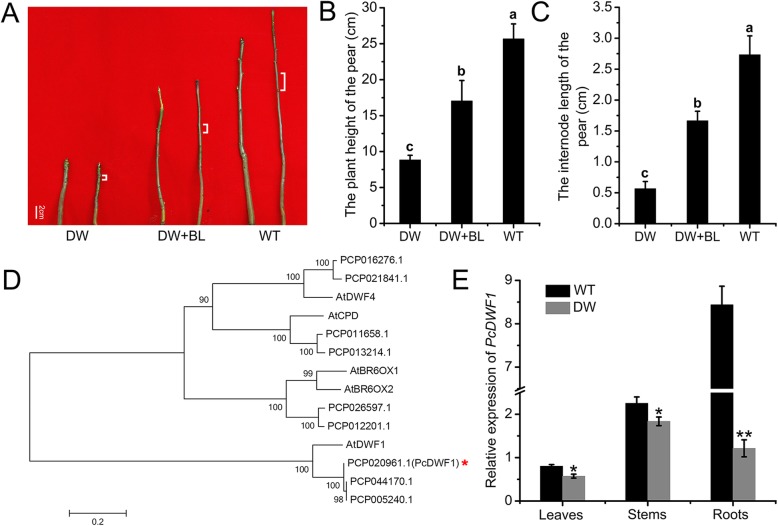
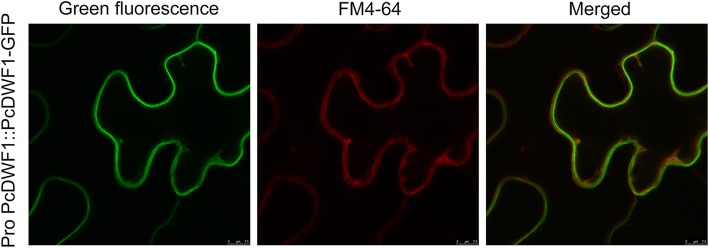
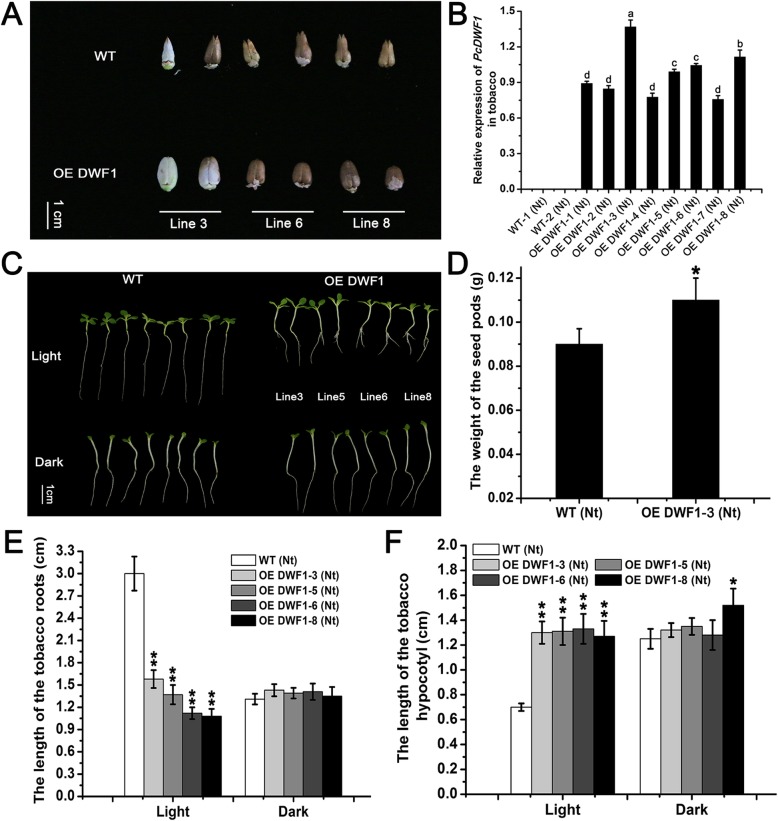
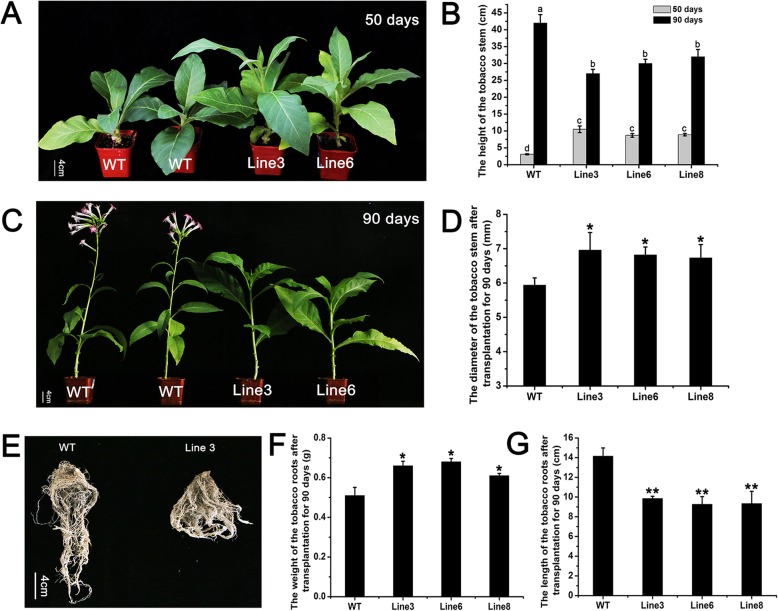
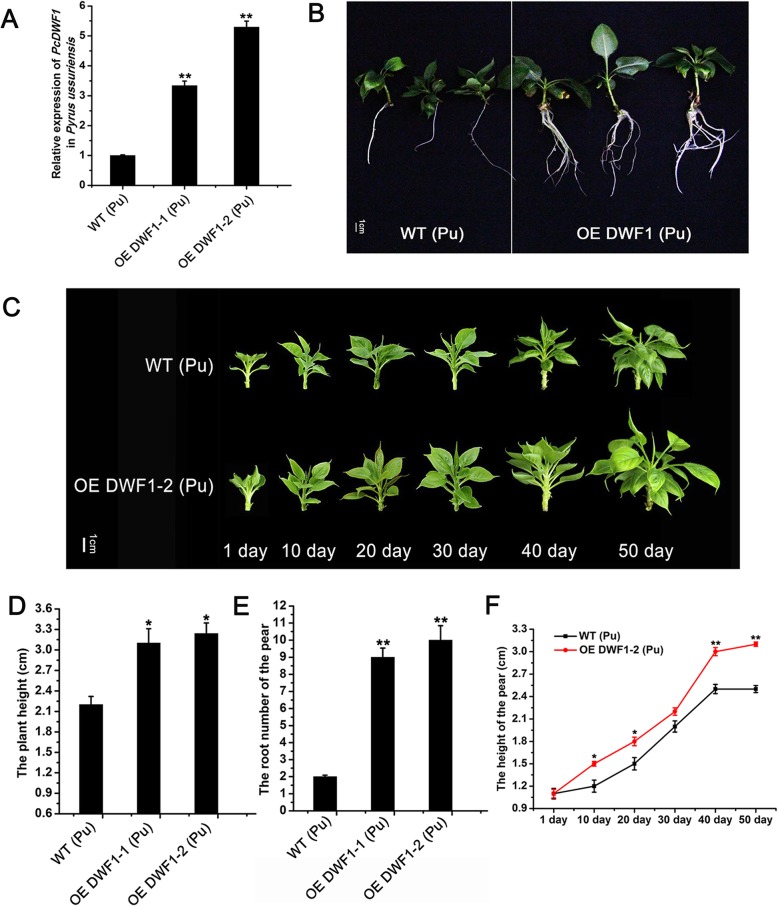
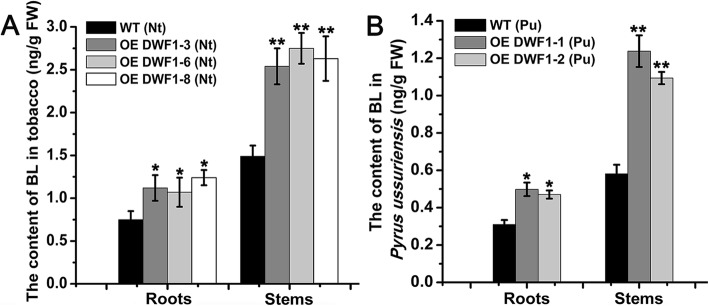
In this study, we found that applying exogenous brassinolide (BL) could significantly increase the stem growth and rooting ability of Pyrus ussuriensis. PcDWF1, which had a significantly lower level of expression in the dwarf-type pear than in the standard-type pear, was cloned for further analysis. A phylogenetic analysis showed that PcDWF1 was a pear brassinosteroid biosynthetic gene that was homologous to AtDWARF1. The subcellular localization analysis indicated that PcDWF1 was located in the plasma membrane. Overexpression of PcDWF1 in tobacco (Nicotiana tabacum) or pear (Pyrus ussuriensis) plants promoted the growth of the stems, which was caused by a larger cell size and more developed xylem than those in the control plants, and the rooting ability was significantly enhanced. In addition to the change in vegetative growth, the tobacco plants overexpressing PcDWF1 also had a delayed flowering time and larger seed size than did the control tobacco plants. These phenotypes were considered to result from the higher BL contents in the transgenic lines than in the control tobacco and pear plants.
Taken together, these results reveal that the pear BR biosynthetic gene PcDWF1 affected the vegetative and reproductive growth of Pyrus ussuriensis and Nicotiana tabacum and could be characterized as an important BR biosynthetic gene in perennial woody fruit plants.
甾体激素油菜素内酯(BRs)在植物生长发育中起着重要作用。BR 生物合成途径和相关基因主要在拟南芥等模式植物中被鉴定,但关于梨等木本果实中的 BR 生物合成知之甚少。
本研究发现,外源油菜素内酯(BL)处理可显著促进西洋梨茎的生长和生根能力。克隆了 PcDWF1 基因,其在矮化型梨中的表达水平明显低于标准型梨。系统进化分析表明,PcDWF1 是一个梨 BR 生物合成基因,与拟南芥 AtDWARF1 同源。亚细胞定位分析表明,PcDWF1 定位于质膜。过表达 PcDWF1 基因可促进烟草(Nicotiana tabacum)或梨(Pyrus ussuriensis)植株茎的生长,表现为细胞体积增大,木质部发育更为发达,与对照植株相比,生根能力显著增强。除了营养生长的变化外,过表达 PcDWF1 的烟草植株还表现出开花时间延迟和种子尺寸增大的表型,这归因于转 PcDWF1 基因烟草和梨植株中 BL 含量的增加。
综上所述,这些结果表明,梨 BR 生物合成基因 PcDWF1 影响西洋梨和烟草的营养和生殖生长,可被认为是多年生木本果树植物中一个重要的 BR 生物合成基因。