The Key Laboratory of Plant Cell Engineering and Germplasm Innovation, Ministry of Education, College of Life Science, Shandong University, Jinan, People's Republic of China.
State Key Laboratory of Plant Genomics, National Centre for Plant Gene Research (Beijing), Institute of Genetics and Developmental Biology, Chinese Academy of Sciences, Beijing, People's Republic of China.
PLoS Genet. 2018 Jan 11;14(1):e1007144. doi: 10.1371/journal.pgen.1007144. eCollection 2018 Jan.
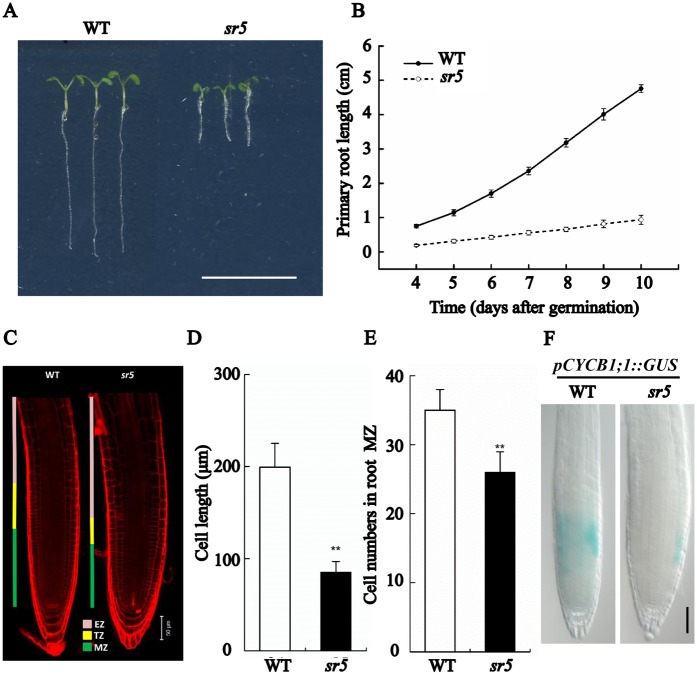
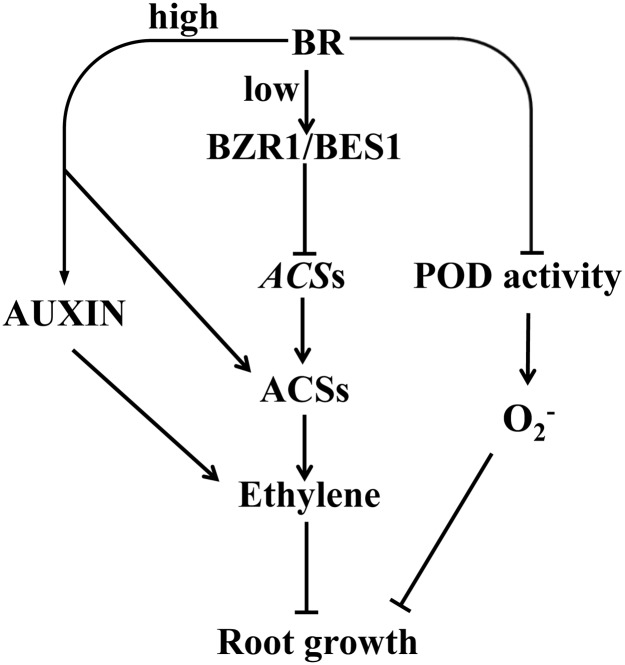
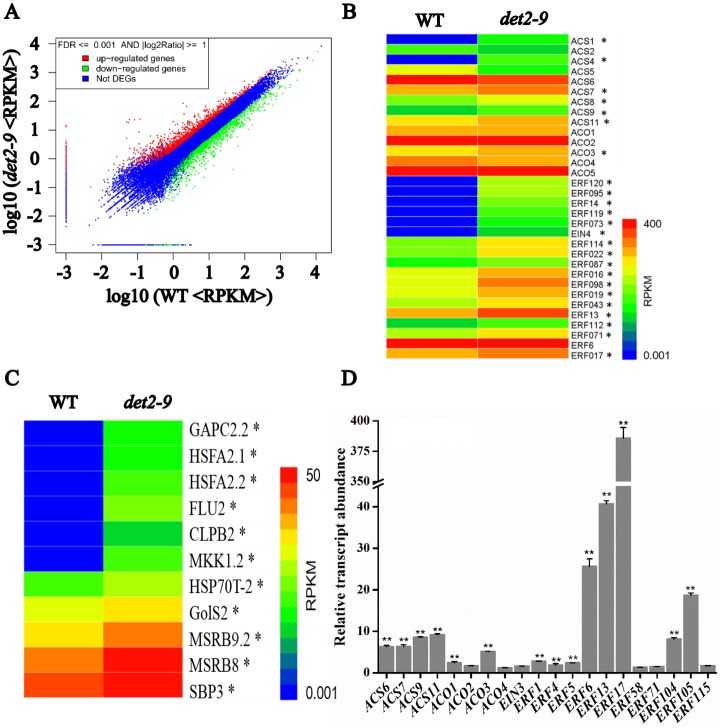
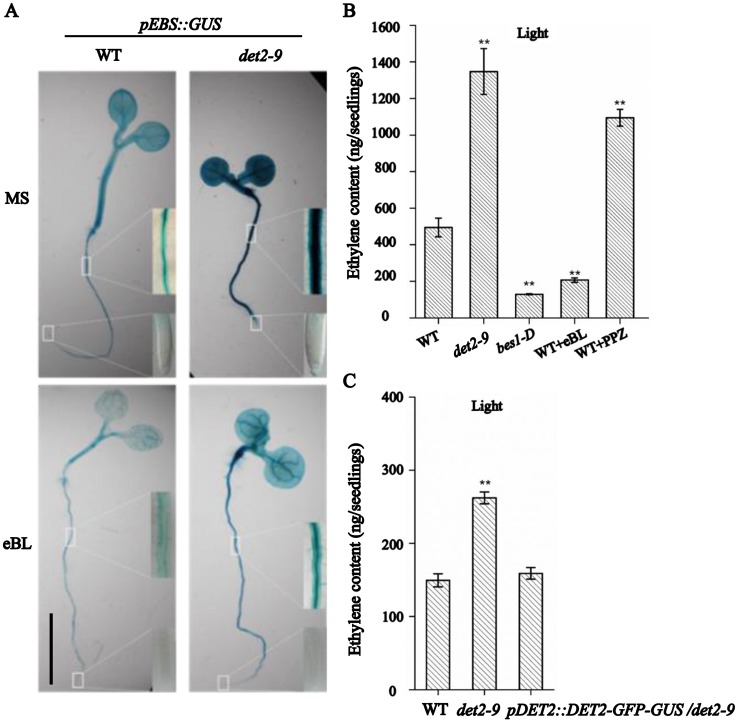
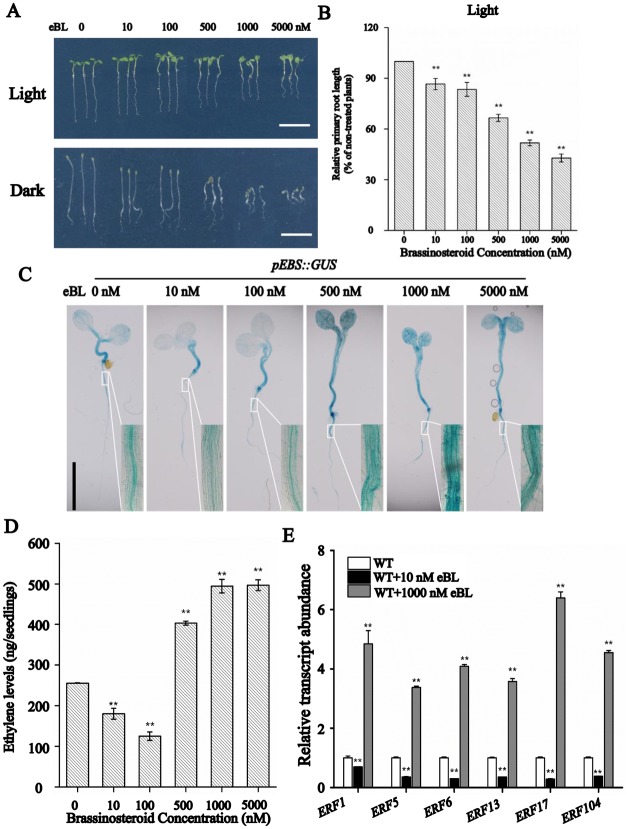
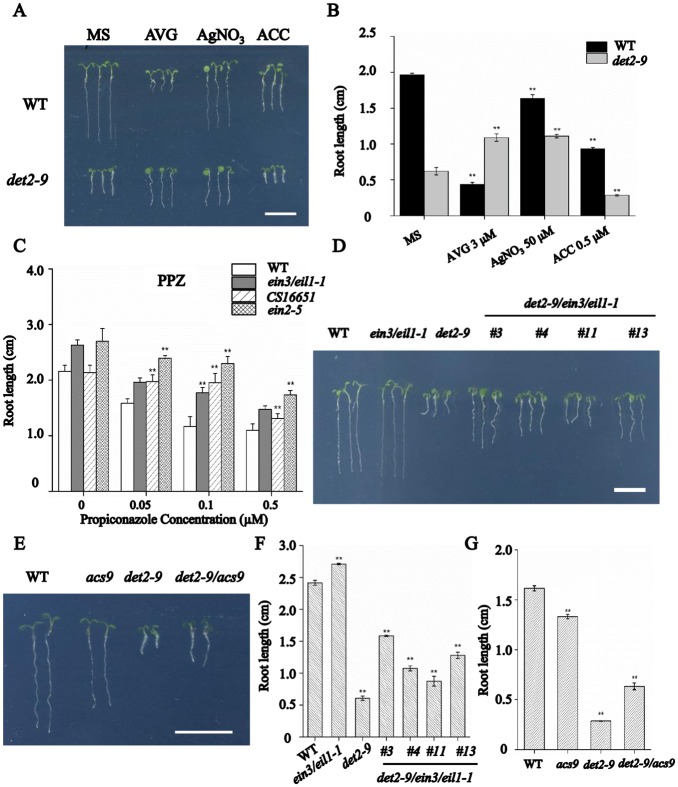
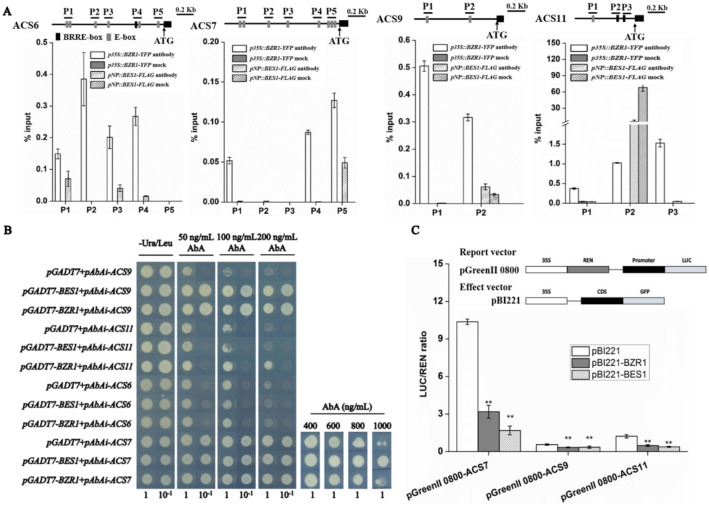
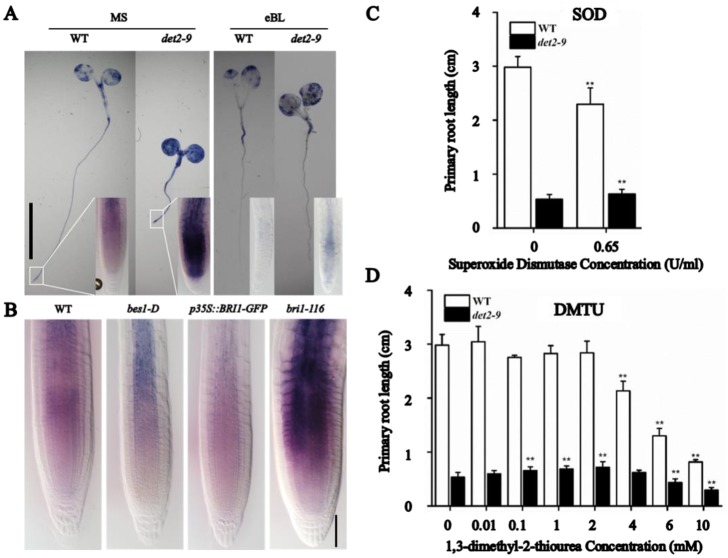
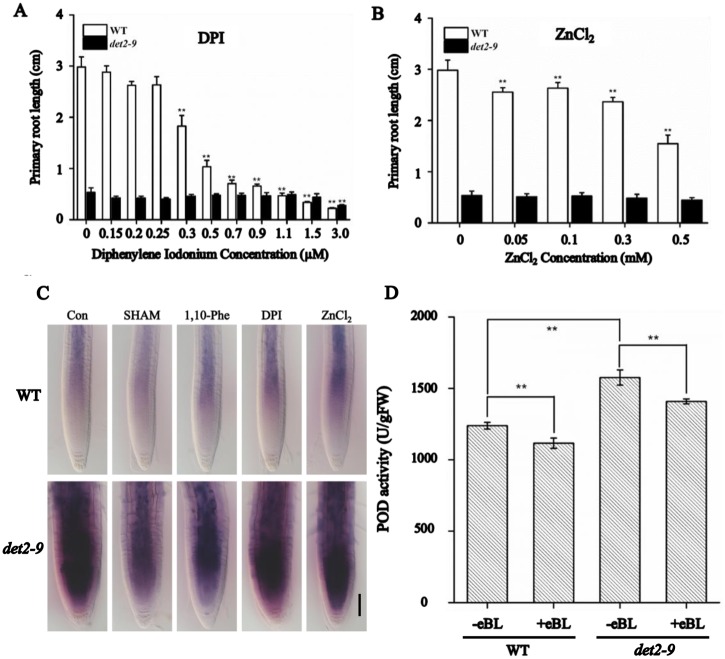
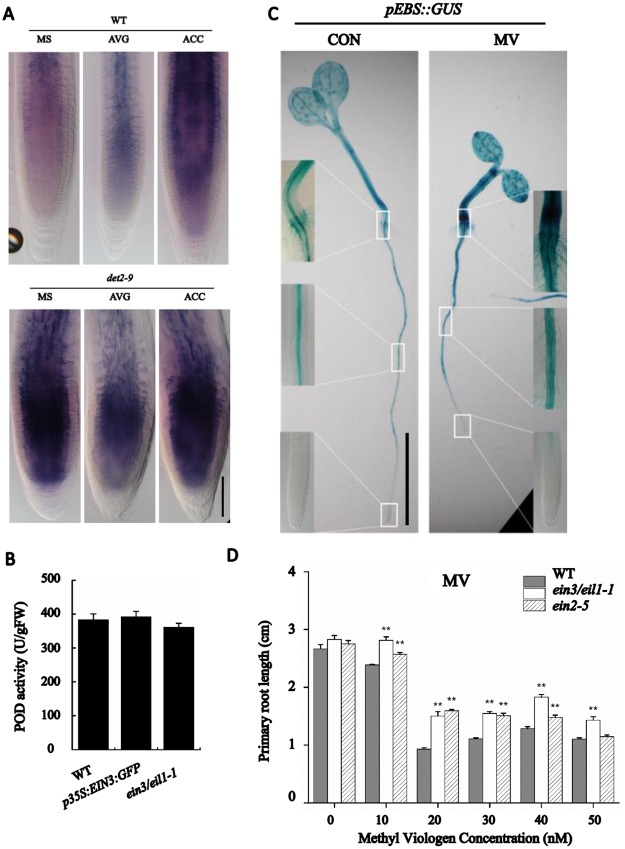
The brassinosteroids (BRs) represent a class of phytohormones, which regulate numerous aspects of growth and development. Here, a det2-9 mutant defective in BR synthesis was identified from an EMS mutant screening for defects in root length, and was used to investigate the role of BR in root development in Arabidopsis. The det2-9 mutant displays a short-root phenotype, which is result from the reduced cell number in root meristem and decreased cell size in root maturation zone. Ethylene synthesis is highly increased in the det2-9 mutant compared with the wild type, resulting in the hyper-accumulation of ethylene and the consequent inhibition of root growth. The short-root phenotype of det2-9 was partially recovered in the det2-9/acs9 double mutant and det2-9/ein3/eil1-1 triple mutant which have defects either in ethylene synthesis or ethylene signaling, respectively. Exogenous application of BR showed that BRs either positively or negatively regulate ethylene biosynthesis in a concentration-dependent manner. Different from the BR induced ethylene biosynthesis through stabilizing ACSs stability, we found that the BR signaling transcription factors BES1 and BZR1 directly interacted with the promoters of ACS7, ACS9 and ACS11 to repress their expression, indicating a native regulation mechanism under physiological levels of BR. In addition, the det2-9 mutant displayed over accumulated superoxide anions (O2-) compared with the wild-type control, and the increased O2- level was shown to contribute to the inhibition of root growth. The BR-modulated control over the accumulation of O2- acted via the peroxidase pathway rather than via the NADPH oxidase pathway. This study reveals an important mechanism by which the hormone cross-regulation between BRs and ethylene or/and ROS is involved in controlling root growth and development in Arabidopsis.
油菜素内酯(BRs)是一类植物激素,调节生长和发育的众多方面。在这里,从 EMS 突变体筛选中鉴定出一个 BR 合成缺陷的 det2-9 突变体,用于研究 BR 在拟南芥根发育中的作用。det2-9 突变体表现出短根表型,这是由于根分生组织中细胞数量减少和根成熟区中细胞体积减小所致。与野生型相比,det2-9 突变体中乙烯合成高度增加,导致乙烯的过度积累和根生长的抑制。det2-9 的短根表型在 det2-9/acs9 双突变体和 det2-9/ein3/eil1-1 三重突变体中部分恢复,这两个突变体分别在乙烯合成或乙烯信号转导方面有缺陷。BR 的外源应用表明,BR 以浓度依赖的方式正向或负向调节乙烯的生物合成。与 BR 通过稳定 ACSs 的稳定性诱导乙烯生物合成不同,我们发现 BR 信号转导转录因子 BES1 和 BZR1 直接与 ACS7、ACS9 和 ACS11 的启动子相互作用,抑制它们的表达,表明在生理水平的 BR 下存在一种天然的调节机制。此外,与野生型对照相比,det2-9 突变体显示出超氧阴离子(O2-)的过度积累,并且增加的 O2-水平被证明有助于抑制根的生长。BR 调节 O2-的积累通过过氧化物酶途径而不是 NADPH 氧化酶途径起作用。这项研究揭示了激素 BRs 和乙烯或/和 ROS 之间的交叉调节参与控制拟南芥根生长和发育的重要机制。