Tropical Crops Genetic Resources Institute, Chinese Academy of Tropical Agricultural Sciences & Ministry of Agriculture Key Laboratory of Crop Gene Resources and Germplasm Enhancement in Southern China, No. 4 Xueyuan Road, Haikou, 571100, Hainan, China.
State Key Laboratory of Microbial Resources, Institute of Microbiology, Chinese Academy of Sciences, 1-3 West Beichen Road, Beijing, 100101, China.
Genome Biol. 2020 Mar 6;21(1):60. doi: 10.1186/s13059-020-01959-8.
Mango is one of the world's most important tropical fruits. It belongs to the family Anacardiaceae, which includes several other economically important species, notably cashew, sumac and pistachio from other genera. Many species in this family produce family-specific urushiols and related phenols, which can induce contact dermatitis.
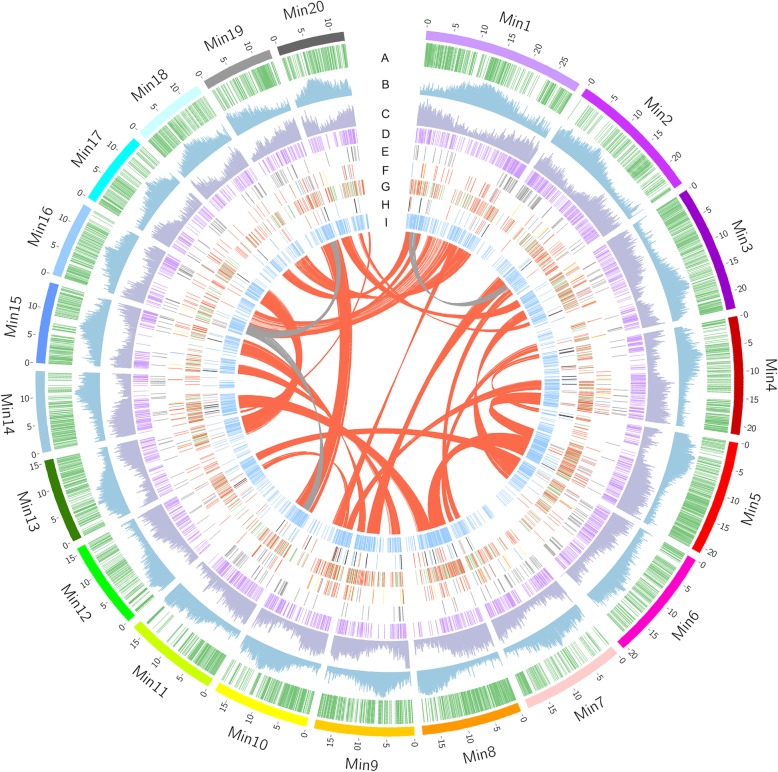
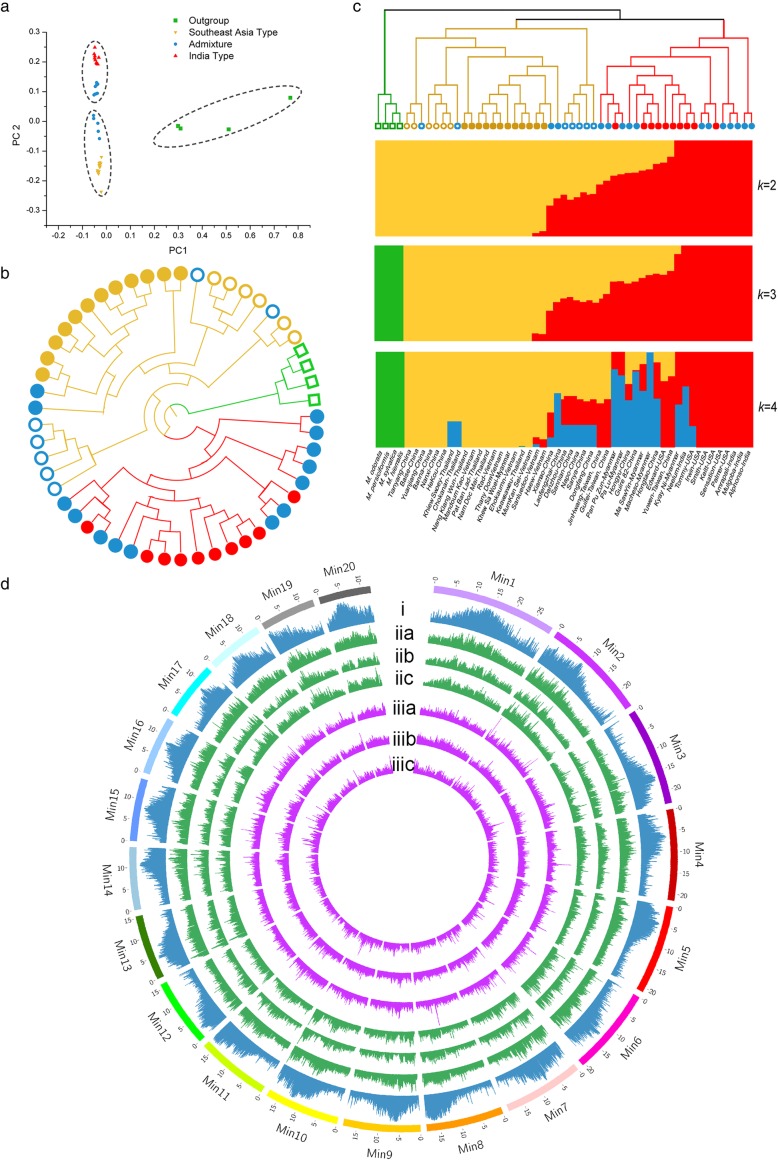
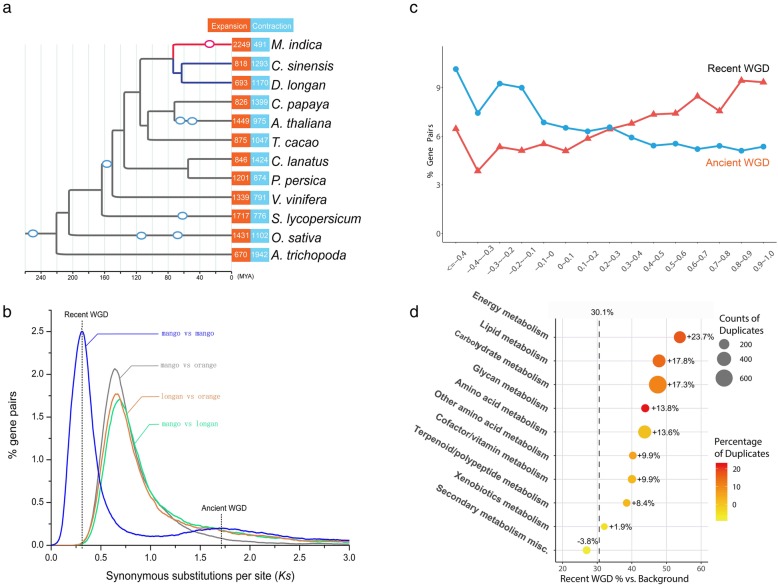
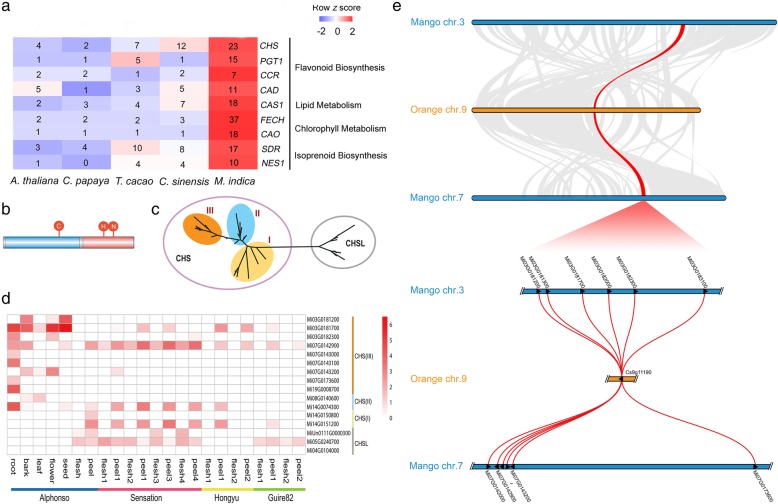
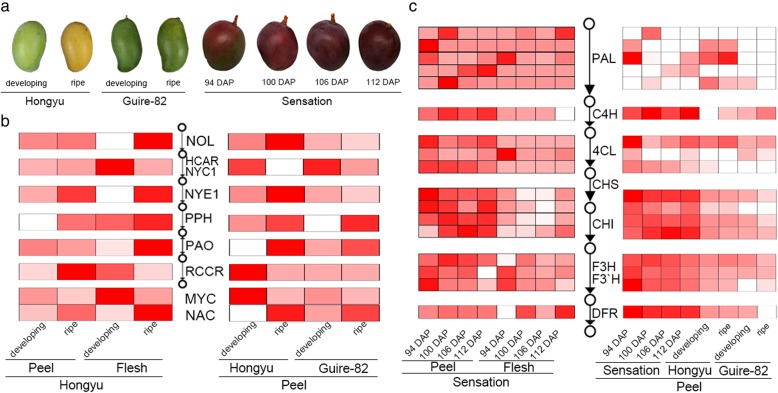
We generate a chromosome-scale genome assembly of mango, providing a reference genome for the Anacardiaceae family. Our results indicate the occurrence of a recent whole-genome duplication (WGD) event in mango. Duplicated genes preferentially retained include photosynthetic, photorespiration, and lipid metabolic genes that may have provided adaptive advantages to sharp historical decreases in atmospheric carbon dioxide and global temperatures. A notable example of an extended gene family is the chalcone synthase (CHS) family of genes, and particular genes in this family show universally higher expression in peels than in flesh, likely for the biosynthesis of urushiols and related phenols. Genome resequencing reveals two distinct groups of mango varieties, with commercial varieties clustered with India germplasms and demonstrating allelic admixture, and indigenous varieties from Southeast Asia in the second group. Landraces indigenous in China formed distinct clades, and some showed admixture in genomes.
Analysis of chromosome-scale mango genome sequences reveals photosynthesis and lipid metabolism are preferentially retained after a recent WGD event, and expansion of CHS genes is likely associated with urushiol biosynthesis in mango. Genome resequencing clarifies two groups of mango varieties, discovers allelic admixture in commercial varieties, and shows distinct genetic background of landraces.
芒果是世界上最重要的热带水果之一。它属于漆树科,该科还包括腰果、漆树和阿月浑子等其他几种经济上重要的物种。该科的许多物种产生特定于家族的漆酚和相关酚类物质,可引起接触性皮炎。
我们生成了一个芒果的染色体规模基因组组装,为漆树科家族提供了一个参考基因组。我们的结果表明,芒果发生了近期的全基因组复制(WGD)事件。保留的优先复制基因包括光合作用、光呼吸和脂质代谢基因,这可能为大气二氧化碳和全球温度急剧下降提供了适应性优势。基因家族扩展的一个显著例子是查尔酮合酶(CHS)基因家族,该家族的特定基因在果皮中的表达普遍高于果肉,可能用于合成漆酚和相关酚类物质。基因组重测序揭示了两个不同的芒果品种群,商业品种与印度种质聚在一起,并表现出等位基因混合,而东南亚的本土品种则属于第二组。中国本土的地方品种形成了不同的分支,其中一些在基因组中表现出混合。
对染色体规模的芒果基因组序列的分析表明,在最近的 WGD 事件后,光合作用和脂质代谢被优先保留,而 CHS 基因的扩张可能与芒果中漆酚的生物合成有关。基因组重测序阐明了两个芒果品种群,发现商业品种存在等位基因混合,并且地方品种具有明显的遗传背景。