Moeller Scott J, Kundu Prantik, Bachi Keren, Maloney Thomas, Malaker Pias, Parvaz Muhammad A, Alia-Klein Nelly, London Edythe D, Goldstein Rita Z
Renaissance School of Medicine at Stony Brook University, Stony Brook, NY, 11794, United States; Icahn School of Medicine at Mount Sinai, New York, NY, 10029, United States.
Icahn School of Medicine at Mount Sinai, New York, NY, 10029, United States.
Drug Alcohol Depend. 2020 Apr 1;209:107930. doi: 10.1016/j.drugalcdep.2020.107930. Epub 2020 Feb 28.
Multiple psychopathologies feature impaired clinical insight. Emerging evidence suggests that insight problems may similarly characterize addiction, perhaps due to aberrant functioning of self-referential brain circuitry, including the rostral anterior cingulate and ventromedial prefrontal cortices (rACC/vmPFC). We developed a new fMRI task to probe whether rACC/vmPFC abnormalities in cocaine use disorder (CUD) constitute neural correlates of readiness to change, one facet of insight.
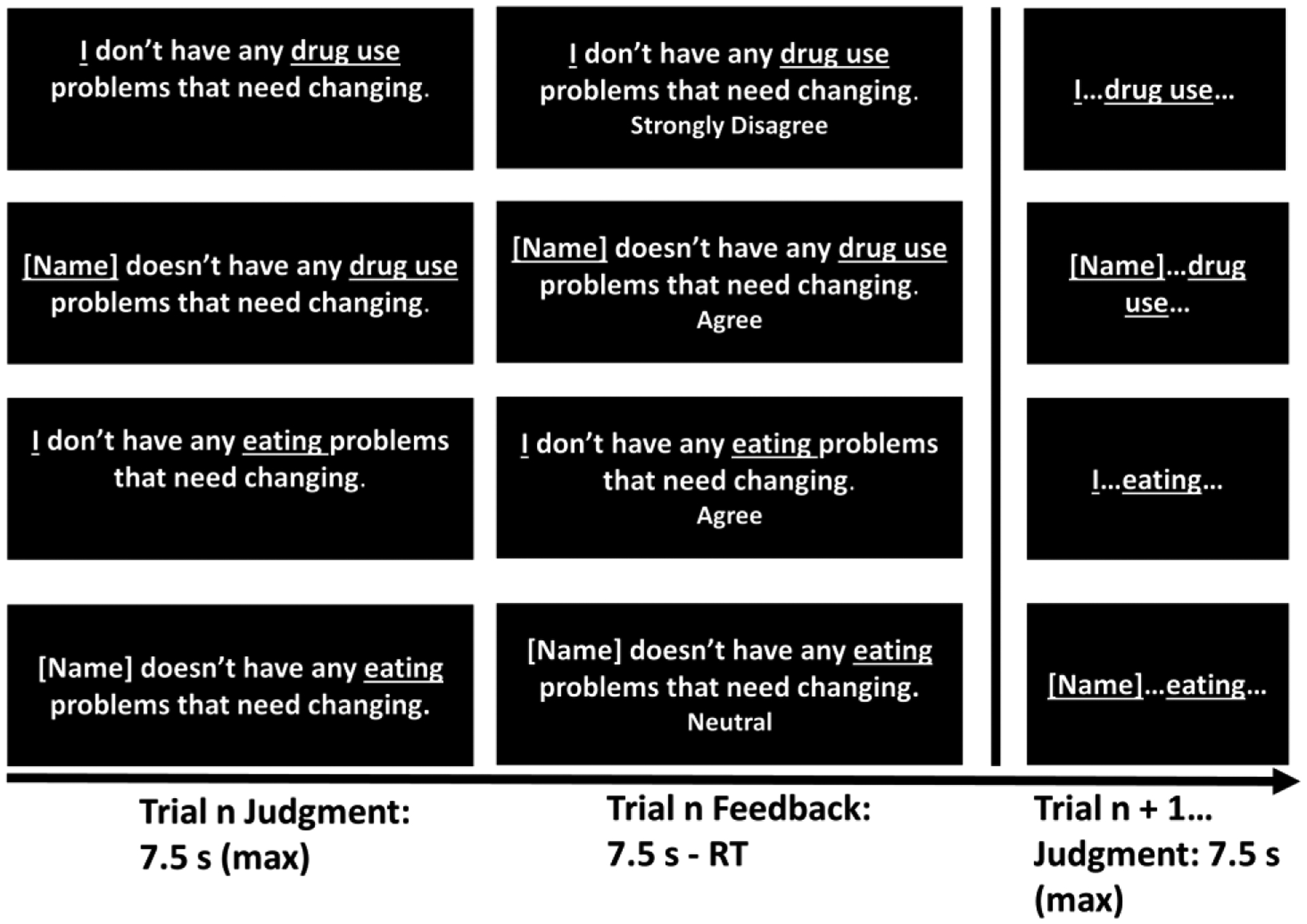
Eighteen individuals with current CUD and 15 healthy controls responded about their own need to change their drug use and eating behavior (control condition) and the need for a named acquaintance to do the same (two additional control conditions). Measures of simulated drug-choice behavior, addiction severity, and neuropsychological function were collected outside the scanner.
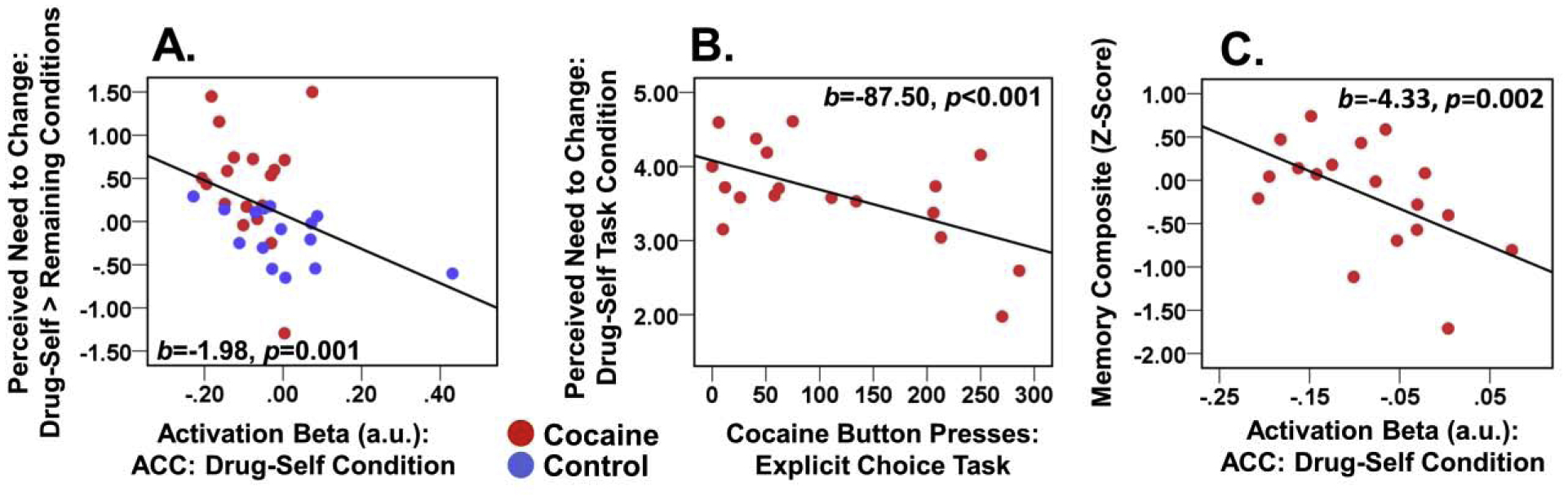
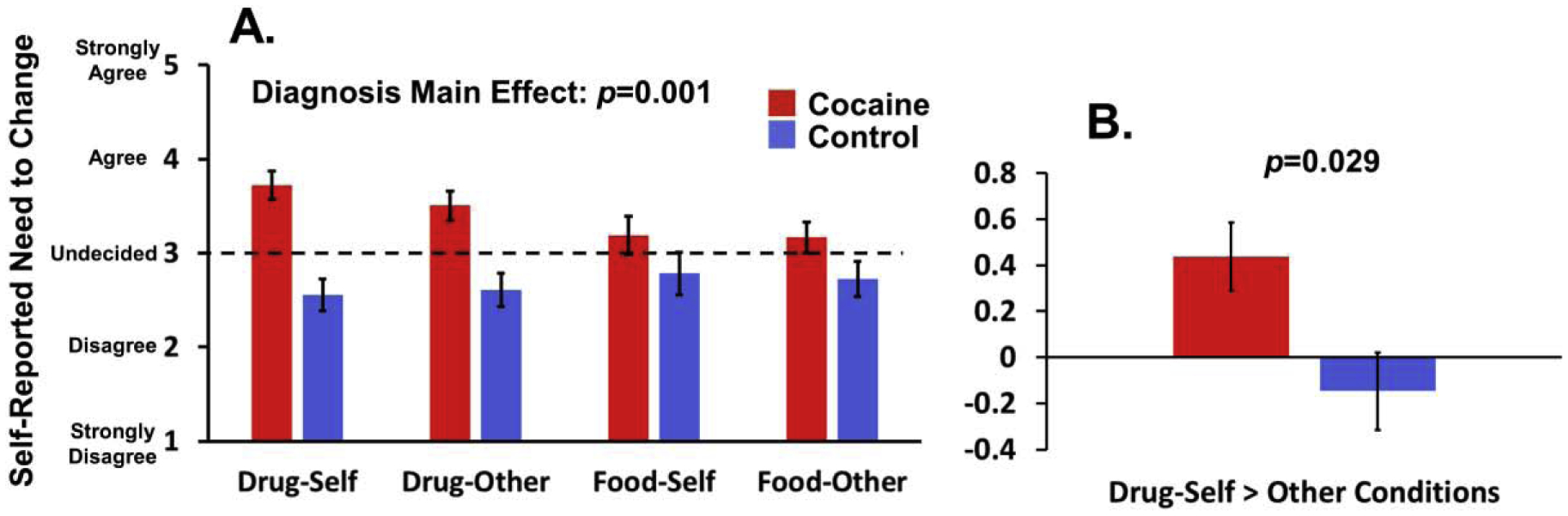
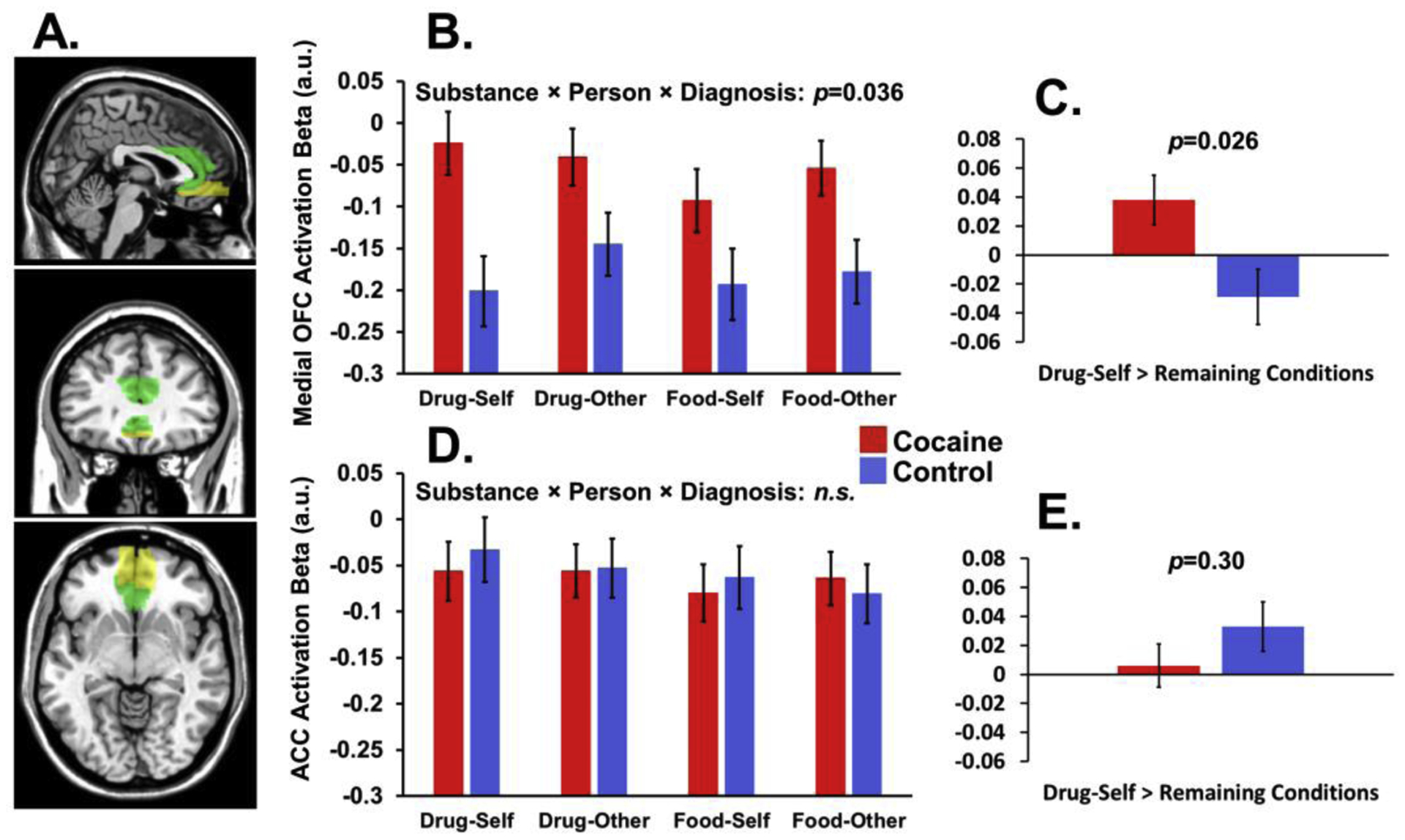
CUD participants perceived a greater need for behavior change than controls (as expected, given their diagnosis), but fell short of "agreeing" to a need for change; in CUD, lower perceived need correlated with higher simulated drug-choice behavior, a proxy measure of drug-seeking. During drug-related insight judgments, CUD participants had higher activation than controls in an anatomically-defined region of interest (ROI) in the medial orbitofrontal cortex, part of the rACC/vmPFC. Although not showing group differences, activation in an anatomically-defined ACC ROI correlated with insight-related task behavior (in all participants) and memory performance (in CUD).
As a group, individuals with current CUD appear to show mild insight problems and rACC/vmPFC abnormalities vis-à-vis readiness to change behavior. With replication and extension of these results, insight-related circuitry may emerge as a novel therapeutic target.
多种精神病理学特征表现为临床洞察力受损。新出现的证据表明,洞察力问题可能同样是成瘾的特征,这可能是由于包括喙前扣带回和腹内侧前额叶皮质(rACC/vmPFC)在内的自我参照脑回路功能异常所致。我们开发了一项新的功能磁共振成像(fMRI)任务,以探究可卡因使用障碍(CUD)患者的rACC/vmPFC异常是否构成改变意愿(洞察力的一个方面)的神经关联。
18名当前患有CUD的个体和15名健康对照者对自己改变吸毒行为和饮食行为的需求(对照条件)以及一名指定熟人做同样事情的需求(另外两个对照条件)做出回应。在扫描仪外收集模拟药物选择行为、成瘾严重程度和神经心理功能的测量数据。
CUD参与者比对照组更能意识到行为改变的必要性(鉴于他们的诊断,这是预期的),但未能“认同”改变的必要性;在CUD中,较低的感知需求与较高的模拟药物选择行为相关,模拟药物选择行为是寻求药物的替代指标。在与药物相关的洞察力判断过程中,CUD参与者在内侧眶额皮质(rACC/vmPFC的一部分)的一个解剖学定义的感兴趣区域(ROI)中的激活高于对照组。尽管未显示出组间差异,但解剖学定义的ACC ROI中的激活与洞察力相关任务行为(在所有参与者中)和记忆表现(在CUD中)相关。
作为一个群体,当前患有CUD的个体在改变行为的意愿方面似乎表现出轻微的洞察力问题和rACC/vmPFC异常。随着这些结果的重复和扩展,与洞察力相关的神经回路可能会成为一个新的治疗靶点。