Melbourne School of Population and Global Health, The University of Melbourne, Carlton, VIC, 3053, Australia.
Cabinet Division, Government of Bangladesh, Dhaka, Bangladesh.
BMC Med. 2020 Mar 9;18(1):65. doi: 10.1186/s12916-020-01524-x.
Globally, an estimated two-thirds of all deaths occur in the community, the majority of which are not attended by a physician and remain unregistered. Identifying and registering these deaths in civil registration and vital statistics (CRVS) systems, and ascertaining the cause of death, is thus a critical challenge to ensure that policy benefits from reliable evidence on mortality levels and patterns in populations. In contrast to traditional processes for registration, death notification can be faster and more efficient at informing responsible government agencies about the event and at triggering a verbal autopsy for ascertaining cause of death. Thus, innovative approaches to death notification, tailored to suit the setting, can improve the availability and quality of information on community deaths in CRVS systems.
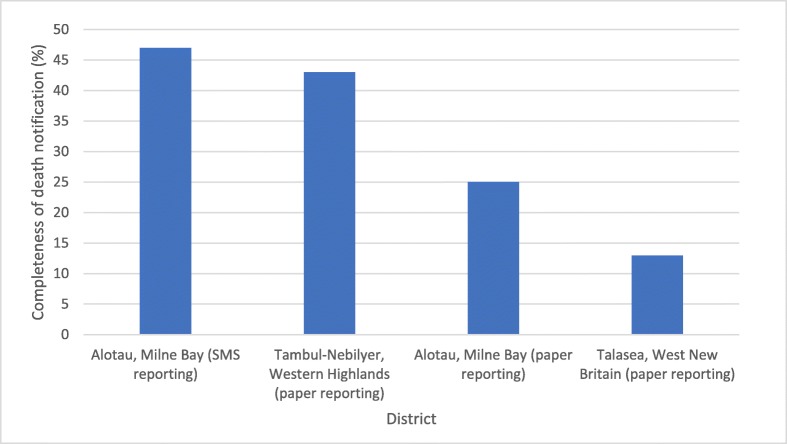
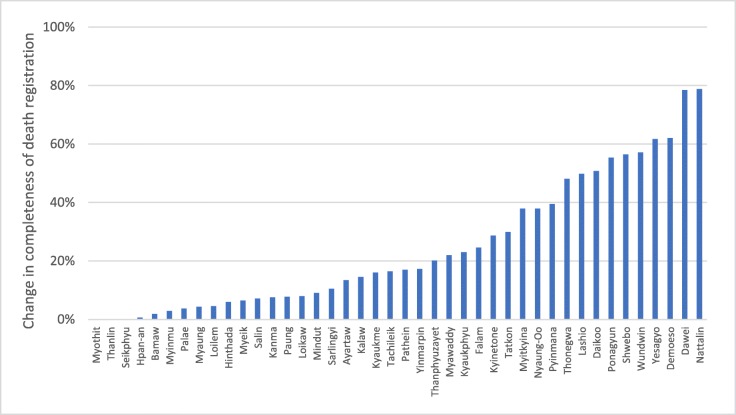
Here, we present case studies in four countries (Bangladesh, Colombia, Myanmar and Papua New Guinea) that were part of the initial phases of the Bloomberg Data for Health Initiative at the University of Melbourne, each of which faces unique challenges to community death registration. The approaches taken promote improved notification of community deaths through a combination of interventions, including integration with the health sector, using various notifying agents and methods, and the application of information and communication technologies. One key factor for success has been the smoothing of processes linking notification, registration and initiation of a verbal autopsy interview. The processes implemented champion more active notification systems in relation to the passive systems commonly in place in these countries.
The case studies demonstrate the significant potential for improving death reporting through the implementation of notification practices tailored to a country's specific circumstances, including geography, cultural factors, structure of the existing CRVS system, and available human, information and communication technology resources. Strategic deployment of some, or all, of these innovations can result in rapid improvements to death notification systems and should be trialled in other settings.
在全球范围内,估计有三分之二的死亡发生在社区,其中大多数死亡没有医生参与,也没有进行登记。因此,在民事登记和生命统计(CRVS)系统中识别和登记这些死亡,并确定死因,是确保政策从人口死亡率和模式的可靠证据中受益的一个关键挑战。与传统的登记程序相比,死亡通知可以更快、更有效地通知负责的政府机构有关事件,并触发死因口头检查以确定死因。因此,针对登记环境量身定制的创新死亡通知方法可以提高 CRVS 系统中社区死亡信息的可用性和质量。
在这里,我们介绍了四个国家(孟加拉国、哥伦比亚、缅甸和巴布亚新几内亚)的案例研究,这些国家都是墨尔本大学彭博健康数据倡议初始阶段的一部分,每个国家在社区死亡登记方面都面临着独特的挑战。所采取的方法通过一系列干预措施促进了社区死亡的更好通知,包括与卫生部门的整合、使用各种通知代理和方法,以及应用信息和通信技术。成功的一个关键因素是简化了将通知、登记和启动口头检查访谈联系起来的流程。实施的流程支持与这些国家通常采用的被动系统相比,建立更积极的通知系统。
案例研究表明,通过实施针对特定国家具体情况的通知做法,可以显著提高死亡报告的潜力,这些情况包括地理、文化因素、现有 CRVS 系统的结构以及可用的人力、信息和通信技术资源。有针对性地部署其中一些或所有这些创新都可以迅速改善死亡通知系统,并应在其他环境中进行试验。