Beijing Obstetrics and Gynecology Hospital, Capital Medical University, Beijing, China.
Biomed Res Int. 2020 Feb 18;2020:6247526. doi: 10.1155/2020/6247526. eCollection 2020.
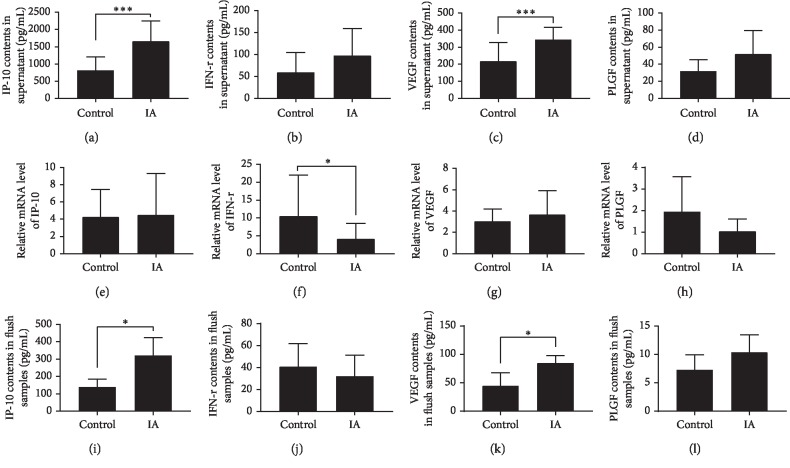
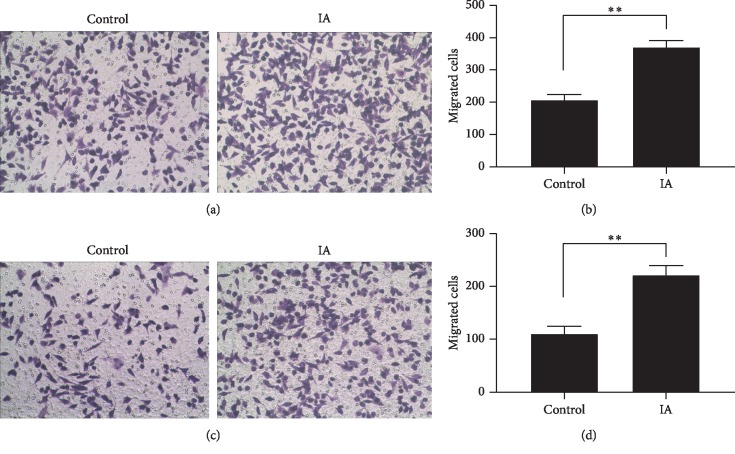
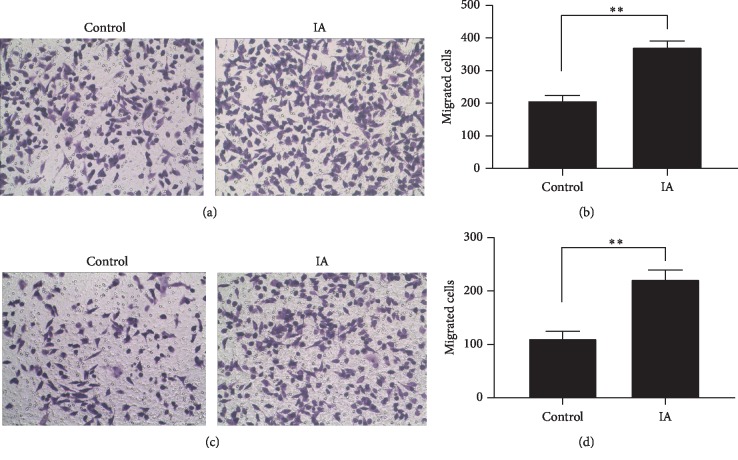
The present study aimed to identify changes in decidual natural killer (dNK) cells and related cytokines in women who have undergone induced abortions (IAs). The effects of dNK cells on subsequent pregnancies remain unknown. Accordingly, we sought to investigate whether a history of early pregnancy can change dNK cells and facilitate their role in the regulation of angiogenesis and trophoblast invasion. . dNK cells were obtained from primiparous women who had undergone IA(s) prior to this study and primiparous women who had never been pregnant before this IA (control). Real-time polymerase chain reaction (PCR) was used to measure the mRNA levels of IFN-, IP-10, VEGF, and PLGF in dNK cells. The levels of these cytokines were quantified using the enzyme-linked immunosorbent assay. HUVEC and HTR-8/SVneo cells were used to evaluate the angiogenesis, migration, and invasion activities influenced by dNK cells.
In dNK cells, the mRNA level of IFN-, IP-10, VEGF, and PLGF in dNK cells. The levels of these cytokines were quantified using the enzyme-linked immunosorbent assay. HUVEC and HTR-8/SVneo cells were used to evaluate the angiogenesis, migration, and invasion activities influenced by dNK cells.
The findings of this study suggest that a history of early pregnancy has an impact on dNK cells. These trained dNK cells can regulate angiogenesis and trophoblast invasion and migration by promoting the production of certain cytokines.
本研究旨在鉴定经历人工流产(IA)的女性蜕膜自然杀伤(dNK)细胞及其相关细胞因子的变化。dNK 细胞对随后妊娠的影响尚不清楚。因此,我们试图研究早期妊娠史是否会改变 dNK 细胞并促进其在调节血管生成和滋养细胞浸润中的作用。从之前接受过 IA 的初产妇和之前从未怀孕过的初产妇(对照组)中获得 dNK 细胞。使用实时聚合酶链反应(PCR)测量 dNK 细胞中 IFN-、IP-10、VEGF 和 PLGF 的 mRNA 水平。使用酶联免疫吸附测定法定量这些细胞因子的水平。使用 HUVEC 和 HTR-8/SVneo 细胞评估 dNK 细胞影响的血管生成、迁移和侵袭活性。
在 dNK 细胞中,IFN-、IP-10、VEGF 和 PLGF 的 mRNA 水平。使用酶联免疫吸附测定法定量这些细胞因子的水平。使用 HUVEC 和 HTR-8/SVneo 细胞评估 dNK 细胞影响的血管生成、迁移和侵袭活性。
这项研究的结果表明,早期妊娠史对 dNK 细胞有影响。这些经过训练的 dNK 细胞可以通过促进某些细胞因子的产生来调节血管生成和滋养细胞的侵袭和迁移。