Lefere Sander, Tacke Frank
Department of Gastroenterology and Hepatology, Hepatology Research Unit, Ghent University, Ghent, Belgium.
Department of Medicine III, University Hospital Aachen, Aachen, Germany.
JHEP Rep. 2019 Feb 23;1(1):30-43. doi: 10.1016/j.jhepr.2019.02.004. eCollection 2019 May.
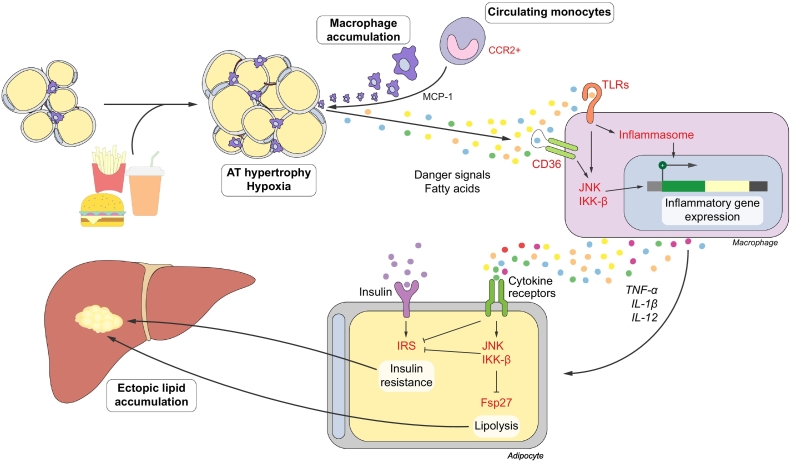
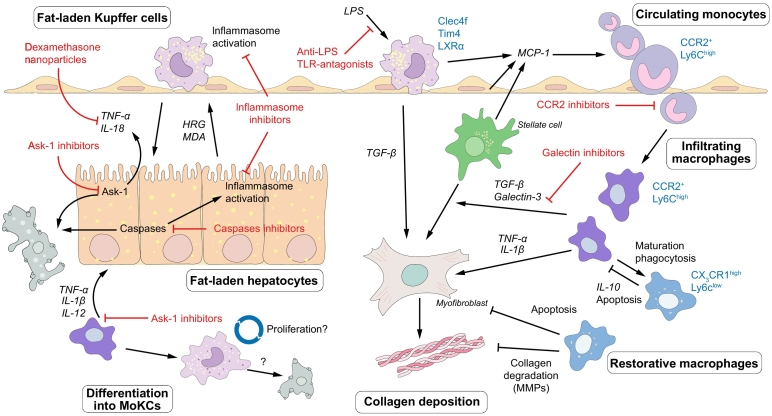
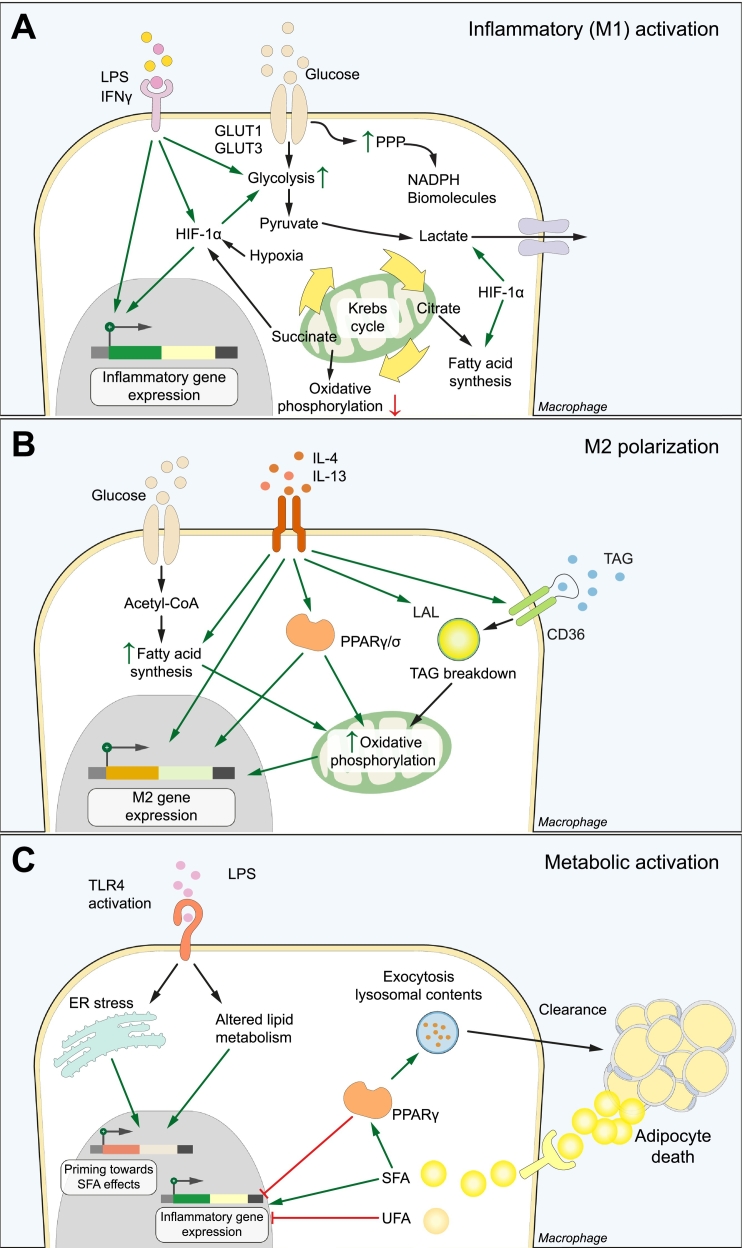
Non-alcoholic fatty liver disease (NAFLD) is the most prevalent liver disease worldwide, and a major cause of liver cirrhosis and hepatocellular carcinoma. NAFLD is intimately linked with other metabolic disorders characterized by insulin resistance. Metabolic diseases are driven by chronic inflammatory processes, in which macrophages perform essential roles. The polarization status of macrophages is itself influenced by metabolic stimuli such as fatty acids, which in turn affect the progression of metabolic dysfunction at multiple disease stages and in various tissues. For instance, adipose tissue macrophages respond to obesity, adipocyte stress and dietary factors by a specific metabolic and inflammatory programme that stimulates disease progression locally and in the liver. Kupffer cells and monocyte-derived macrophages represent ontologically distinct hepatic macrophage populations that perform a range of metabolic functions. These macrophages integrate signals from the gut-liver axis (related to dysbiosis, reduced intestinal barrier integrity, endotoxemia), from overnutrition, from systemic low-grade inflammation and from the local environment of a steatotic liver. This makes them central players in the progression of NAFLD to steatohepatitis (non-alcoholic steatohepatitis or NASH) and fibrosis. Moreover, the particular involvement of Kupffer cells in lipid metabolism, as well as the inflammatory activation of hepatic macrophages, may pathogenically link NAFLD/NASH and cardiovascular disease. In this review, we highlight the polarization, classification and function of macrophage subsets and their interaction with metabolic cues in the pathophysiology of obesity and NAFLD. Evidence from animal and clinical studies suggests that macrophage targeting may improve the course of NAFLD and related metabolic disorders.
非酒精性脂肪性肝病(NAFLD)是全球最常见的肝脏疾病,也是肝硬化和肝细胞癌的主要病因。NAFLD与以胰岛素抵抗为特征的其他代谢紊乱密切相关。代谢性疾病由慢性炎症过程驱动,巨噬细胞在其中发挥着重要作用。巨噬细胞的极化状态本身受脂肪酸等代谢刺激的影响,而这些刺激又会在多个疾病阶段和不同组织中影响代谢功能障碍的进展。例如,脂肪组织巨噬细胞通过特定的代谢和炎症程序对肥胖、脂肪细胞应激和饮食因素作出反应,从而在局部和肝脏中促进疾病进展。库普弗细胞和单核细胞衍生的巨噬细胞代表了在本体论上不同的肝巨噬细胞群体,它们执行一系列代谢功能。这些巨噬细胞整合来自肠-肝轴(与生态失调、肠道屏障完整性降低、内毒素血症有关)、营养过剩、全身低度炎症和脂肪变性肝脏局部环境的信号。这使它们成为NAFLD进展为脂肪性肝炎(非酒精性脂肪性肝炎或NASH)和肝纤维化的核心因素。此外,库普弗细胞在脂质代谢中的特殊作用,以及肝巨噬细胞的炎症激活,可能在发病机制上把NAFLD/NASH与心血管疾病联系起来。在这篇综述中,我们重点介绍了巨噬细胞亚群的极化、分类和功能,以及它们在肥胖和NAFLD病理生理学中与代谢信号的相互作用。动物和临床研究的证据表明,靶向巨噬细胞可能改善NAFLD及相关代谢紊乱的病程。