Qiu Shuang, Chen Guobing, Peng Juan, Liu Jia, Chen Jumin, Wang Jianjun, Li Li, Yang Kunxian
Department of Breast and Thyroid Surgery, The First People's Hospital of Yunnan Province, The Affiliated Hospital of Kunming University of Science and Technology, Kunming, China.
FEBS Open Bio. 2020 May;10(5):817-826. doi: 10.1002/2211-5463.12833. Epub 2020 Apr 8.
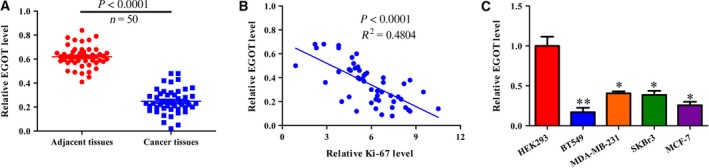
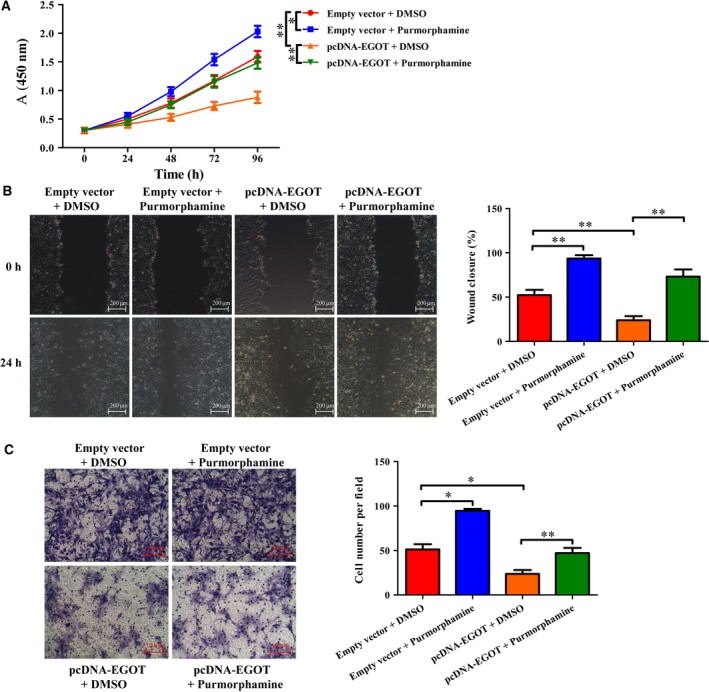
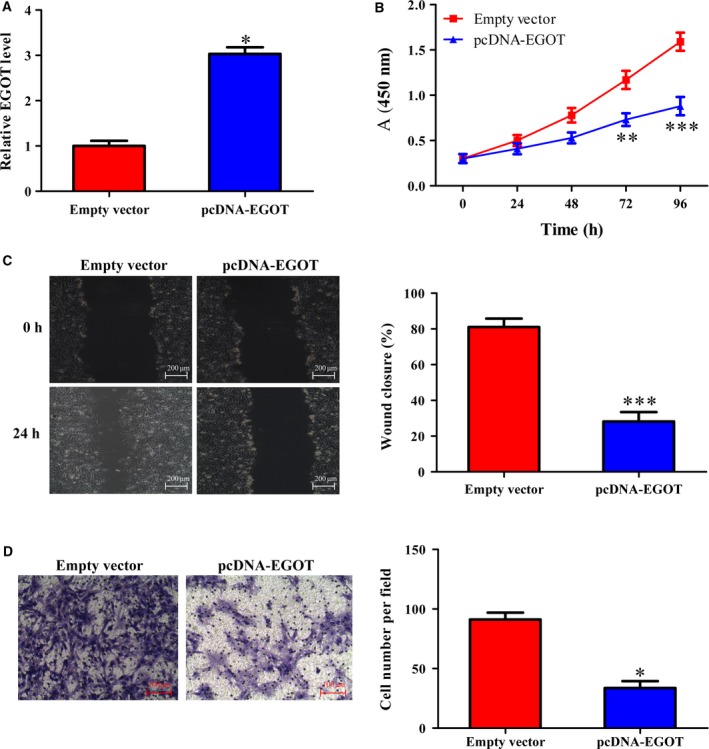
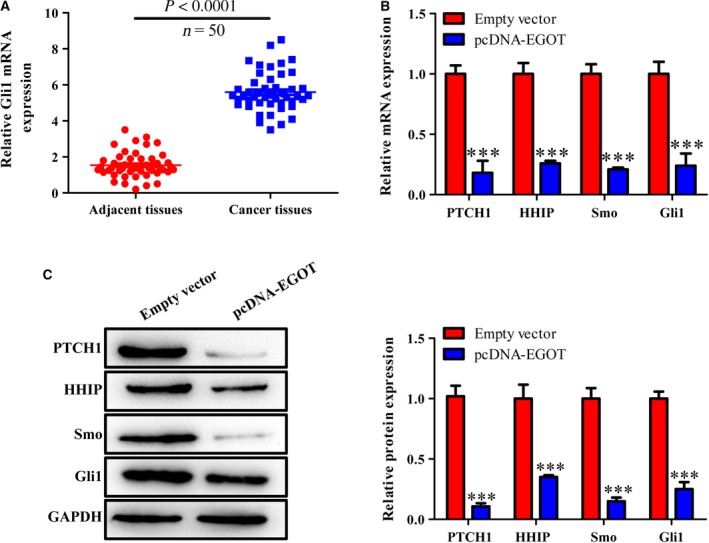
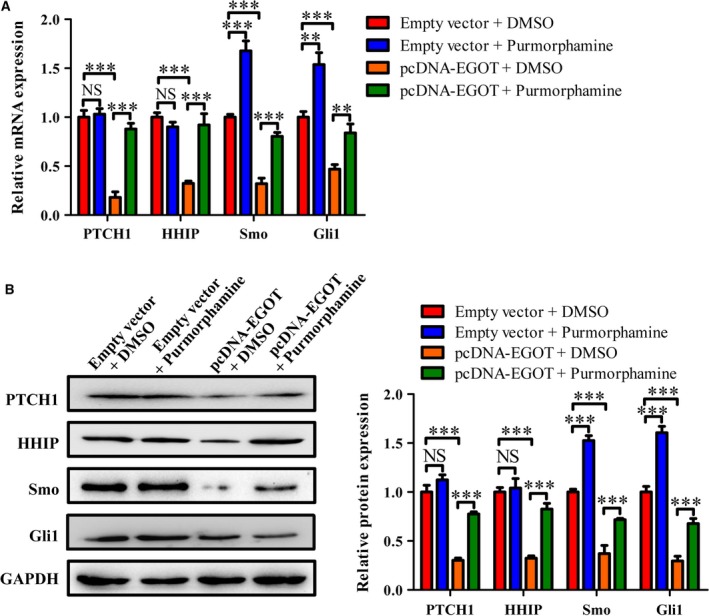
The long noncoding RNA (lncRNA) Eosinophil Granule Ontogeny Transcript (EGOT) has been reported to inhibit the proliferation and migration of glioma cells, and promote the development and progression of gastric cancer through the Hedgehog (Hh) signaling pathway. This study was conducted to assess the role of EGOT in the progression of breast cancer. We observed that EGOT is significantly down-regulated in breast cancer tissues and cell lines, and EGOT expression is negatively correlated with the Ki67 expression. Overexpression of EGOT in BT549 cells decreased cell viability and migration. In addition, overexpression of EGOT resulted in decreases in expression of key genes in the Hh pathway, including Gli1, smoothened protein, protein patched homolog 1 and Hedgehog-interacting protein (HHIP). Breast cancer tissues exhibited an increase in Gli1 expressions. Altered expression of Gli1, smoothened protein, protein patched homolog 1 and HHIP caused by EGOT overexpression were fully restored in cells transfected with plasmid complementory DNA (pcDNA) EGOT and treated with purmorphamine, an agonist of the Hh pathway. Cell viability and migration were also restored by purmorphamine. We conclude that lncRNA EGOT may inhibit breast cancer cell viability and migration via inactivation of the Hh pathway.
据报道,长链非编码RNA(lncRNA)嗜酸性粒细胞颗粒发生转录本(EGOT)可抑制胶质瘤细胞的增殖和迁移,并通过刺猬(Hh)信号通路促进胃癌的发展和进展。本研究旨在评估EGOT在乳腺癌进展中的作用。我们观察到,EGOT在乳腺癌组织和细胞系中显著下调,且EGOT表达与Ki67表达呈负相关。在BT549细胞中过表达EGOT可降低细胞活力和迁移能力。此外,EGOT过表达导致Hh通路关键基因的表达降低,包括Gli1、平滑蛋白、patched蛋白同源物1和刺猬相互作用蛋白(HHIP)。乳腺癌组织中Gli1表达增加。在用质粒互补DNA(pcDNA)EGOT转染并用Hh通路激动剂purmorphamine处理的细胞中,由EGOT过表达引起的Gli1、平滑蛋白、patched蛋白同源物1和HHIP的表达改变完全恢复。purmorphamine也可恢复细胞活力和迁移能力。我们得出结论,lncRNA EGOT可能通过使Hh通路失活来抑制乳腺癌细胞的活力和迁移。