Department of Breast Surgery, Harbin Medical University Cancer Hospital, 150 Haping Road, Harbin, 150081, China.
Department of Pathology, Harbin Medical University, Harbin, China.
Mol Cancer. 2019 Apr 18;18(1):89. doi: 10.1186/s12943-019-1017-z.
The biology function of antisense intronic long noncoding RNA (Ai-lncRNA) is still unknown. Meanwhile, cancer patients with paclitaxel resistance have limited therapeutic options in the clinic. However, the potential involvement of Ai-lncRNA in paclitaxel sensitivity remains unclear in human cancer.
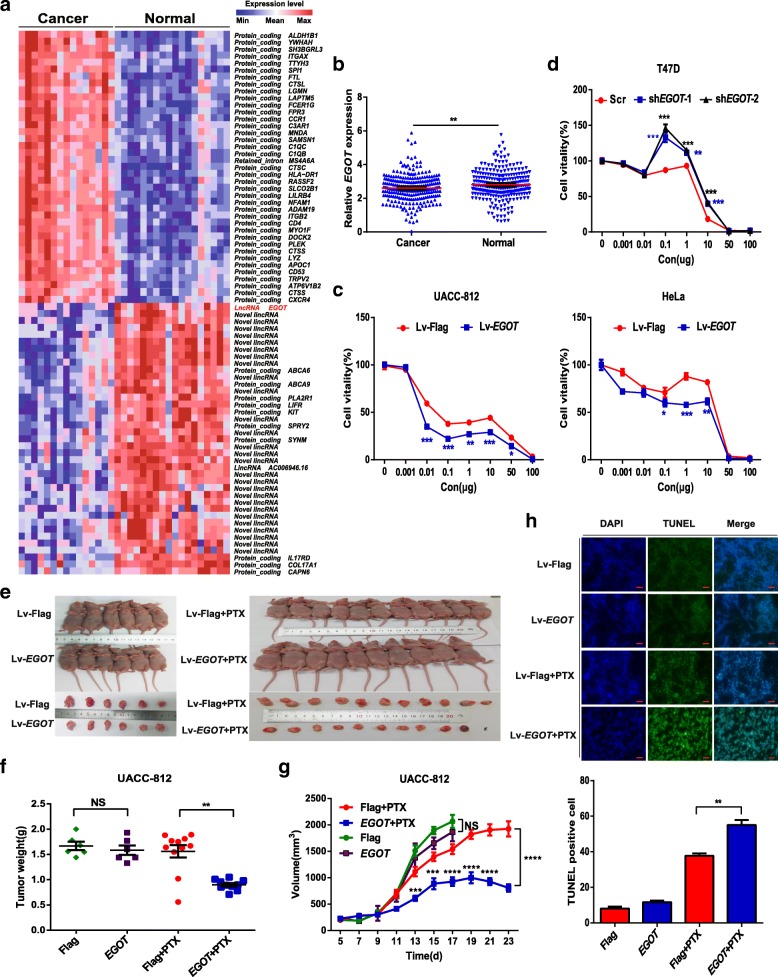
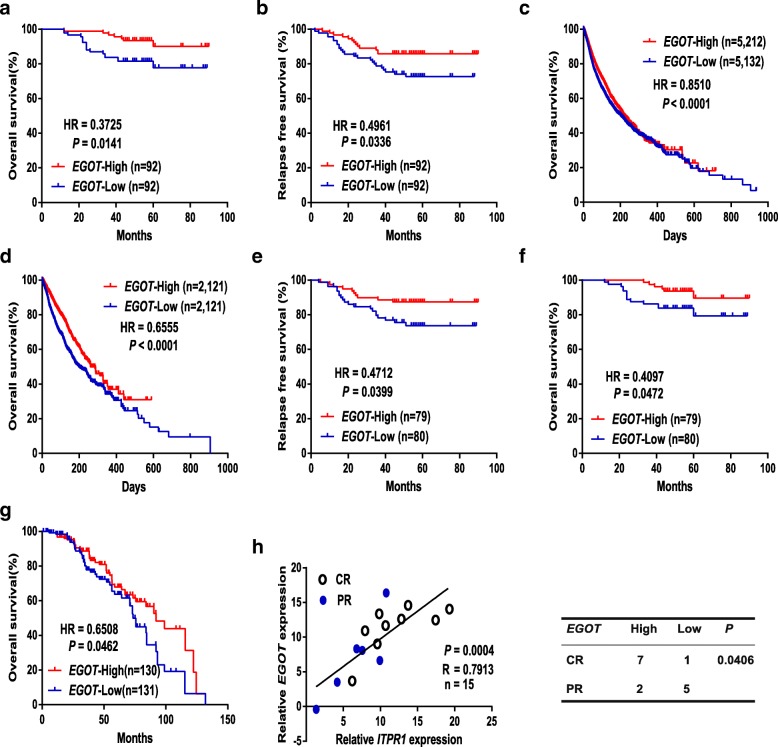
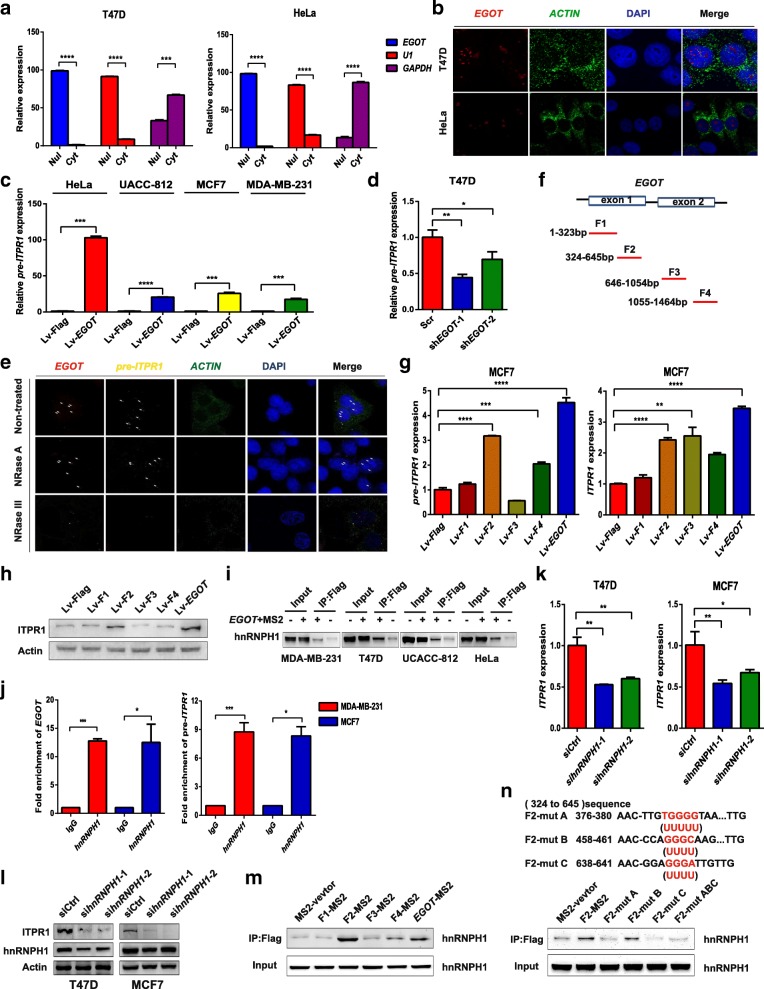
Whole transcriptome sequencing of 33 breast specimens was performed to identify Ai-lncRNA EGOT. Next, the role of EGOT in regulation of paclitaxel sensitivity was investigated. Moreover, the mechanism of EGOT enhancing autophagy sensitizes paclitaxel cytotoxicity via upregulation of ITPR1 expression by RNA-RNA and RNA-protein interactions was investigated in detail. Furthermore, upstream transcriptional regulation of EGOT expression was also investigated by co-immunoprecipitation and chromatin immunoprecipitation. Finally, clinical breast specimens in our cohort, TCGA and ICGC were applied to validate the role of EGOT in enhancing of paclitaxel sensitivity.
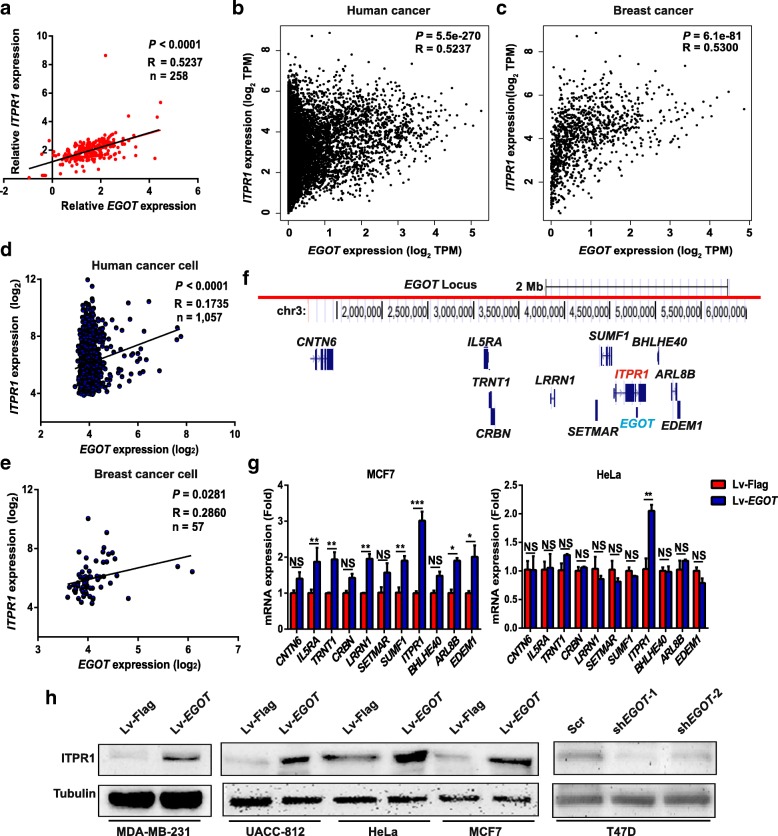
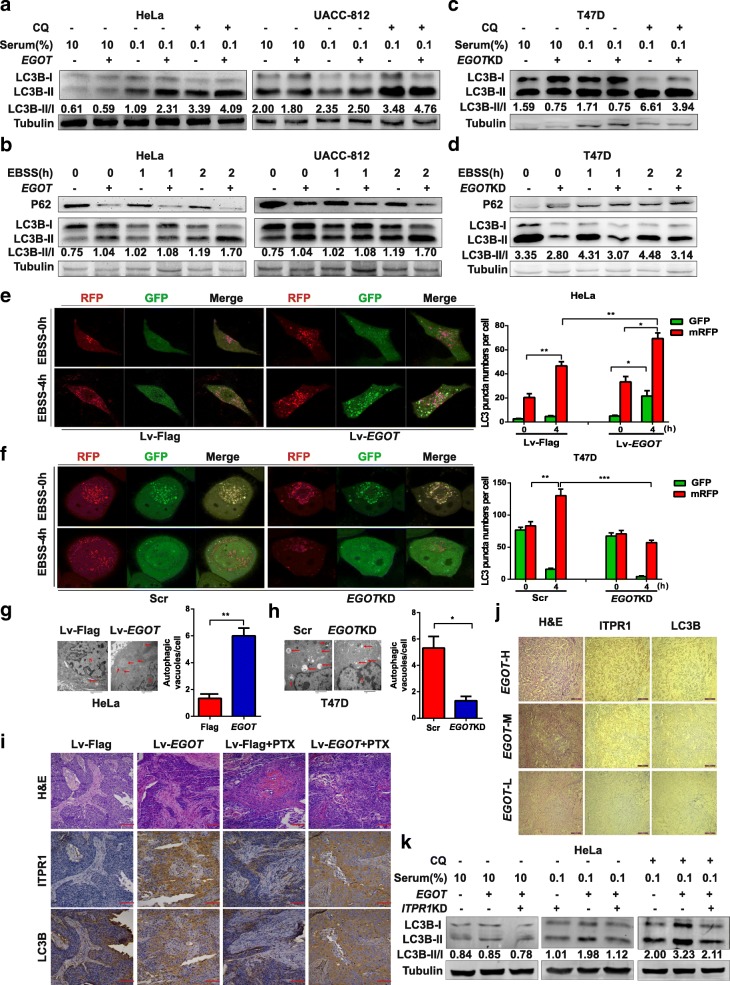
EGOT enhances autophagosome accumulation via the up-regulation of ITPR1 expression, thereby sensitizing cells to paclitaxel toxicity. Mechanistically, on one hand, EGOT upregulates ITPR1 levels via formation of a pre-ITPR1/EGOT dsRNA that induces pre-ITPR1 accumulation to increase ITPR1 protein expression in cis. On the other hand, EGOT recruits hnRNPH1 to enhance the alternative splicing of pre-ITPR1 in trans via two binding motifs in EGOT segment 2 (324-645 nucleotides) in exon 1. Moreover, EGOT is transcriptionally regulated by stress conditions. Finally, EGOT expression enhances paclitaxel sensitivity via assessment of cancer specimens.
These findings broaden comprehensive understanding of the biology function of Ai-lncRNAs. Proper regulation of EGOT may be a novel synergistic strategy for enhancing paclitaxel sensitivity in cancer therapy.
反义内含子长非编码 RNA(Ai-lncRNA)的生物学功能尚不清楚。同时,紫杉醇耐药的癌症患者在临床上治疗选择有限。然而,Ai-lncRNA 对人类癌症中紫杉醇敏感性的潜在参与仍不清楚。
对 33 个乳腺标本进行全转录组测序,以鉴定 Ai-lncRNA EGOT。接下来,研究了 EGOT 在调节紫杉醇敏感性中的作用。此外,通过 RNA-RNA 和 RNA-蛋白质相互作用详细研究了 EGOT 通过上调 ITPR1 表达增强自噬敏感性从而增强紫杉醇细胞毒性的机制。此外,还通过共免疫沉淀和染色质免疫沉淀研究了 EGOT 表达的上游转录调控。最后,应用我们队列、TCGA 和 ICGC 的临床乳腺标本验证了 EGOT 在增强紫杉醇敏感性中的作用。
EGOT 通过上调 ITPR1 表达增强自噬体积累,从而使细胞对紫杉醇毒性敏感。从机制上讲,一方面,EGOT 通过形成诱导 pre-ITPR1 积累的 pre-ITPR1/EGOT dsRNA 上调 ITPR1 水平,从而增加顺式 ITPR1 蛋白表达。另一方面,EGOT 招募 hnRNPH1 通过 EGOT 片段 2(324-645 个核苷酸)中的两个结合基序在反式中增强 pre-ITPR1 的选择性剪接。此外,EGOT 受应激条件的转录调控。最后,通过评估癌症标本,EGOT 表达增强了紫杉醇的敏感性。
这些发现拓宽了对 Ai-lncRNAs 生物学功能的全面理解。适当调节 EGOT 可能是增强癌症治疗中紫杉醇敏感性的一种新的协同策略。