Veeramuthu Loganathan, Venkatesan Manikandan, Liang Fang-Cheng, Benas Jean-Sebastien, Cho Chia-Jung, Chen Chin-Wen, Zhou Ye, Lee Rong-Ho, Kuo Chi-Ching
Institute of Organic and Polymeric Materials, Research and Development Center of Smart Textile Technology, National Taipei University of Technology, Taipei 10608, Taiwan.
Institute for Advanced Study, Shenzhen University, Shenzhen 518060, China.
Polymers (Basel). 2020 Mar 5;12(3):587. doi: 10.3390/polym12030587.
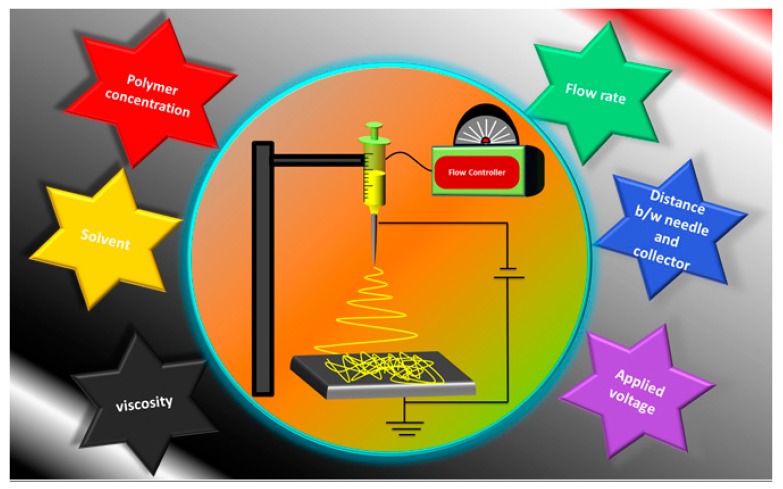
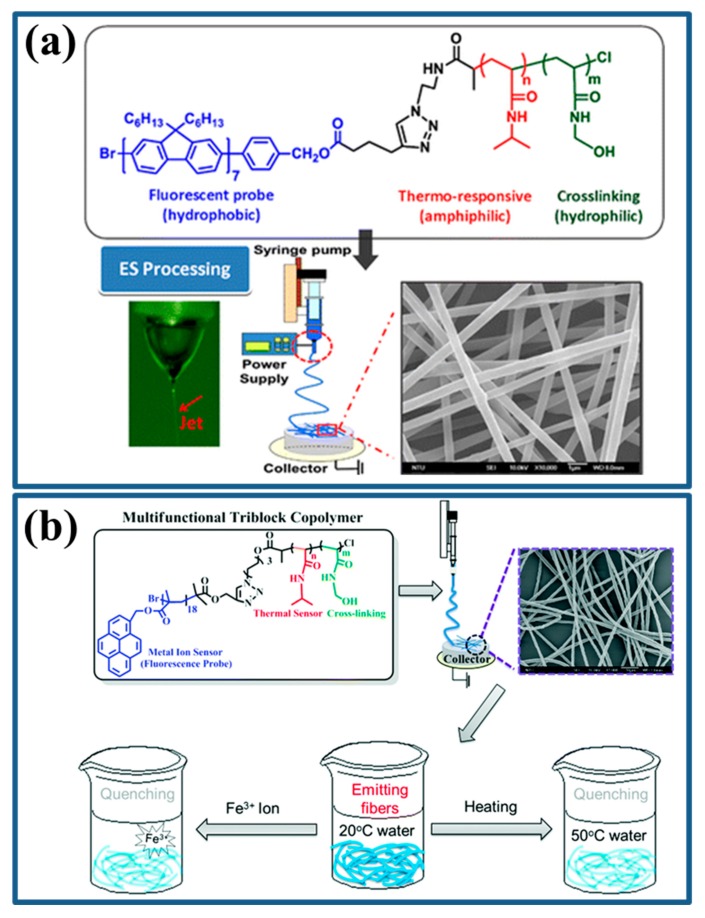
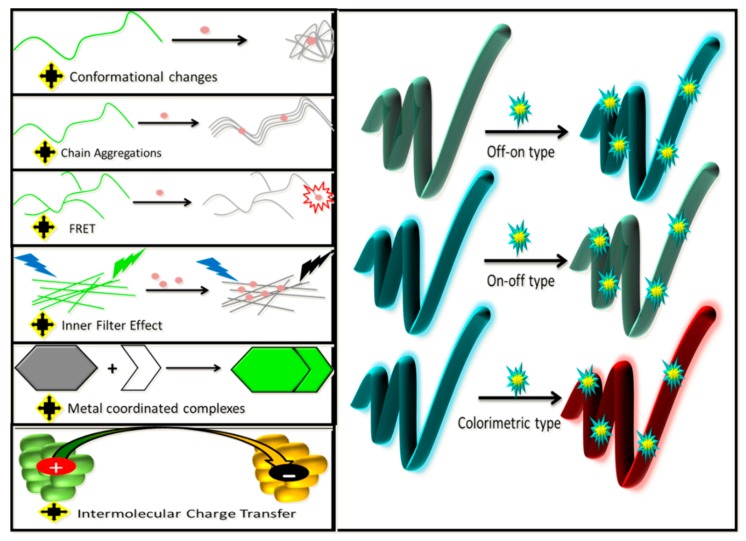
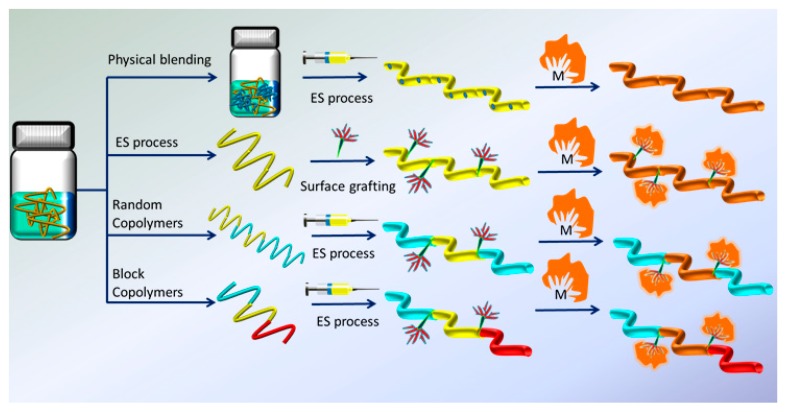
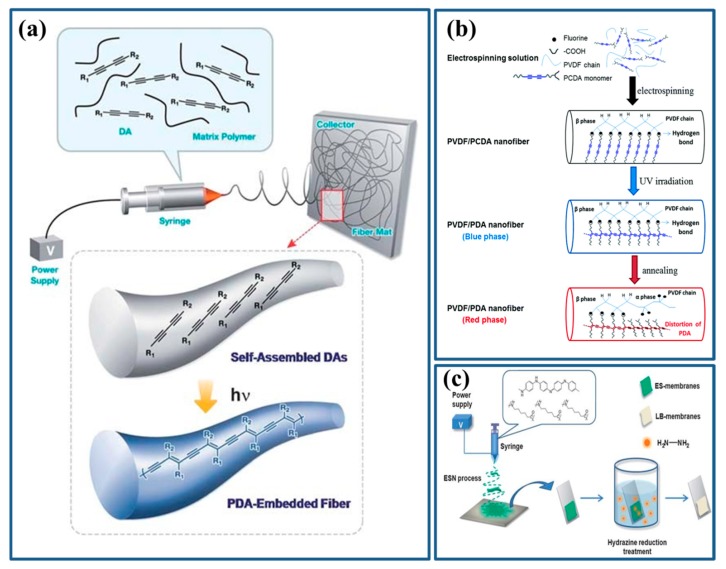
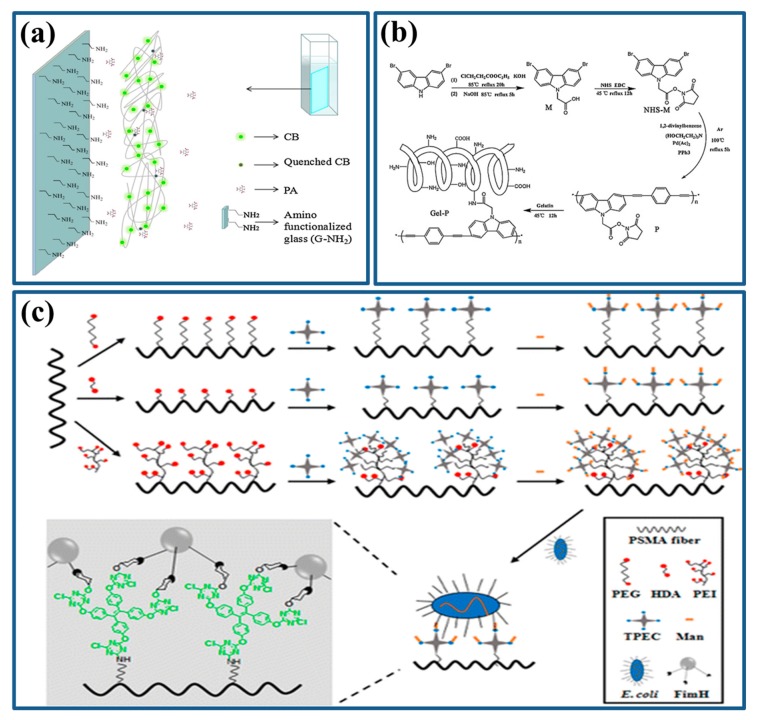
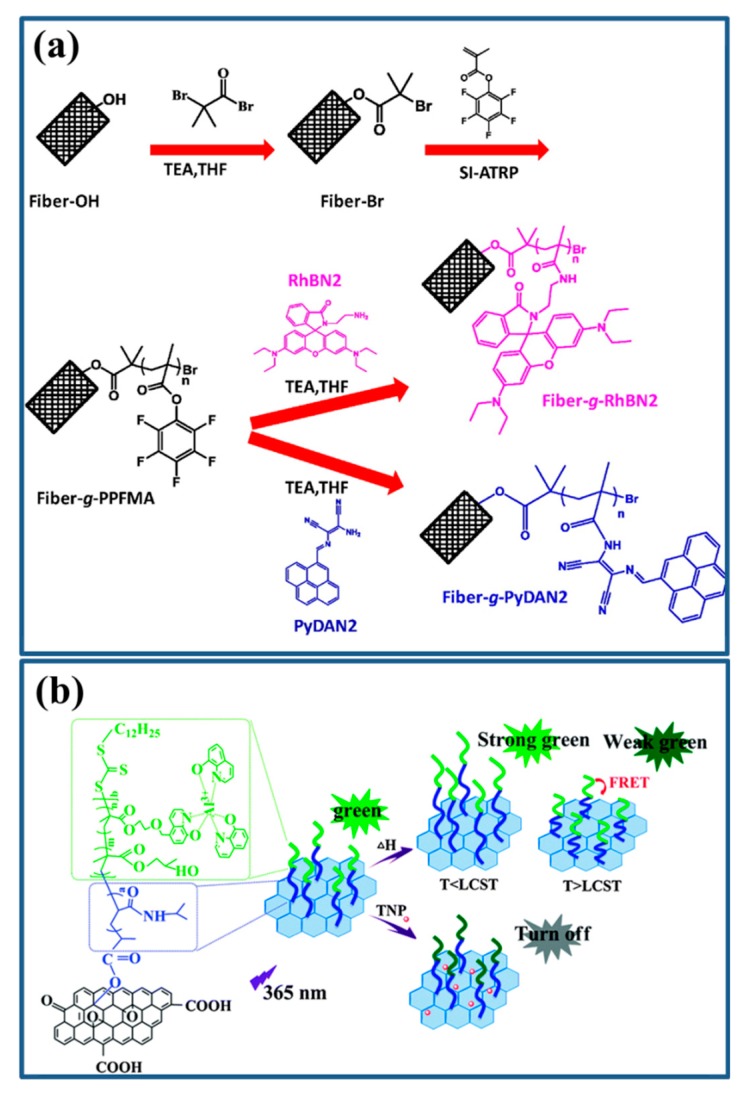
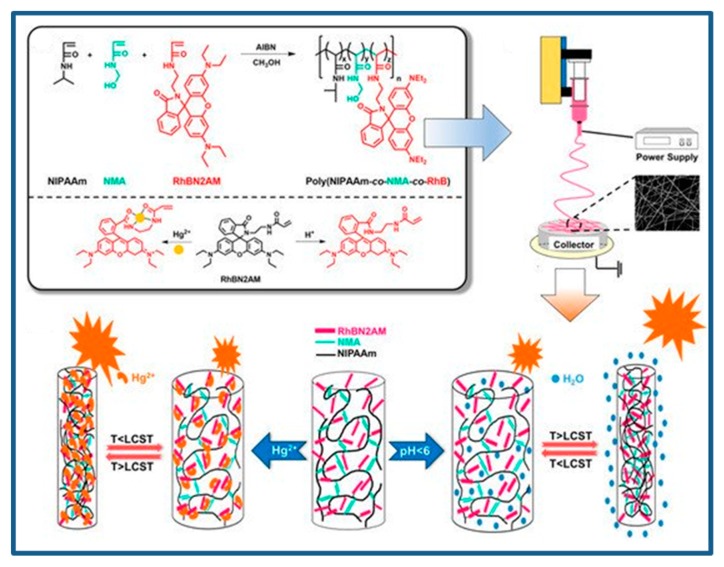
Conjugated copolymers (CCPs) are a class of polymers with excellent optical luminescent and electrical conducting properties because of their extensive π conjugation. CCPs have several advantages such as facile synthesis, structural tailorability, processability, and ease of device fabrication by compatible solvents. Electrospinning (ES) is a versatile technique that produces continuous high throughput nanofibers or microfibers and its appropriate synchronization with CCPs can aid in harvesting an ideal sensory nanofiber. The ES-based nanofibrous membrane enables sensors to accomplish ultrahigh sensitivity and response time with the aid of a greater surface-to-volume ratio. This review covers the crucial aspects of designing highly responsive optical sensors that includes synthetic strategies, sensor fabrication, mechanistic aspects, sensing modes, and recent sensing trends in monitoring environmental toxicants, pH, temperature, and humidity. In particular, considerable attention is being paid on classifying the ES-based optical sensor fabrication to overcome remaining challenges such as sensitivity, selectivity, dye leaching, instability, and reversibility.
共轭共聚物(CCPs)是一类具有优异光学发光和导电性能的聚合物,因为它们具有广泛的π共轭结构。CCPs具有多种优点,如合成简便、结构可定制性、可加工性以及易于通过相容性溶剂制造器件。静电纺丝(ES)是一种通用技术,可生产连续的高通量纳米纤维或微纤维,将其与CCPs适当同步有助于制备出理想的传感纳米纤维。基于ES的纳米纤维膜使传感器能够借助更大的表面积与体积比实现超高灵敏度和响应时间。本综述涵盖了设计高响应光学传感器的关键方面,包括合成策略、传感器制造、机理方面、传感模式以及监测环境毒物、pH值、温度和湿度的最新传感趋势。特别是,人们正在高度关注对基于ES的光学传感器制造进行分类,以克服诸如灵敏度、选择性、染料渗漏、不稳定性和可逆性等剩余挑战。