Nadaf Arif, Gupta Akash, Hasan Nazeer, Ahmad Shadaan, Kesharwani Prashant, Ahmad Farhan J
Department of Pharmaceutics, School of Pharmaceutical Education and Research, Jamia Hamdard New Delhi 110062 India
RSC Adv. 2022 Aug 23;12(37):23808-23828. doi: 10.1039/d2ra02864f. eCollection 2022 Aug 22.
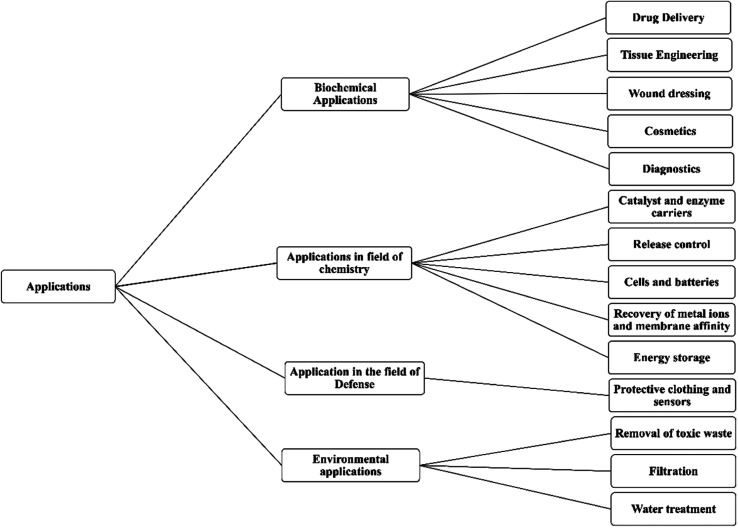
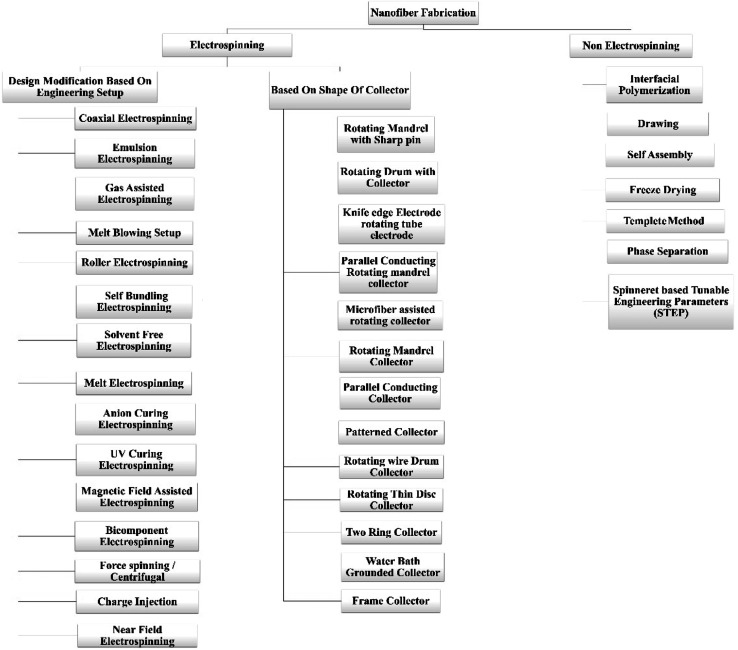
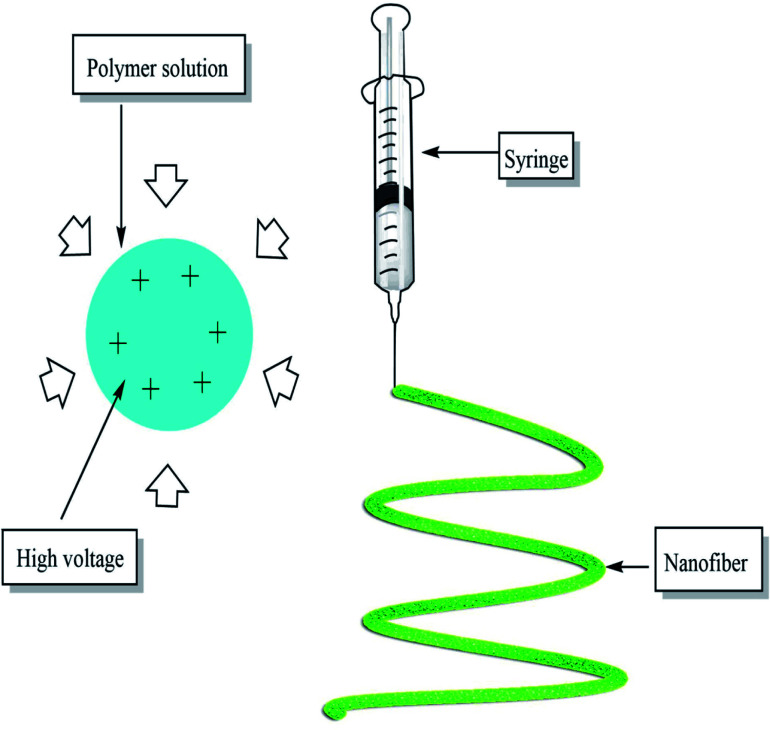
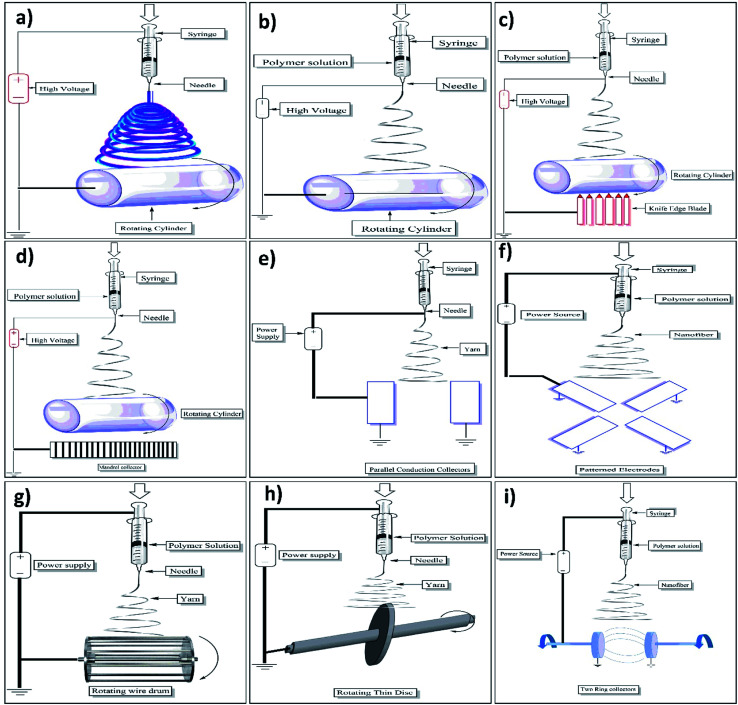
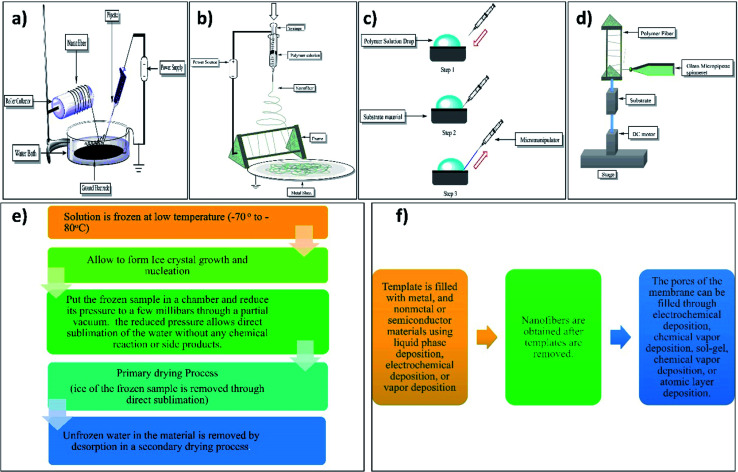
Electrospinning is a versatile and viable technique for generating ultrathin fibers. Remarkable progress has been made in techniques for creating electro-spun and non-electro-spun nanofibers. Nanofibers were the center of attention for industries and researchers due to their simplicity in manufacture and setup. The review discusses a thorough overview of both electrospinning and non-electrospinning processes, including their setup, fabrication process, components, and applications. The review starts with an overview of the field of nanotechnology, the background of electrospinning, the surge in demand for nanofiber production, the materials needed to make nanofibers, and the critical process variables that determine the characteristics of nanofibers. Additionally, the diverse applications of electrospun nanofibers, such as smart mats, catalytic supports, filtration membranes, energy storage/heritage components, electrical devices (batteries), and biomedical scaffolds, are then covered. Further, the review concentrates on the most recent and pertinent developments in nanofibers that are connected to the use of nanofibers, focusing on the most illustrative cases. Finally, challenges and their possible solutions, marketing, and the future prospects of nanofiber development are discussed.
静电纺丝是一种用于制造超细纤维的通用且可行的技术。在制备电纺和非电纺纳米纤维的技术方面已经取得了显著进展。纳米纤维因其制造和设置简单而成为工业界和研究人员关注的焦点。这篇综述全面讨论了静电纺丝和非静电纺丝工艺,包括它们的设置、制造过程、组件和应用。综述首先概述了纳米技术领域、静电纺丝的背景、纳米纤维生产需求的激增、制造纳米纤维所需的材料以及决定纳米纤维特性的关键工艺变量。此外,还涵盖了电纺纳米纤维的各种应用,如智能垫、催化载体、过滤膜、储能/传承组件、电气设备(电池)和生物医学支架。进一步地,综述集中于与纳米纤维应用相关的纳米纤维的最新和相关进展,重点关注最具代表性的案例。最后,讨论了挑战及其可能的解决方案、市场推广以及纳米纤维发展的未来前景。