Collier Graham R S, Spaner Dean M, Graf Robert J, Beres Brian L
Department of Agricultural, Food, and Nutritional Science, University of Alberta, Edmonton, AB, Canada.
Lethbridge Research Centre, Agriculture and Agri-Food Canada, Lethbridge, AB, Canada.
Front Plant Sci. 2020 Feb 20;11:89. doi: 10.3389/fpls.2020.00089. eCollection 2020.
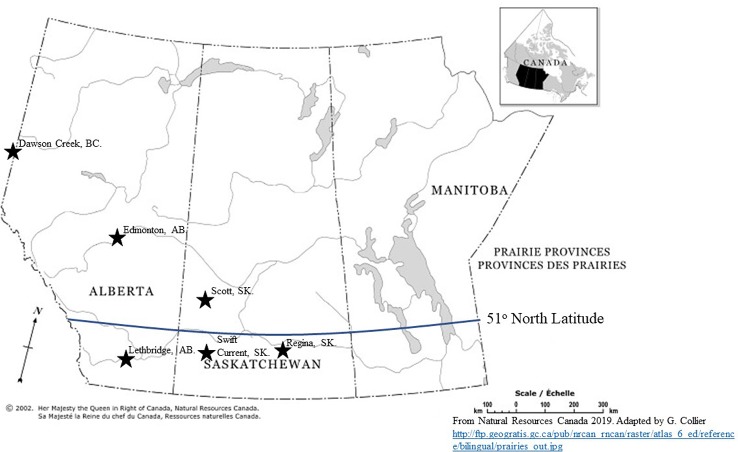
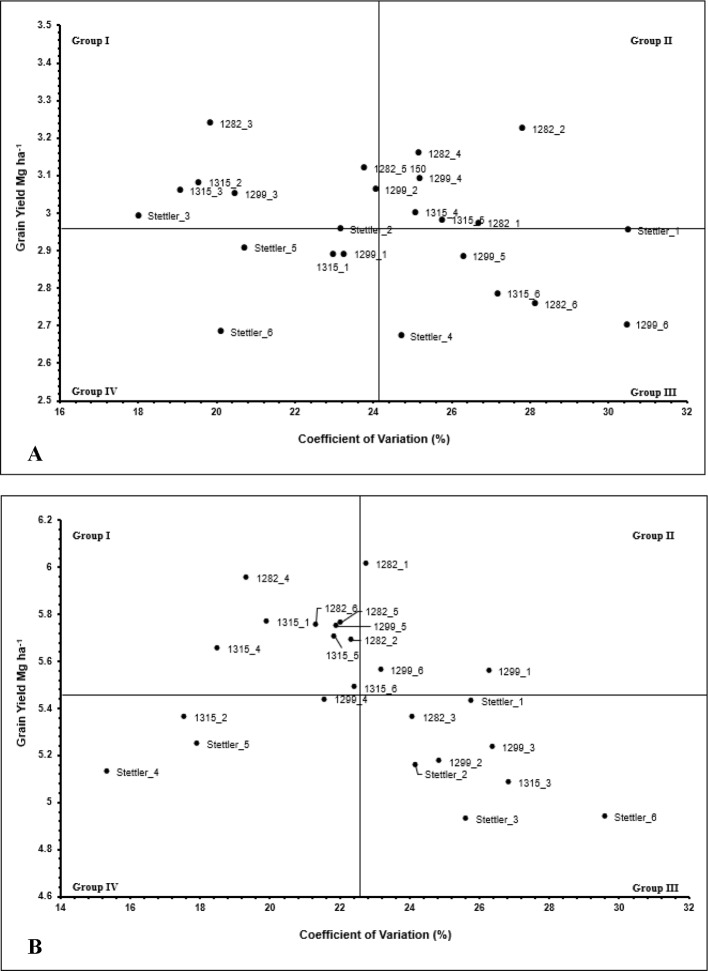
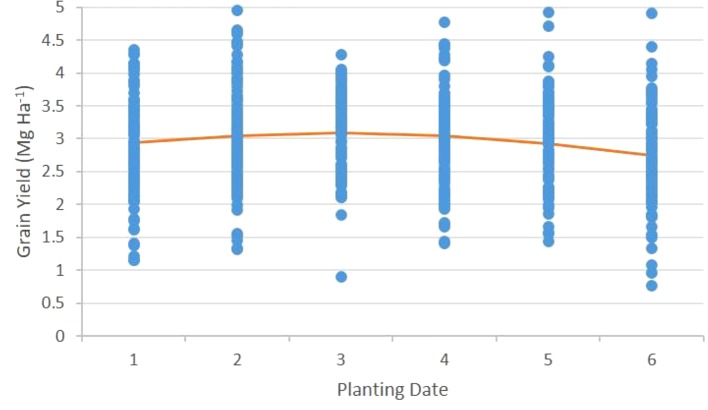
Early seeding has been suggested as a method of increasing the grain yield and grain yield stability of wheat (.) in the Northern Great Plains. The point at which early seeding results in a decrease in grain yield has not been clearly identified. Changes in climatic conditions have increased frost-free periods and increased temperatures during grain filling, which can either be taken advantage of or avoided by seeding earlier. Field trials were conducted in western Canada from 2015 to 2018 to evaluate an ultra-early wheat planting system based on soil temperature triggers as opposed to calendar dates. Planting began when soil temperatures at 5 cm depth reached 0°C and continued at 2°C intervals until 10°C, regardless of calendar date. Conventional commercial spring wheat genetics and newly identified cold tolerant spring wheat lines were evaluated to determine if ultra-early wheat seeding systems required further development of specialized varieties to maintain system stability. Ultra-early seeding resulted in no detrimental effect on grain yield. Grain yield increased at sites south of 51° latitude N, and was unaffected by ultra-early seeding at sites north of 51° latitude N. Grain protein content, kernel weight, and bulk density were not affected by ultra-early seeding. Optimal seeding time was identified between 2 and 6°C soil temperatures. A greater reduction in grain yield was observed from delaying planting until soils reached 10°C than from seeding into 0°C soils; this was despite extreme environmental conditions after initial seeding, including air temperatures as low as -10.2°C, and as many as 37 nights with air temperatures below 0°C. Wheat emergence ranged from 55 to 70%, and heads m decreased with delayed seeding while heads plant did not change. Cold tolerant wheat lines did not increase stability of the ultra-early wheat seeding system relative to the conventional spring wheat check, and are therefore not required for growers to adopt ultra-early seeding. The results of this study indicate that growers in western Canada can successfully begin seeding wheat earlier, with few changes to their current management practices, and endure less risk than delaying seeding until soil temperatures reach 10°C or greater.
早播被认为是提高北美大平原北部小麦产量和产量稳定性的一种方法。早播导致小麦产量下降的临界点尚未明确确定。气候条件的变化延长了无霜期,并提高了灌浆期的温度,早播既可以利用这些条件,也可以避免这些条件带来的影响。2015年至2018年在加拿大西部进行了田间试验,以评估一种基于土壤温度触发而非日历日期的超早播小麦种植系统。当5厘米深度的土壤温度达到0°C时开始播种,并以2°C的间隔持续播种,直到达到10°C,而不考虑日历日期。对传统商业春小麦品种和新鉴定的耐寒春小麦品系进行了评估,以确定超早播小麦系统是否需要进一步培育专门品种以维持系统稳定性。超早播对小麦产量没有不利影响。在北纬51°以南的地区,产量增加,而在北纬51°以北的地区,产量不受超早播的影响。超早播对籽粒蛋白质含量、粒重和容重没有影响。确定了土壤温度在2至6°C之间为最佳播种时间。与播种到0°C的土壤相比,将播种推迟到土壤达到10°C时,产量下降幅度更大;尽管初始播种后环境条件极端,包括气温低至-10.2°C,以及多达37个夜间气温低于0°C。小麦出苗率在55%至70%之间,每平方米穗数随播种延迟而减少,而每株穗数不变。耐寒小麦品系相对于传统春小麦对照,并没有提高超早播小麦系统的稳定性,因此种植者采用超早播并不需要耐寒小麦品系。这项研究的结果表明,加拿大西部的种植者可以成功地更早开始播种小麦,对当前管理措施几乎无需改变,而且比推迟播种到土壤温度达到10°C或更高时所承受的风险更小。