Chen John H, Lenihan Daniel J, Phillips Sharon E, Harrell Shelton L, Cornell Robert F
1Department of Medicine, Division of Hematology-Oncology, Vanderbilt University Medical Center, 2220 Pierce Avenue, 777 PRB, Nashville, TN 37232 USA.
2Department of Medicine, Division of Cardio-Oncology, Vanderbilt Heart & Vascular Institute, 1215 21st Avenue South, 5209 MCE, Nashville, TN 37232 USA.
Cardiooncology. 2017 Jun 1;3:4. doi: 10.1186/s40959-017-0023-9. eCollection 2017.
Proteasome inhibitors (PI) bortezomib and carfilzomib are cornerstone therapies for multiple myeloma. Higher incidence of cardiac adverse events (CAEs) has been reported in patients receiving carfilzomib. However, risk factors for cardiac toxicity remain unclear. Our objective was to evaluate the incidence of CAEs associated with PI and recognize risk factors for developing events.
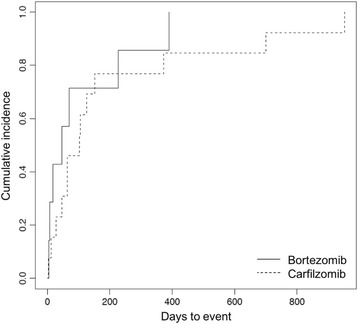
This was a descriptive analysis of 96 patients with multiple myeloma who received bortezomib ( = 44) or carfilzomib ( = 52). We compared the cumulative incidence of CAEs using a log rank test. Patient-related characteristics were assessed and multivariate analysis was used to identify risk factors for developing CAEs.
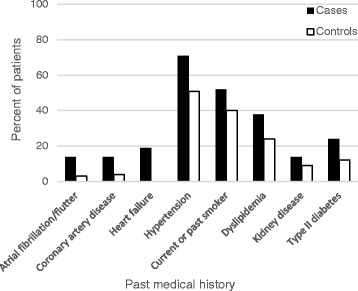
PI-related CAEs occurred in 21 (22%) patients. Bortezomib-associated CAEs occurred in 7 (16%) patients while carfilzomib-associated cardiac events occurred in 14 (27%) patients. The cumulative incidence of CAEs was not significantly different between agents. Events occurred after a median of 67.5 days on PI therapy. Heart failure was the most prevalent event type. More patients receiving carfilzomib were monitored by a cardiologist. By multivariate analysis, a history of prior cardiac events and longer duration of PI therapy were identified as independent risk factors for developing CAEs.
AEs were common in patients receiving PIs. Choice of PI did not impact the cumulative incidence of CAEs. Early involvement by a cardiologist in patients at high risk for CAEs may help to mitigate the frequency and severity of CAEs.
蛋白酶体抑制剂(PI)硼替佐米和卡非佐米是多发性骨髓瘤的基础治疗药物。据报道,接受卡非佐米治疗的患者心脏不良事件(CAE)的发生率更高。然而,心脏毒性的危险因素仍不明确。我们的目的是评估与PI相关的CAE的发生率,并识别发生这些事件的危险因素。
这是一项对96例接受硼替佐米(n = 44)或卡非佐米(n = 52)治疗的多发性骨髓瘤患者的描述性分析。我们使用对数秩检验比较了CAE的累积发生率。评估了患者相关特征,并使用多变量分析来识别发生CAE的危险因素。
21例(22%)患者发生了与PI相关的CAE。7例(16%)患者发生了与硼替佐米相关的CAE,而14例(27%)患者发生了与卡非佐米相关的心脏事件。两种药物之间CAE的累积发生率没有显著差异。事件发生在PI治疗中位数67.5天后。心力衰竭是最常见的事件类型。更多接受卡非佐米治疗的患者由心脏病专家进行监测。通过多变量分析,既往心脏事件史和PI治疗时间较长被确定为发生CAE的独立危险因素。
接受PI治疗的患者中不良事件很常见。PI的选择不影响CAE的累积发生率。心脏病专家早期介入CAE高危患者可能有助于降低CAE的发生频率和严重程度。