Ballardini Giulia, Florio Valeria, Canessa Andrea, Carlini Giorgio, Morasso Pietro, Casadio Maura
Department of Informatics, Bioengineering, Robotics and Systems Engineering, University of Genoa, Genoa, Italy.
Department of Robotics, Brain and Cognitive Sciences, Italian Institute of Technology, Genoa, Italy.
Front Bioeng Biotechnol. 2020 Feb 21;8:94. doi: 10.3389/fbioe.2020.00094. eCollection 2020.
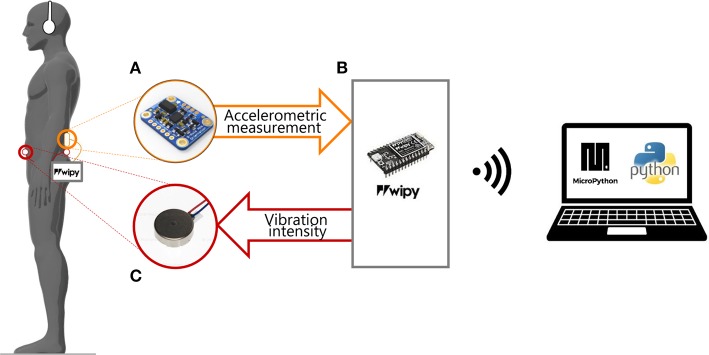
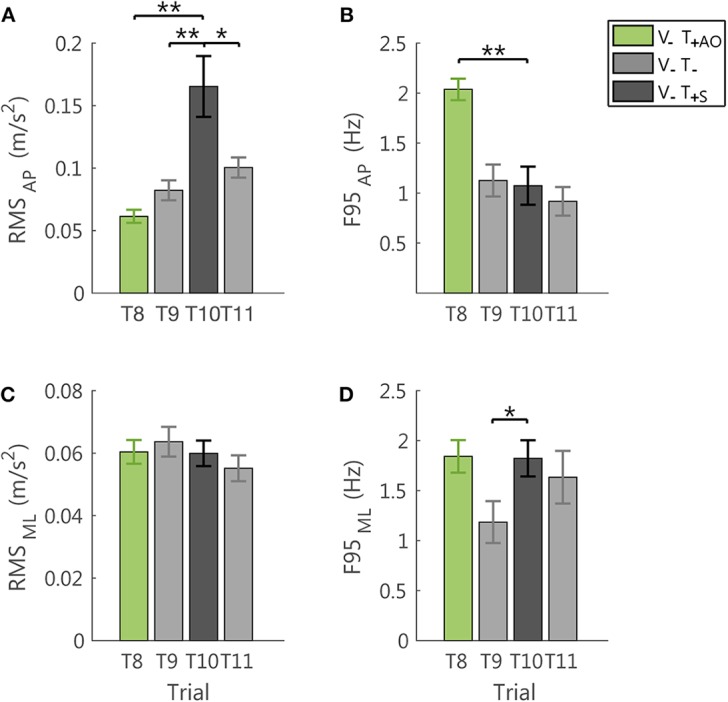
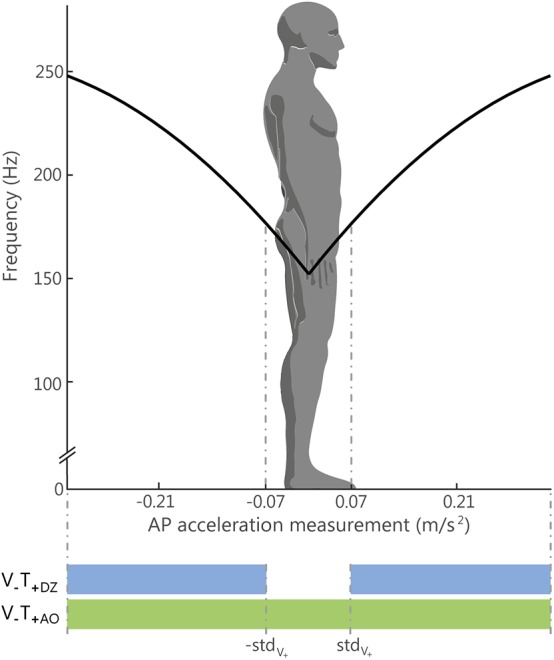
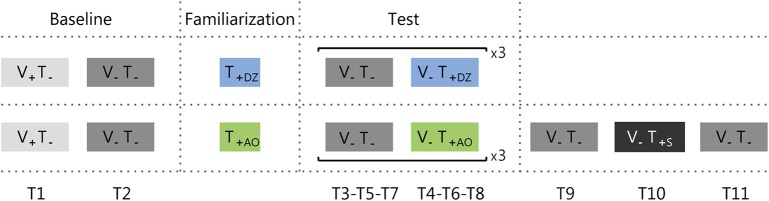
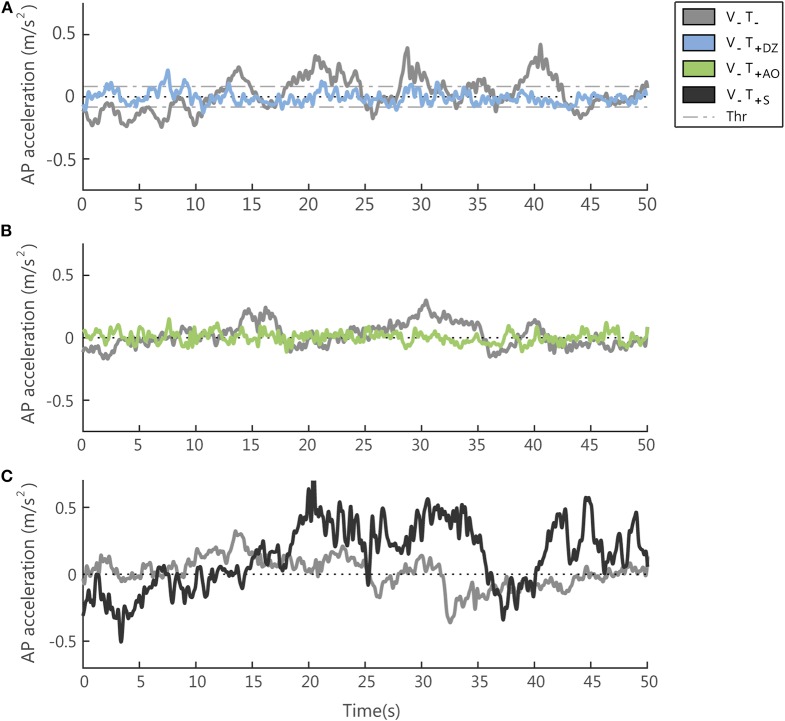
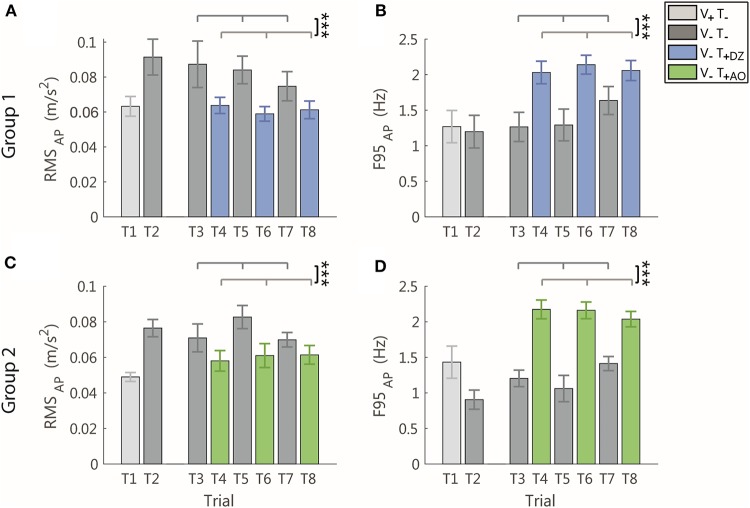
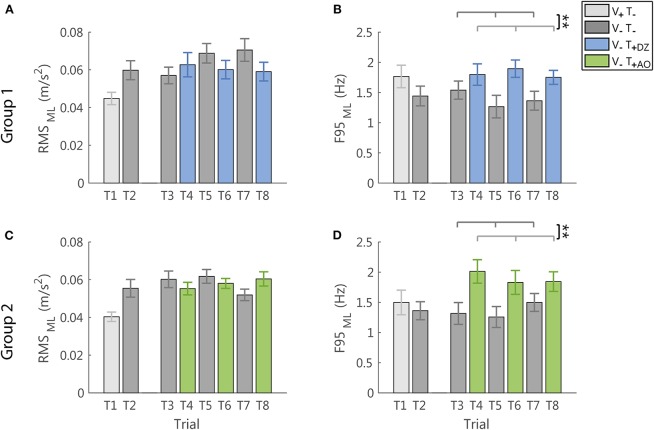
Maintaining balance standing upright is an active process that complements the stabilizing properties of muscle stiffness with feedback control driven by independent sensory channels: proprioceptive, visual, and vestibular. Considering that the contribution of these channels is additive, we investigated to what extent providing an additional channel, based on vibrotactile stimulation, may improve balance control. This study focused only on healthy young participants for evaluating the effects of different encoding methods and the importance of the informational content. We built a device that provides a vibrotactile feedback using two vibration motors placed on the anterior and posterior part of the body, at the L5 level. The vibration was synchronized with an accelerometric measurement encoding a combination of the position and acceleration of the body center of mass in the anterior-posterior direction. The goal was to investigate the efficacy of the information encoded by this feedback in modifying postural patterns, comparing, in particular, two different encoding methods: vibration and vibration with a , i.e., silent in a region around the natural stance posture. We also studied if after the exposure, the participants modified their normal oscillation patterns, i.e., if there were after effects. Finally, we investigated if these effects depended on the informational content of the feedback, introducing trials with vibration unrelated to the actual postural oscillations ( feedback). Twenty-four participants were asked to stand still with their eyes closed, alternating trials with and without vibrotactile feedback: nine were tested with vibration and feedback, fifteen with feedback. The results show that synchronized vibrotactile feedback reduces significantly the sway amplitude while increasing the frequency in anterior-posterior and medial-lateral directions. The two encoding methods had no different effects of reducing the amount of postural sway during exposure to vibration, however only the feedback led to short-term after effects. The presence of vibration, instead, increased the sway amplitude, highlighting the importance of the encoded information.
保持直立站立时的平衡是一个主动过程,它通过由独立感觉通道(本体感觉、视觉和前庭)驱动的反馈控制来补充肌肉僵硬度的稳定特性。考虑到这些通道的作用是相加的,我们研究了基于振动触觉刺激提供一个额外通道在多大程度上可以改善平衡控制。本研究仅聚焦于健康的年轻参与者,以评估不同编码方法的效果以及信息内容的重要性。我们制造了一种装置,该装置使用两个振动电机在L5水平放置于身体的前后部位来提供振动触觉反馈。该振动与一个加速度测量同步,该测量对身体质心在前后方向上的位置和加速度的组合进行编码。目标是研究这种反馈所编码的信息在改变姿势模式方面的功效,特别比较两种不同的编码方法:连续振动和在自然站立姿势周围的一个区域内静音的振动(即 振动)。我们还研究了在暴露之后参与者是否改变了他们的正常振荡模式,即是否存在后效应。最后,我们通过引入与实际姿势振荡无关的振动试验(假反馈)来研究这些效应是否取决于反馈的信息内容。24名参与者被要求闭眼站立不动,交替进行有和没有振动触觉反馈的试验:9名参与者接受连续振动和 反馈测试,15名参与者接受 反馈测试。结果表明,同步的振动触觉反馈显著降低了摇摆幅度,同时增加了前后方向和内外侧方向的频率。在暴露于振动期间,两种编码方法在减少姿势摇摆量方面没有不同的效果,然而只有 反馈导致了短期后效应。相反, 振动的存在增加了摇摆幅度,突出了编码信息的重要性。