Cichocka Magdalena O, Bolhuis Maarten, van Heijst Sabrya E, Conesa-Boj Sonia
Kavli Institute of Nanoscience, Delft University of Technology, 2628CJ Delft, The Netherlands.
ACS Appl Mater Interfaces. 2020 Apr 1;12(13):15867-15874. doi: 10.1021/acsami.9b22586. Epub 2020 Mar 17.
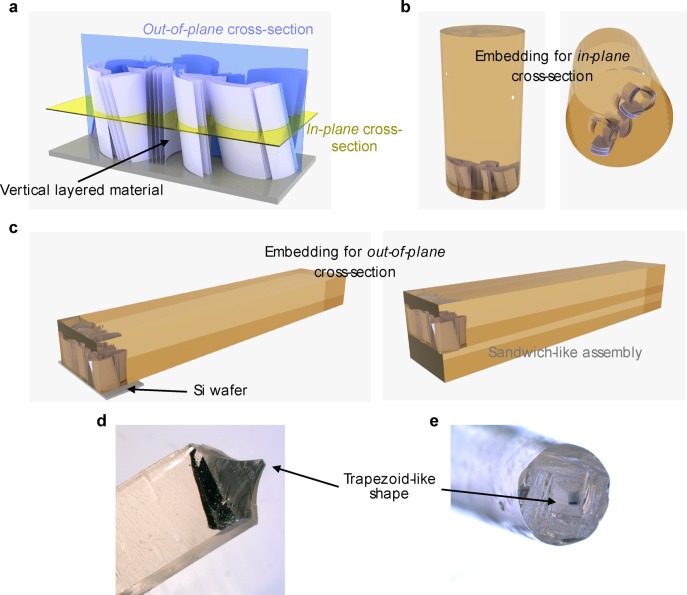
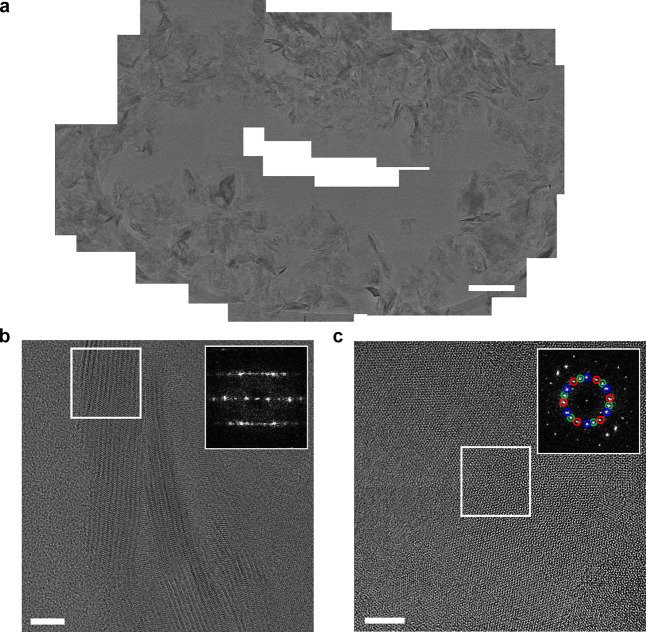
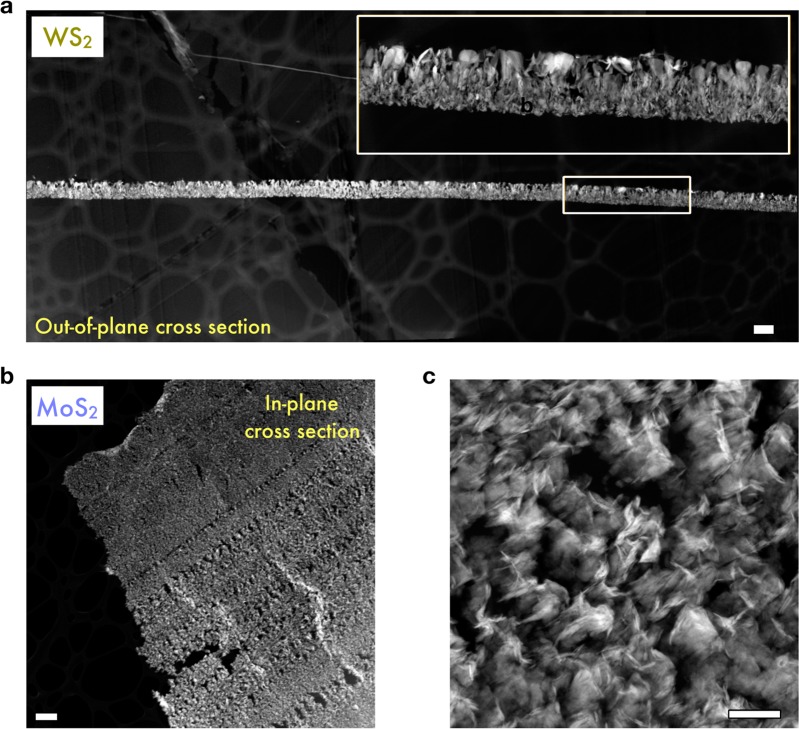
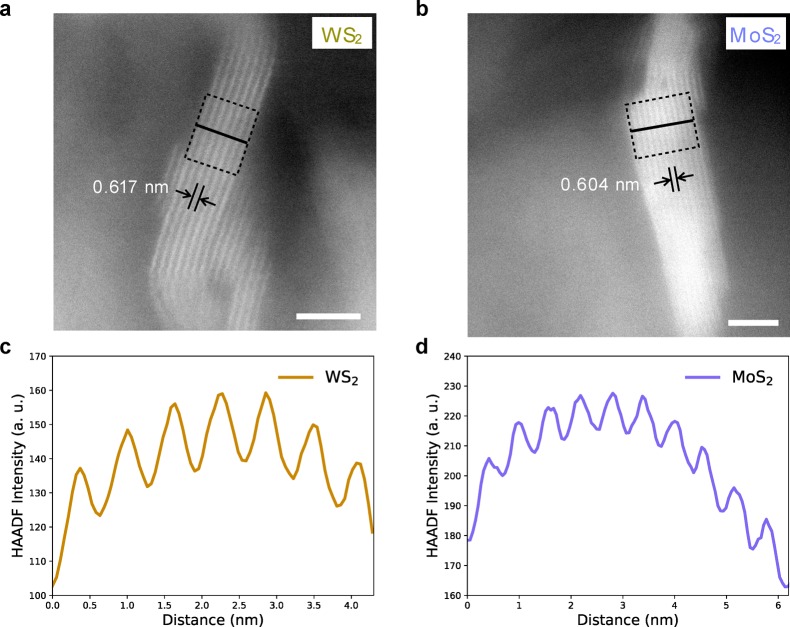
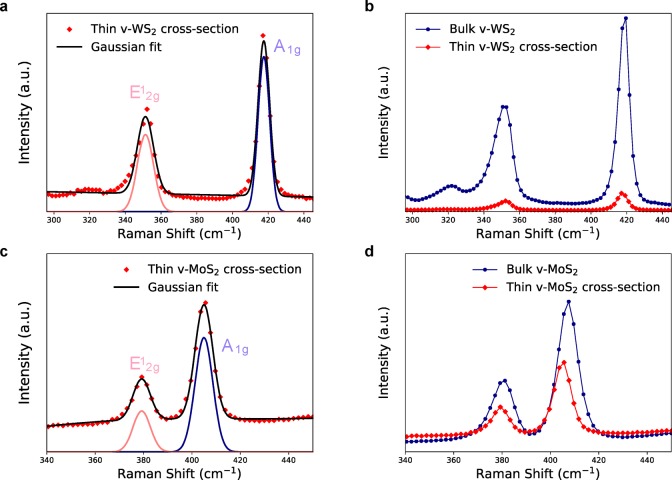
Layered materials (LMs) such as graphene or MoS have attracted a great deal of interest recently. These materials offer unique functionalities due to their structural anisotropy characterized by weak van der Waals bonds along the out-of-plane axis and covalent bonds in the in-plane direction. A central requirement to access the structural information on complex nanostructures built upon LMs is to control the relative orientation of each sample prior to their inspection, e.g., with transmission electron microscopy (TEM). However, developing sample preparation methods that result in large inspection areas and ensure full control over the sample orientation while avoiding damage during the transfer to the TEM grid is challenging. Here, we demonstrate the feasibility of deploying ultramicrotomy for the preparation of LM samples in TEM analyses. We show how ultramicrotomy leads to the reproducible large-scale production of both in-plane and out-of-plane cross sections, with bulk vertically oriented MoS and WS nanosheets as a proof of concept. The robustness of the prepared samples is subsequently verified by their characterization by means of both high-resolution TEM and Raman spectroscopy measurements. Our approach is fully general and should find applications for a wide range of materials as well as of techniques beyond TEM, thus paving the way to the systematic large-area mass-production of cross-sectional specimens for structural and compositional studies.
诸如石墨烯或二硫化钼之类的层状材料(LMs)近来引起了广泛关注。这些材料因其结构各向异性而具有独特功能,其特征是沿面外轴方向存在弱范德华键,而面内方向存在共价键。要获取基于层状材料构建的复杂纳米结构的结构信息,一个核心要求是在检查之前控制每个样品的相对取向,例如使用透射电子显微镜(TEM)。然而,开发能够产生大面积检查区域并确保对样品取向进行完全控制,同时避免在转移到TEM网格过程中造成损坏的样品制备方法具有挑战性。在此,我们展示了在TEM分析中采用超薄切片术制备层状材料样品的可行性。我们展示了超薄切片术如何实现可重复的大规模制备面内和面外横截面,以垂直取向的块状二硫化钼和二硫化钨纳米片作为概念验证。随后通过高分辨率TEM和拉曼光谱测量对制备的样品进行表征,验证了其稳定性。我们的方法具有通用性,应该能应用于广泛的材料以及TEM之外的技术,从而为用于结构和成分研究的横截面样品的系统大面积批量生产铺平道路。